TL;DR
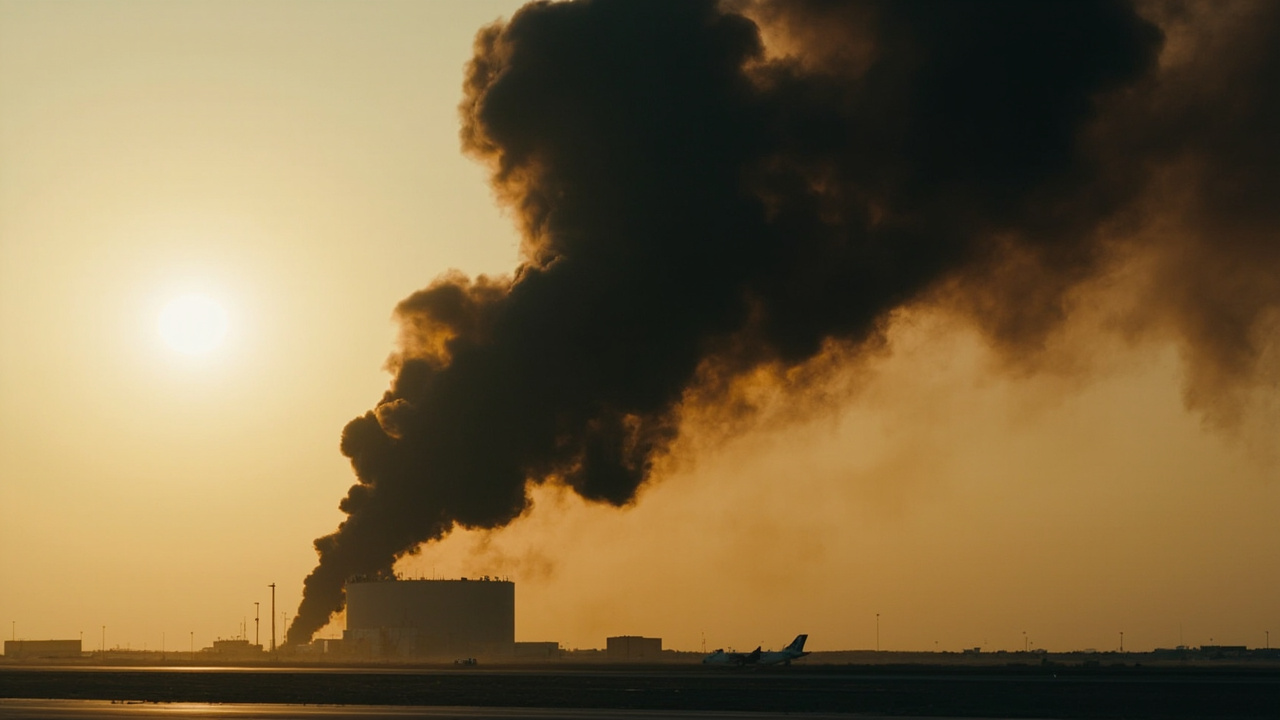
Four of seven damaged transmission lines are back online, but a drone strike set fire to a fuel tank at Kuwait International Airport on March 25.
MSM Perspective
Reuters reports a drone struck a fuel storage tank at Kuwait International Airport, while repair crews restored four of seven damaged power lines.
X Perspective
OSINT satellite imagery accounts are sharing before-and-after shots of the Kuwait Airport fuel tank fire, calling it a new front in Iran's infrastructure campaign.
Kuwait's power grid is slowly recovering. Four of seven high-voltage transmission lines damaged by Iranian drone strikes on March 24 have been restored, the Ministry of Electricity confirmed Wednesday [1]. Rolling blackouts have eased in Kuwait City, though the three remaining lines may take several more days.
The progress was overshadowed by a new strike. Shortly after 2 a.m. local time on March 25, an Iranian drone struck a fuel storage tank at Kuwait International Airport, igniting a fire visible from across the capital [2]. Kuwait's Civil Aviation Authority suspended flights for six hours while crews contained the blaze. No casualties were reported.
When seven lines went down over the weekend, the concern was cascading failure across desalination plants. That threat has partially receded with four lines restored, but the airport strike opens a different vulnerability. Kuwait's airport is the country's primary civilian logistics hub and a staging point for humanitarian aid flowing into the region.
Iran has not claimed responsibility for the airport strike. Western intelligence officials attributed it to an IRGC-launched Shahed-series drone, consistent with the pattern from earlier infrastructure attacks [2]. Kuwait's government issued a formal protest through Swiss intermediaries.
The infrastructure campaign against Gulf states continues to widen.
-- YOSEF STERN, Jerusalem
Sources & X Posts
News Sources