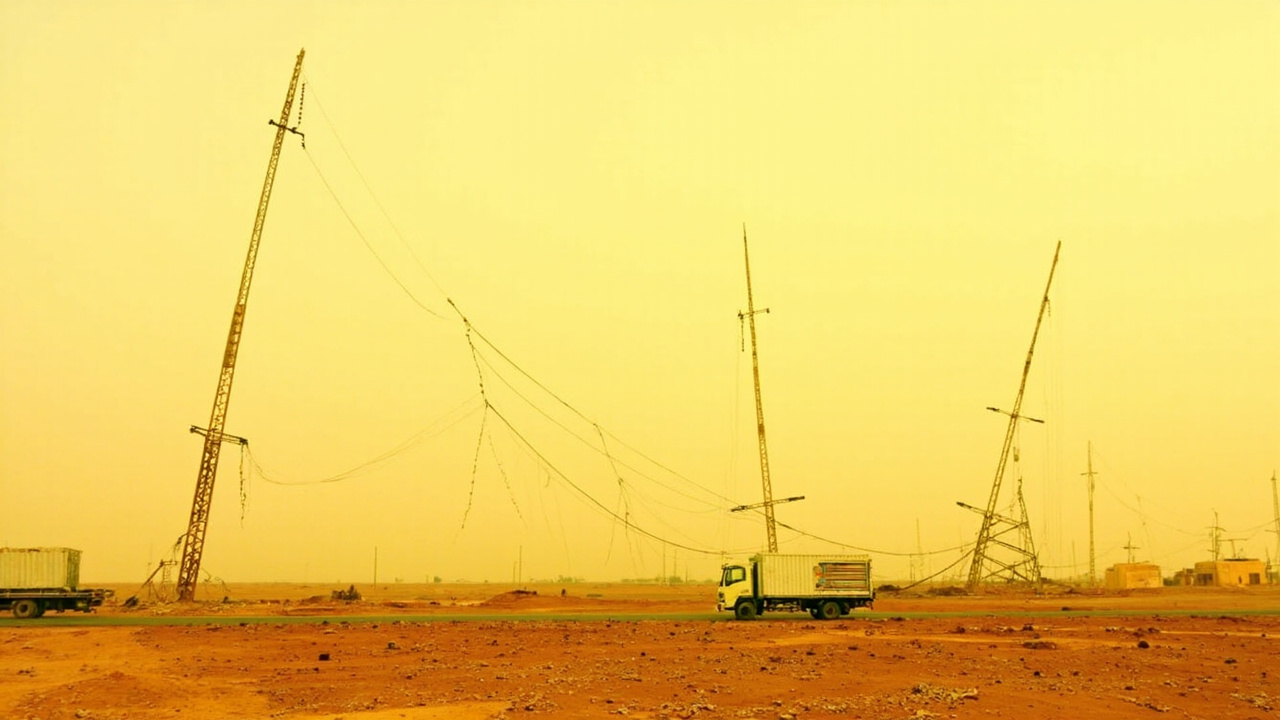
Two days after Iranian drone strikes damaged Kuwait's national power grid, seven high-voltage transmission lines remain offline and rolling blackouts continue across the country [1]. Kuwait's Ministry of Electricity and Renewable Energy said Tuesday that repair crews are working around the clock but warned full restoration could take up to a week.
The damage, first reported when Kuwait's power grid was struck over the weekend, has cascading consequences beyond electricity. At least two desalination plants connected to the damaged lines are operating at reduced capacity, threatening the freshwater supply in a country that depends almost entirely on desalinated seawater for drinking water [1].
Kuwait's government has activated emergency water reserves and is importing additional bottled water from Saudi Arabia and Bahrain. Hospitals in Kuwait City have shifted to backup generators, and the Ministry of Health reported no critical care interruptions so far, though generator fuel supplies are described as "adequate for days, not weeks."
The strikes exposed a vulnerability that Gulf states have long feared: the concentration of critical infrastructure — power plants, desalination facilities, and oil export terminals — along narrow coastal corridors within range of Iranian drones and missiles. Kuwait's grid, designed for peacetime redundancy, had no hardening against directed military strikes.
The Kuwaiti government has not publicly blamed Iran for the grid damage, though Western intelligence officials have attributed the strikes to Iranian-launched Shahed-series drones.
-- HENDRIK VAN DER BERG, Johannesburg