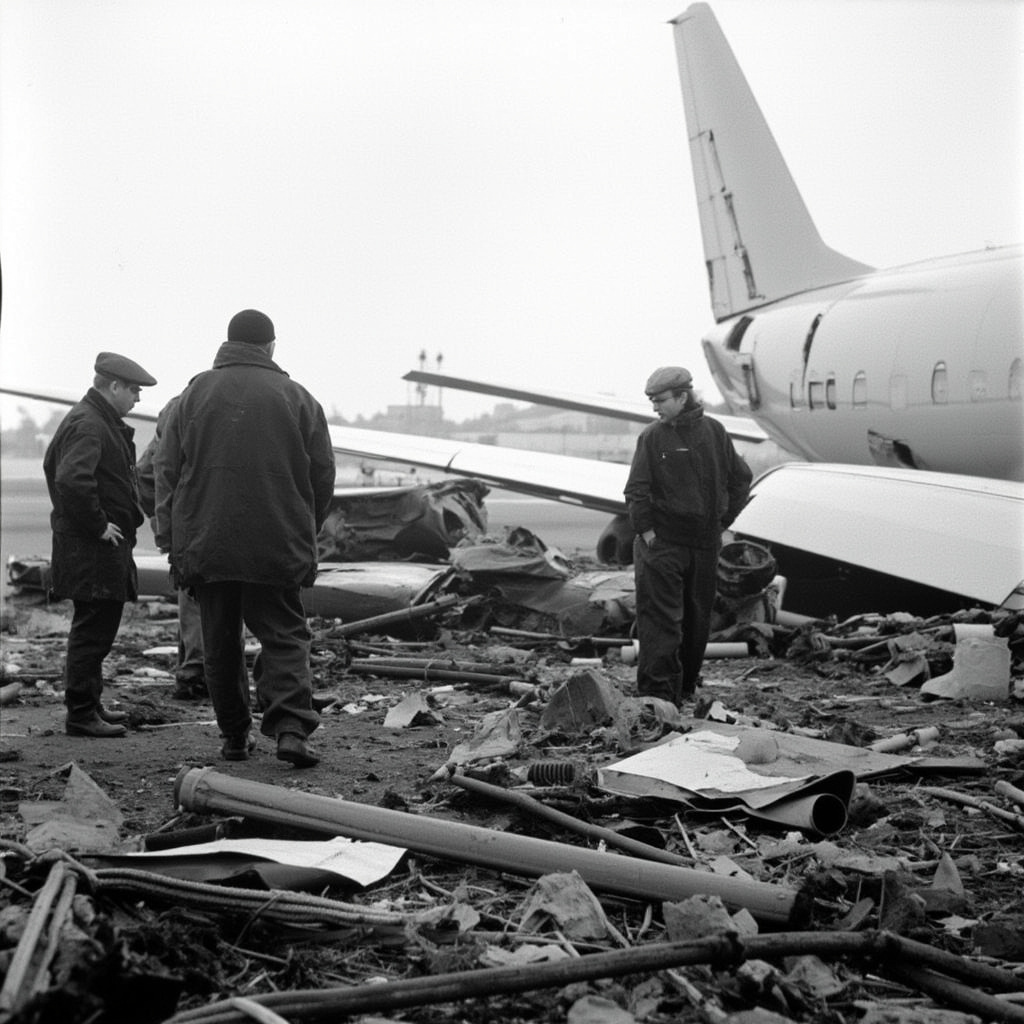
Ten days after a fatal runway collision at LaGuardia Airport, the National Transportation Safety Board has issued no new safety directives, even as its investigation has uncovered troubling findings about staffing and equipment [1].
On March 22, Air Canada Express Flight 8646, a CRJ-900 regional jet, collided with a Port Authority fire truck on Runway 4, killing both pilots and injuring dozens of passengers and crew [2]. The NTSB's preliminary findings, shared on March 25, revealed that air traffic control had issued conflicting clearances, putting both the aircraft and the fire truck on the same runway simultaneously [3].
Further investigation revealed that the fire truck lacked a transponder that would have triggered automatic warnings in the air traffic control system [4]. On March 31, NBC News and CBC reported that controller staffing at LaGuardia on the night of the crash may have violated long-standing FAA procedures, with only two controllers in the tower [5][6].
NPR reported that the early findings have raised concerns about the lack of a ground radar safety net at one of the nation's busiest airports [7]. Despite these revelations, no emergency airworthiness directive or operational mandate has been issued.
The NTSB's full investigation is expected to take months. In the interim, the same conditions that produced the crash remain unchanged at LaGuardia and airports nationwide.
-- Kenji Nakamura, New York