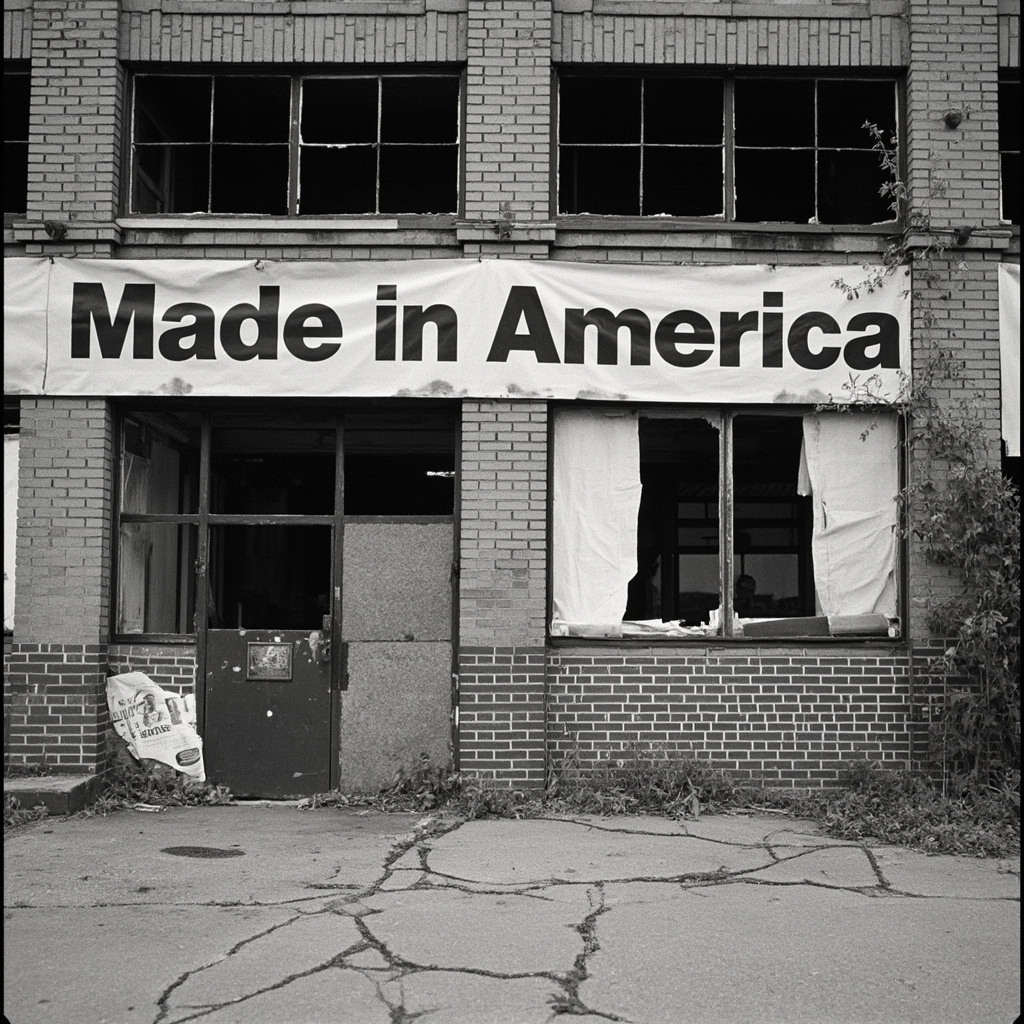
One year ago today, on April 2, 2025, President Donald Trump stood in the Rose Garden and announced what he called "Liberation Day" — a sweeping regime of reciprocal tariffs imposed under the International Emergency Economic Powers Act. The tariffs covered virtually every trading partner. They were described as the most significant trade action since Smoot-Hawley. They were supposed to bring manufacturing back to America. [1]
Thursday is the anniversary. Here is what Liberation Day liberated: $166 billion in tariff revenue collected from American importers and passed along to American consumers. [2] A manufacturing sector that lost 89,000 jobs in the ten months following the announcement. [3] A Supreme Court ruling, issued on February 20, 2026, declaring the tariffs unconstitutional. [4] And a $170 billion refund process that has not yet begun. [5]
The war pushed this story off the front page. That is understandable — bombs are louder than trade data. But the anniversary demands an accounting that the Iran conflict has made impossible to conduct in real time. The tariffs were the administration's signature domestic economic policy. They failed by every metric the administration set for them.
The Numbers
The Tax Foundation's analysis, published on the day of the Supreme Court ruling, is the most comprehensive accounting. [6] The IEEPA tariffs added an effective tax rate of 14.3% on all US imports, up from an average of 2.5% before Liberation Day. The revenue — $166 billion over ten months — was collected not from foreign governments but from US importers, who passed the costs to consumers in the form of higher prices on everything from electronics to clothing to auto parts.
The price effects were immediate and measurable. The Consumer Price Index for goods rose 4.2% in the six months following Liberation Day, compared to 1.1% in the six months preceding it. [6] The average American household paid an estimated $1,900 more per year in direct tariff costs, according to the National Taxpayers Union, with lower-income households bearing a disproportionate burden because they spend a larger share of income on goods. [7]
Chad Bown, the Peterson Institute trade economist whose granular analyses became essential reading during the first Trump term, published his anniversary assessment this week. [8] His question was simple: what happened to US imports? The answer was devastation across sectors. Imports from China fell 34%. Imports from the EU fell 18%. Imports from allies subject to the highest "reciprocal" rates — Vietnam, Thailand, Indonesia — fell by 40% or more.
But here is the number that matters: domestic production did not fill the gap. Manufacturing output rose 0.7%, according to the Yale Budget Lab, but total industrial production fell because other sectors — construction, mining, utilities — contracted under the weight of higher input costs. [9] The tariffs did not reshore production. They destroyed trade without replacing it.
The Employment Collapse
The administration promised manufacturing jobs. It delivered the opposite.
The Bureau of Labor Statistics tracks manufacturing employment back to 1939, when the data series begins. [10] In February 2026, the manufacturing employment-to-total-nonfarm ratio stood at its lowest point in the entire 87-year series. Not the lowest since the pandemic. Not the lowest since China's WTO accession. The lowest ever recorded.
The Joint Economic Committee's Democratic staff documented the damage in a February report: 108,000 manufacturing jobs lost during Trump's first year back in office, with the revised data showing even deeper losses than initially estimated. [11] The American Progress anniversary analysis found 89,000 of those losses occurred directly after Liberation Day, concentrated in sectors most exposed to retaliatory tariffs — agriculture equipment, automotive parts, electronics assembly. [3]
The promised factories did not materialize. The announcements did — every few weeks, a press conference about a new plant or an expansion. But the Foreign Direct Investment data told the real story: new foreign investment in the US was down significantly in 2025, as Bloomberg reported, because investors could not plan around a tariff regime that, as one trade lawyer told the Financial Times, "changed once a week." [5]
The Supreme Court
The Supreme Court's ruling in Learning Resources, Inc. v. Trump landed on February 20, 2026, six weeks before the anniversary. [4] The decision was fractured — five separate opinions spanning 127 pages — but the holding was clear: IEEPA does not authorize the president to impose tariffs. The power to tax imports belongs to Congress under Article I. The tariffs were illegal from the day they were announced.
The majority opinion, written by Chief Justice Roberts, contained a sentence that will appear in constitutional law textbooks for a century: "The power to tax is the power to destroy, and the Constitution does not vest that power in the executive alone." [4]
The ruling created an immediate practical crisis. The $166 billion collected was now potentially owed back to the importers who paid it. The refund mechanism does not exist. The Treasury Department has not issued guidance. The legal process for recovering illegally collected tariffs will take years and consume billions in administrative costs. The Tax Foundation estimated the total cost of unwinding — refunds, interest, litigation — at between $180 billion and $210 billion. [6]
The administration's response was defiance. Trump called the ruling "a terrible decision by judges who don't understand business." He instructed the US Trade Representative to begin drafting new tariffs under different statutory authority — Section 301, Section 232, the traditional tools. But those statutes require specific findings (unfair trade practices, national security threats) that cannot support the blanket, universal tariff regime Liberation Day attempted. [6]
The Retaliatory Spiral
The tariffs did not exist in isolation. They provoked retaliation from every major trading partner. China imposed 125% counter-tariffs on US agricultural products within weeks. The European Union targeted bourbon, Harley-Davidson motorcycles, and agricultural goods from politically sensitive states. Canada matched US tariffs dollar-for-dollar on $16 billion in goods. [9]
The retaliatory tariffs hit American exporters — the very manufacturing sector the tariffs were supposed to protect. Soybean farmers lost their largest export market overnight. Bourbon distillers saw European sales collapse by 40%. Auto parts manufacturers found themselves paying tariffs on imported components while facing retaliatory tariffs on their finished exports. The Cato Institute's January 2026 analysis found that most manufacturing sub-sectors registered net job losses in 2025, with the pain concentrated in the export-dependent firms that the tariffs were nominally designed to help. [10]
The human geography of the damage is politically inconvenient. The states hardest hit by retaliatory tariffs — Iowa, Wisconsin, Michigan, Ohio, Pennsylvania — are the same states that provided Trump's electoral margin. The farmers who voted for tariff protection discovered that protection works both ways, and the other side's tariffs hit harder than their own.
The Political Vanishing Act
The most remarkable feature of Liberation Day's first anniversary is its absence from political discourse. The tariffs were the administration's defining domestic accomplishment — announced with more fanfare than any policy since the first term's tax cuts. The Rose Garden ceremony featured a chart with per-country tariff rates. The president held it up for cameras. Cable news discussed it for weeks.
Now: silence. The State of the Union in January 2026 did not mention tariffs. The administration's messaging has pivoted entirely to the war. Liberation Day is not defended, not explained, not even acknowledged. It has been memory-holed — a $166 billion policy failure quietly buried under the noise of a $2-billion-per-day military operation.
The war's timing is not incidental. The tariff ruling came on February 20. The strikes on Iran began on February 28. Eight days between the administration's most significant domestic legal defeat and the launch of its most significant foreign military operation. Correlation is not causation. But the calendar is suggestive.
What One Year Bought
Liberation Day bought nothing that was promised and delivered much that was not. It did not bring factories home. It did not create manufacturing jobs. It did not reduce the trade deficit — which widened in 2025 as retaliatory tariffs hit US exports harder than the import taxes hit foreign goods. [9] It did not generate net revenue — the $166 billion collected will be exceeded by the cost of refunds and litigation.
What it did was raise prices for American consumers, destroy livelihoods in trade-dependent sectors, damage relationships with allies who are now refusing to host American bombers, and produce a Supreme Court ruling that definitively limits executive trade authority for a generation.
The ironies compound. The tariffs were imposed under IEEPA — the same emergency powers statute used to justify aspects of the Iran operation. The Supreme Court's February ruling did not merely strike down tariffs; it narrowed the scope of presidential emergency authority at exactly the moment the president was invoking emergency authority elsewhere. The administration argued in the tariff case that national emergencies require executive flexibility. The Court responded that the Constitution does not bend for convenience. Four weeks later, the administration launched a war that tests the same principle in a different domain.
The anniversary will pass without ceremony. No Rose Garden event. No chart. No celebration of $166 billion in revenue that must now be returned. Liberation Day liberated nothing except the limits of executive overreach. The factories did not come. The jobs did not come. The trade deficit widened. The Supreme Court said no. And the war that buried the story continues to generate its own costs — costs that, unlike tariff revenue, will never be refunded.
One year. The tariffs are dead. The damage is not.
-- HENDRIK VAN DER BERG, Washington