TL;DR
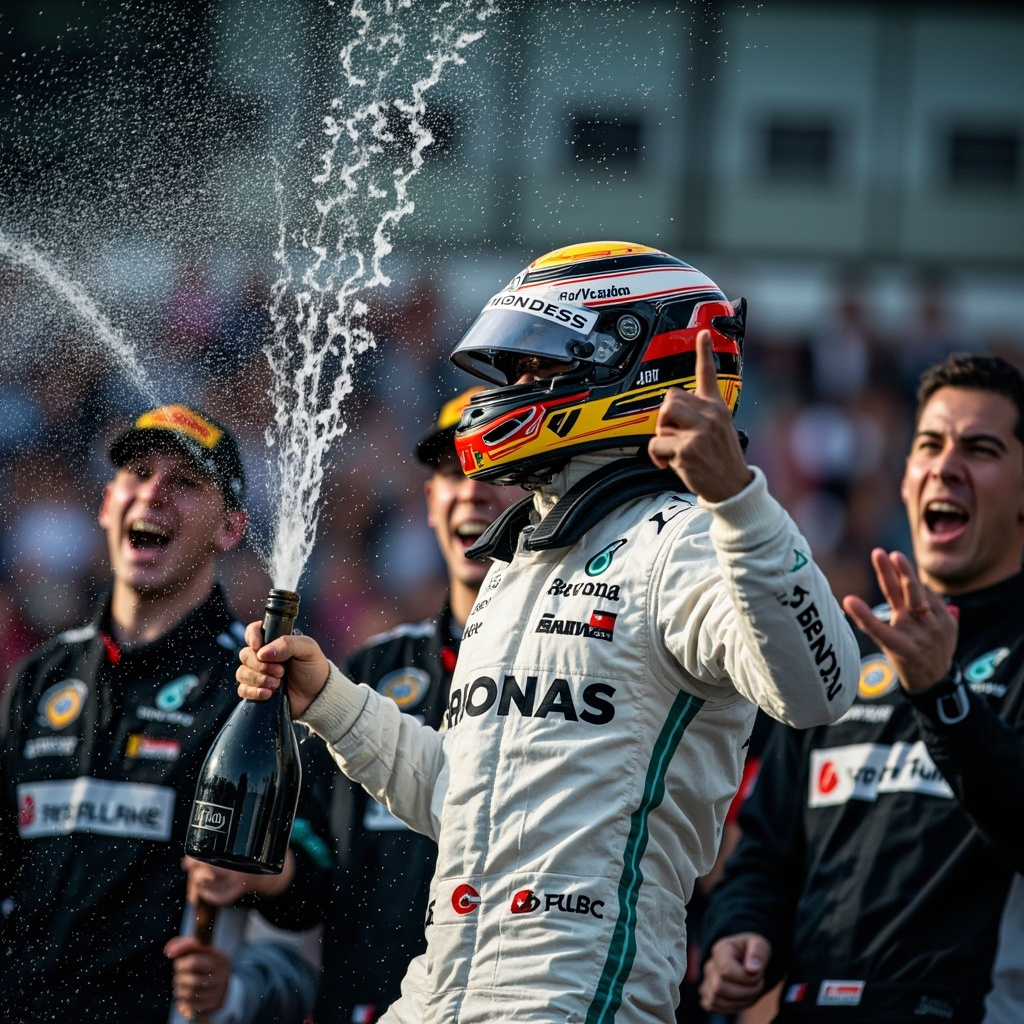
Kimi Antonelli won the Chinese Grand Prix at 19, his first-ever F1 victory — and Mercedes now has a teenager doing what Lewis Hamilton used to do, only cheaper.
MSM Perspective
Formula1.com and Sky Sports report Mercedes' back-to-back 1-2 finishes as the defining early narrative of F1's radical 2026 regulations era.
X Perspective
F1 Twitter is comparing Antonelli's maiden win to Verstappen's early career and debating whether Mercedes has accidentally built the most dominant car since 2014.
The sequence of events deserves to be stated plainly, because it is genuinely remarkable. In Melbourne on March 8, George Russell won the Australian Grand Prix from pole position, with his Mercedes teammate Kimi Antonelli finishing second. One week later in Shanghai, Antonelli — who is 19 years old, who was racing go-karts four years ago, who replaced a seven-time world champion — won the Chinese Grand Prix from pole, with Russell second. Mercedes 1-2. Twice. The team that spent three years building cars that made Lewis Hamilton visibly miserable now appears to have built the best machine on the grid.
This paper noted last week that Mercedes had dominated the first two races of F1's radical new era, calling Antonelli's rise premature to judge. It is still premature to judge. But the data set is becoming more persuasive with each passing Sunday.
Antonelli's Shanghai victory carried a particular weight. He took pole position on Saturday — becoming, again, the youngest pole-sitter in Formula 1 history — and converted it into a lights-to-flag win on Sunday. He added fastest lap. The motorsport commentariat has a term for this: a hat trick. Antonelli is the youngest driver ever to achieve one on his maiden victory. The statistics cascade like this because he is 19 and everything he does at this level is, by definition, the youngest instance of itself. [1]
The Hamilton Replacement
The elephant in every Mercedes debrief is the man who is no longer there. Lewis Hamilton left for Ferrari over the winter, ending a partnership that produced six of his seven world championships. The move was supposed to revitalize Hamilton's career and leave Mercedes scrambling to replace the irreplaceable. Instead, Hamilton finished third in Melbourne and fourth in Shanghai. Ferrari's car is quick but erratic, and Hamilton — the most decorated driver in the sport's history — is watching a teenager do the job he left behind, and do it more effectively than he managed in his final Mercedes seasons. [1][2]
This is not Hamilton's fault. The 2026 regulations are the most comprehensive technical overhaul Formula 1 has undergone in a generation: new aerodynamic rules emphasizing active surfaces, a dramatically revised powertrain with greater electrical output, and tire specifications that reward a different driving style. Mercedes read the regulations correctly. Ferrari, apparently, did not. Hamilton traded a winning car for a losing one. The irony requires no embellishment. [2]
What the Regulations Changed
The 2026 cars are fundamentally different machines. Active aerodynamics — adjustable bodywork elements that reconfigure during a lap — are legal for the first time. The electrical component of the hybrid power unit has been significantly increased, while the internal combustion engine has been simplified. The combined effect produces cars that are lighter, more electrically dependent, and aerodynamically more complex than anything the sport has seen.
Mercedes' advantage appears to be concentrated in two areas: their power unit's electrical deployment strategy and their interpretation of the active aerodynamic regulations. Their car changes shape more aggressively than any rival on the straights, reducing drag in a way that competitors have not yet matched. Whether this advantage is structural — baked into the design philosophy — or parametric — a matter of setup optimization that others will eventually replicate — is the question that will define the season. [1]
The Grid Ahead
The Japanese Grand Prix at Suzuka runs March 27-29. The circuit's high-speed corners and elevation changes will provide a more revealing test of the car's aerodynamic philosophy than Shanghai's power-dependent layout. If Mercedes dominates Suzuka, the conversation shifts from "early advantage" to "potential championship dominance" — territory the team has not occupied since the turbo-hybrid era of 2014-2020.
Two new constructors have joined the grid. Audi, absorbing the Sauber entry with Volkswagen Group resources, and Cadillac, entering as the 11th team and the first new constructor since Haas in 2016. Neither has threatened the established order in the opening rounds. Both are building for the medium term. [2]
Antonelli, meanwhile, has a contract through 2028. He is 19. He has won one race. The comparisons to Max Verstappen's prodigious early career are inevitable and, for now, premature. But the trajectory is there. Mercedes spent $400 million developing this car. They spent considerably less developing the teenager who drives it. The return on investment, at this early stage, is asymmetric in a way that makes accountants smile.
-- CHARLES ASHFORD, London
Sources & X Posts
News Sources
X Posts