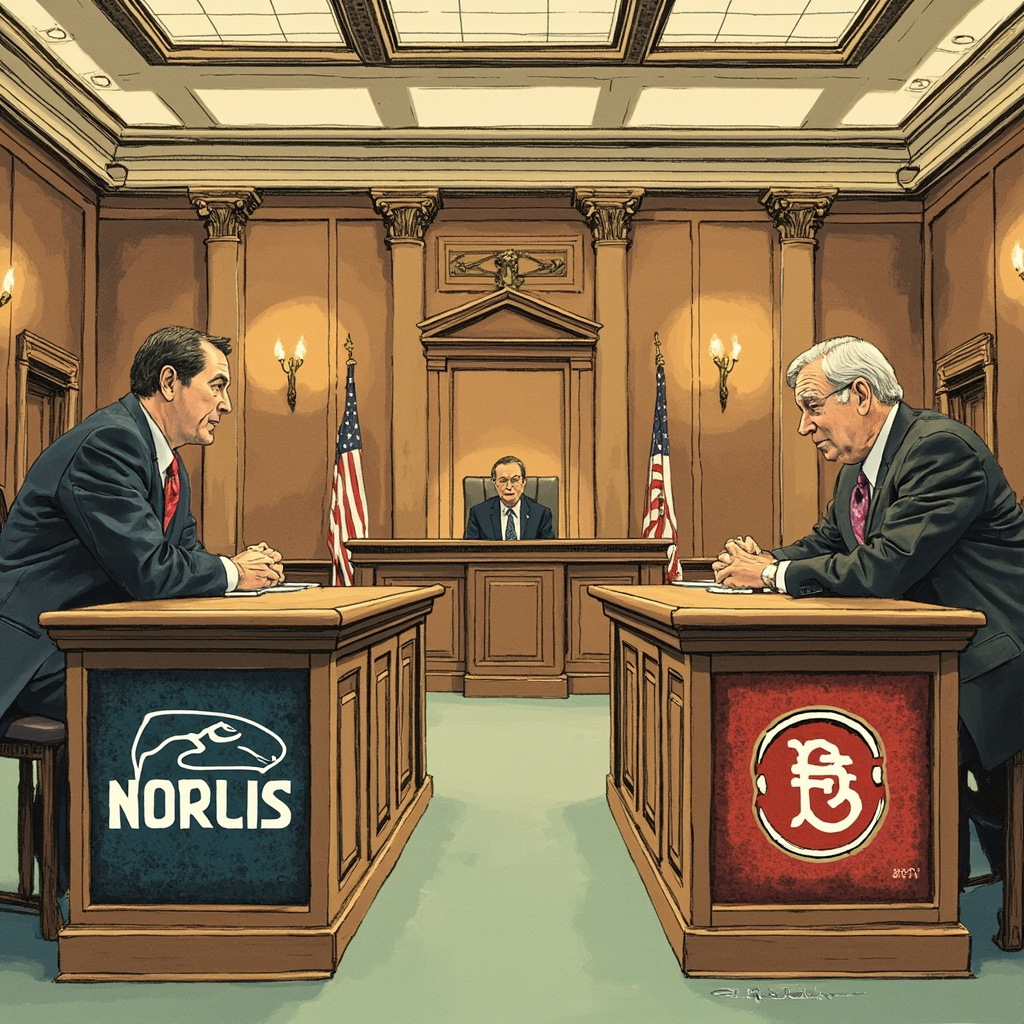
TL;DR
The NCAA filed a trademark lawsuit against DraftKings four days into a tournament generating $3.3 billion in wagers — the contradiction is the story.
MSM Perspective
ESPN reports the NCAA is seeking an emergency TRO against DraftKings over 'March Madness' trademarks, while the Guardian frames the suit as a control fight amid record wagering.
X Perspective
X is calling the NCAA's DraftKings lawsuit performative brand policing from an organization that profits from the very betting culture it claims to oppose.
The National Collegiate Athletic Association filed a federal lawsuit against DraftKings on March 20 — the same day the first round of the men's basketball tournament tipped off, the same week the American Gaming Association projected a record $3.3 billion in legal tournament wagers, and less than three months after federal prosecutors indicted 26 people in a point-shaving scandal involving 39 college basketball players. [1] The timing is either exquisite or absurd, depending on how one reads the NCAA's relationship with the gambling industry it simultaneously feeds and fights.
This paper noted last edition that the tournament's integrity problem runs deeper than any single scandal — that $3.3 billion in wagers and 39 indicted players occupy the same ecosystem, and that the NCAA's regulatory posture amounts to an antenna rather than a solution. The DraftKings lawsuit does not contradict that assessment. It refines it. The NCAA is not trying to stop gambling. It is trying to control who profits from the brand.
The complaint, filed in the U.S. District Court for the Southern District of Indiana, accuses DraftKings of trademark infringement for using the terms "March Madness," "Final Four," "Elite Eight," and "Sweet Sixteen" in its betting promotions and marketing materials. The NCAA is seeking an emergency temporary restraining order, a preliminary injunction, and unspecified damages. [2]
The Trademark Argument
The NCAA's legal position is not frivolous. "March Madness" has been a registered trademark since 1989, jointly owned by the NCAA and the Illinois High School Association. "Final Four" has been protected since 1995. The NCAA spends millions annually policing unauthorized use, and courts have consistently upheld its rights. [3]
DraftKings' defense, articulated in a public statement, is that its use of these terms constitutes fair use — descriptive references to a publicly known sporting event rather than an attempt to imply NCAA endorsement. Sports law attorney Darren Heitner noted that the case turns on whether DraftKings used the trademarks "as a source identifier" or merely as descriptive terms. The distinction is legally significant and commercially enormous. [4]
The National Law Review characterized the suit as a "fight years in the making," noting that the NCAA has sent cease-and-desist letters to multiple sportsbook operators since 2022 without filing suit. DraftKings, the largest publicly traded sportsbook operator in the United States, appears to have been chosen as the test case. [5]
The Money Contradiction
Here is where the story turns from trademark law into something more revealing. The NCAA does not operate in isolation from the betting industry. CBS and Turner Sports, which hold the tournament broadcast rights through a deal worth approximately $8.8 billion over eight years, sell advertising to sportsbook operators during tournament broadcasts. FanDuel, DraftKings' primary competitor, ran ads during this year's first-round games. [1]
Gambling Insider reported that 43 percent of digital sports betting advertisements shown to American consumers in January and February 2026 lacked responsible gambling messaging — a figure the NCAA has cited in its advocacy for stricter state-level regulation. But the NCAA has not sued the networks for airing those ads. It has not sued FanDuel for similar trademark usage. It has sued DraftKings, the market leader, in a case narrowly constructed around brand control rather than the systemic gambling crisis the NCAA claims to oppose. [6]
The 39 players indicted in January were not corrupted by trademark infringement. They were corrupted by a market that pays them nothing while generating billions in revenue from their labor. The fixers who recruited them did not need the words "March Madness" to find their marks. They needed players who were broke, and they found 39 of them.
What the Lawsuit Is Really About
The NCAA's lawsuit is about control — control of the tournament brand at a moment when that brand has become the most valuable property in American sports gambling. The $3.3 billion wagered on March Madness this year exceeds the Super Bowl handle. It exceeds the combined wagering on the NBA and NHL playoffs. The tournament is the industry's annual showcase, and the NCAA wants to ensure that it, not DraftKings, sets the terms of engagement. [6]
DraftKings responded by pointing to its compliance with state gaming regulations and its existing responsible gambling protocols. The company did not, notably, apologize for using the phrase "March Madness." It is difficult to apologize for something that everyone in America says for three weeks every March.
The case will proceed in federal court. The TRO hearing has not yet been scheduled. Meanwhile, the tournament continues, the wagers continue, and somewhere in America, a college basketball player making no salary is being watched by a fixer who does not care about trademarks.
-- AMARA OKONKWO, Lagos
Sources & X Posts
News Sources
X Posts