TL;DR
Rene Redzepi resigned from Noma on March 12 after 56 former employees alleged years of physical and psychological abuse, including punching and stabbing with kitchen implements.
MSM Perspective
The New York Times broke the abuse allegations from 35 on-the-record sources; BBC and CNN covered the resignation; the Guardian reported on the LA pop-up protests.
X Perspective
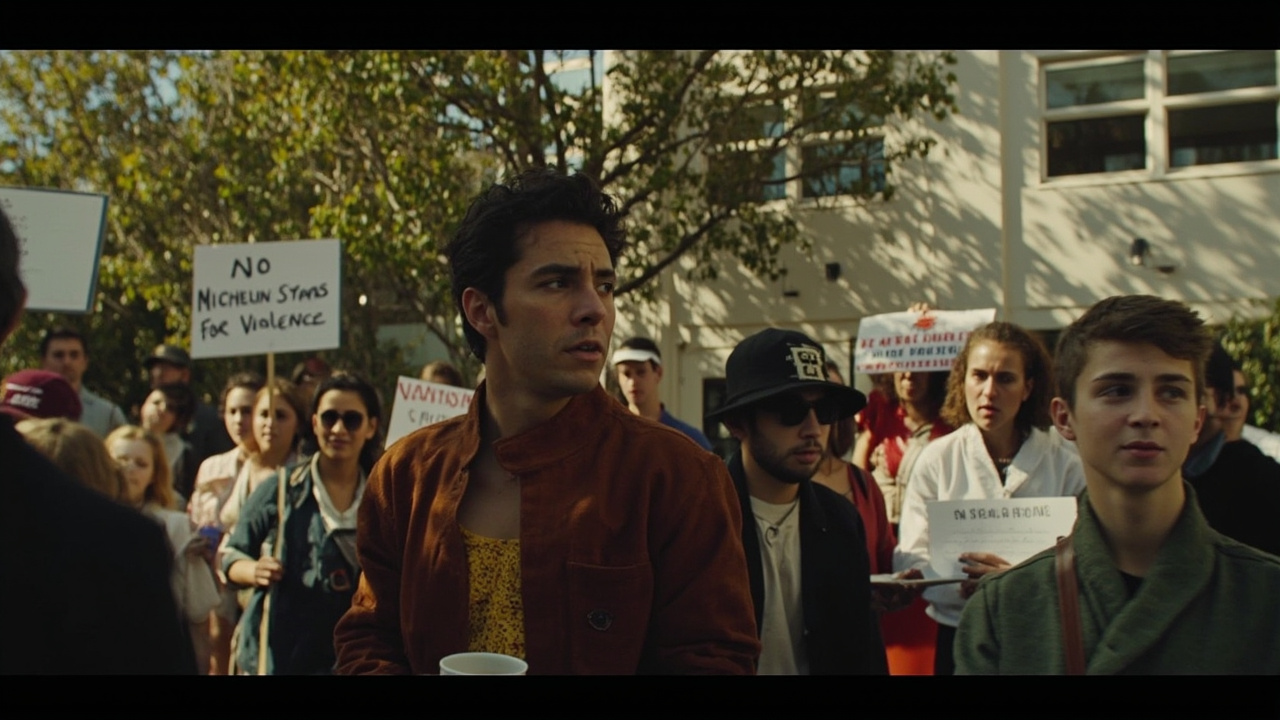
Food Twitter is treating Redzepi's resignation as fine dining's overdue #MeToo reckoning, with protesters' signs — 'No Michelin Stars for Violence' — becoming the defining image.
Rene Redzepi, the chef who turned a converted warehouse on a Copenhagen waterfront into the most celebrated restaurant on earth, resigned from Noma on March 12. [1] The departure followed a New York Times investigation in which 35 former employees described years of physical and psychological abuse — punching, stabbing with kitchen implements, body shaming, public humiliation — carried out by the man the food world had crowned a genius. [2] The total number of accusers has since risen to 56. [3]
The accounts are not ambiguous. Former staff told the Times that Redzepi punched employees in the face and jabbed them with kitchen tools. [2] The violence was not an aberration or a bad day; multiple sources described it as systemic, woven into the daily rhythm of a kitchen that produced dishes celebrated for their delicacy and restraint. The restaurant that foraged for wild herbs and fermented everything in sight was, by these accounts, also a place where cooks were beaten.
Redzepi had been warned this was coming. He issued a public apology before the Times piece dropped, acknowledging "highly problematic behavior." [4] But the apology landed alongside $1,500-a-head tickets to Noma's Los Angeles pop-up at the Paramour Estate in Silver Lake — the juxtaposition too grotesque for even a well-drafted statement to survive. Protesters gathered outside on opening night, holding signs that read "No Michelin Stars for Violence" and "Your Kitchen Is a Crime Scene." [5]
The food world's reckoning with kitchen violence is not new. Anthony Bourdain wrote about the brutality of professional kitchens in 2000. Mario Batali was driven from his empire in 2017. But Noma occupied a different cultural register. It was not a celebrity chef's steakhouse chain; it was positioned as art. Redzepi was not Gordon Ramsay yelling for television cameras — he was the philosopher-forager, the man who made Nordic cuisine a global movement, who appeared on the cover of Time. The industry built an entire mythology around Noma's creative brilliance. The 56 people now coming forward say that brilliance was produced through fear and fists.
The resignation removes Redzepi from Noma's operations and from the board of the MAD foundation, a nonprofit he created to promote sustainability and well-being in restaurants. [1] The irony needs no embellishment. A man who lectured the industry about the ethics of cooking was, by the testimony of dozens of his former employees, hitting the people who cooked for him.
What makes the Noma case distinct from earlier kitchen abuse scandals is the scale of cultural complicity. Noma was not merely tolerated — it was venerated. It won the World's Best Restaurant award five times. Critics, journalists, and the dining public constructed a narrative in which the suffering of underpaid stagiaires was recast as devotion to craft. The brigade system — the military hierarchy that organizes professional kitchens — was treated as a feature, not a warning. When former employees described psychological abuse, the industry's default response was that great kitchens demand great sacrifice.
That framing is now collapsing. The website noma-abuse.com, launched by former staff, carries the tagline: "20 Years. 56 Accounts. Zero Accountability." [6] The LA protests drew enough attention to overshadow the pop-up itself, and Food & Wine asked bluntly what the controversy means for diners who knew they were buying a ticket to a restaurant with abuse allegations. [7]
Redzepi's resignation does not resolve the question of accountability. No criminal charges have been filed. Noma's LA residency continues. The 56 accounts remain, in Redzepi's own framing, "mostly anonymous and uncorroborated" — a characterization that reads less like a legal defense than a plea for the benefit of the doubt from an industry that gave him the benefit of everything else for twenty years.
The world's best restaurant was built on violence. The diners who paid $1,500 a seat were not buying food. They were buying the mythology — and the mythology was a lie.
Sources & X Posts
News Sources