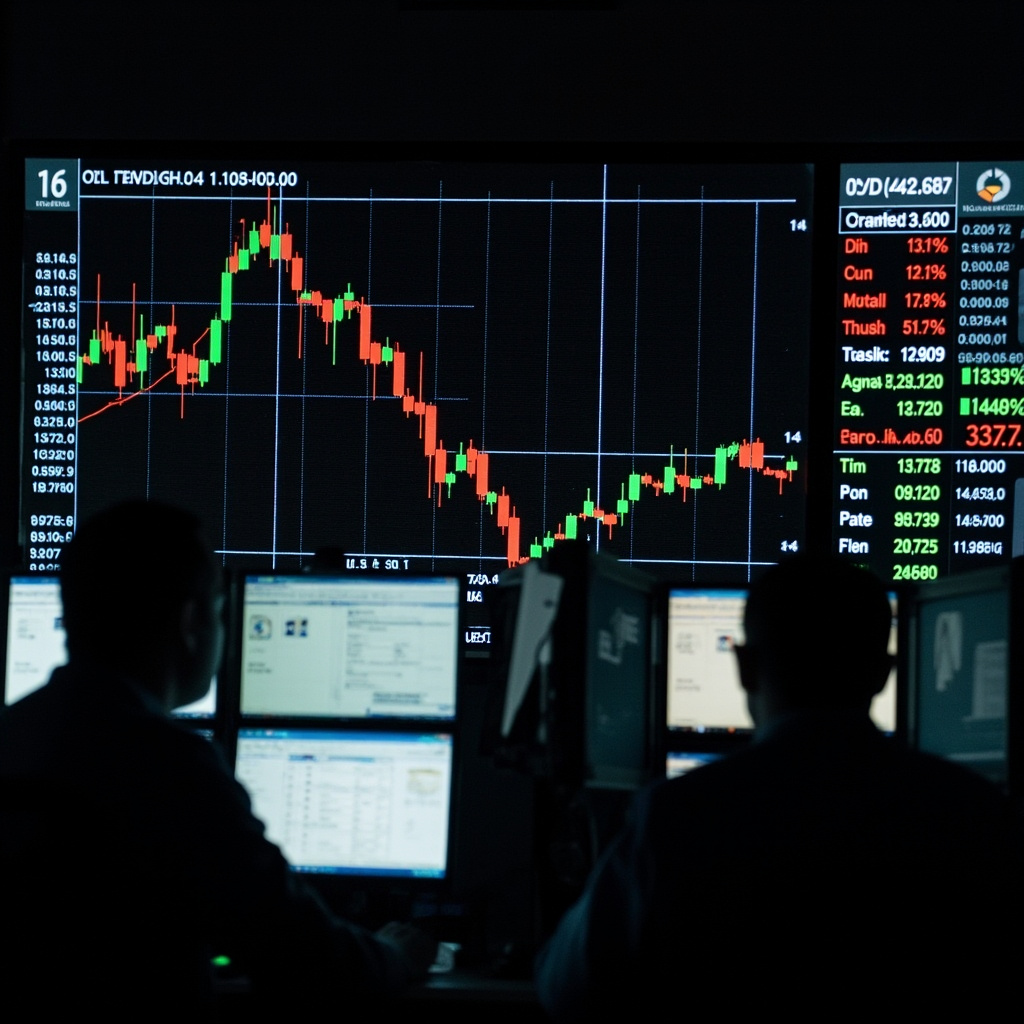
Brent crude fell as much as 15 percent on Monday morning, touching $96 a barrel, after President Trump announced a five-day pause on strikes against Iran's energy infrastructure. By mid-afternoon, it had climbed back to $104. The reason for the reversal was simple: Iran said there was no deal to pause. [1]
The session was the most violent in oil markets since March 2020. When this paper reported Sunday that Brent had reached $113 as Monday's deadline loomed, the trajectory appeared fixed — the only question was how high. Trump's Truth Social post at 6:14 a.m. Eastern, announcing a "productive" diplomatic channel and a five-day halt on power-plant strikes, obliterated that trajectory in minutes. West Texas Intermediate dropped 10.3 percent to $88.13. Brent settled at $99.94, its first close below $100 since March 11. [2]
Then Iran's foreign ministry issued a terse statement: there were no negotiations, no channels, and no pause on its end. The Revolutionary Guard added that military operations would continue "regardless of enemy declarations." Brent immediately reversed, climbing four dollars in afternoon trading to close the extended session near $104. [3]
Goldman Sachs, which had warned Friday of $130 oil if Hormuz remained closed, published a revised note Sunday evening raising its 2026 average Brent forecast to $85 from $77 — an acknowledgment that triple-digit prices may persist even if the immediate crisis resolves. The bank called the Hormuz disruption the "largest-ever supply shock" to oil markets and warned that the war premium, estimated at 45 to 50 percent above pre-conflict levels, would not fully unwind without a verified ceasefire. [4]
The arithmetic is clarifying. Pre-war Brent sat around $70-71. Today's $104 close implies a war premium of roughly $33-34 per barrel. Even Goldman's averaged-down forecast of $85 assumes prices remaining well above anything the global economy experienced in 2024 or 2025. For European refineries dependent on Middle Eastern crude, the pass-through to consumer fuel prices is immediate. For American drivers, the national gasoline average has crossed $4 per gallon, up from $3.12 before the first strike. [5]
The structural problem is that neither side's pause rhetoric reduces the actual supply disruption. The Strait of Hormuz remains functionally closed. Tanker traffic through the strait is down more than 90 percent from pre-war levels. Insurance underwriters continue to refuse war-risk cover for Gulf-bound vessels. The oil that cannot transit Hormuz does not reach refineries regardless of whether Washington and Tehran are exchanging diplomatic pleasantries or missile coordinates.
Monday's volatility exposed a market that wants badly to price in de-escalation but keeps being reminded that the fundamentals have not changed. A five-day pause on strikes does not reopen a waterway. An Iranian denial does not close it further. The price simply oscillates around the reality that roughly 20 percent of global oil supply remains trapped behind a military standoff, and no one with the power to end that standoff has offered terms the other side would accept.
The August futures curve tells the longer story. Deferred contracts are trading near $97, suggesting the market still believes resolution will arrive — eventually. But the backwardation between front-month and deferred contracts widened on Monday, meaning traders are paying more, not less, for near-term delivery. That is not a market pricing peace. It is a market pricing survival.
-- HENDRIK VAN DER BERG, Brussels