TL;DR
The Pentagon's $200 billion Iran war supplemental is reshaping the defense industry, but production bottlenecks and shifting warfare mean the biggest winners may not be the usual suspects.
MSM Perspective
The Wall Street Journal flagged the paradox of record defense spending failing to lift most stocks, while Barron's and Forbes tracked which contractors actually benefit from the supplemental.
X Perspective
X traders are split between legacy defense bulls riding Lockheed's 38% surge and contrarians arguing the real money is in drones and AI, not F-35s.
Two hundred billion dollars is a number large enough to reshape industries, and the Pentagon's Iran war supplemental request is doing exactly that. But the question Wall Street cannot stop asking — who actually collects? — has produced answers far less obvious than the headline figure suggests.
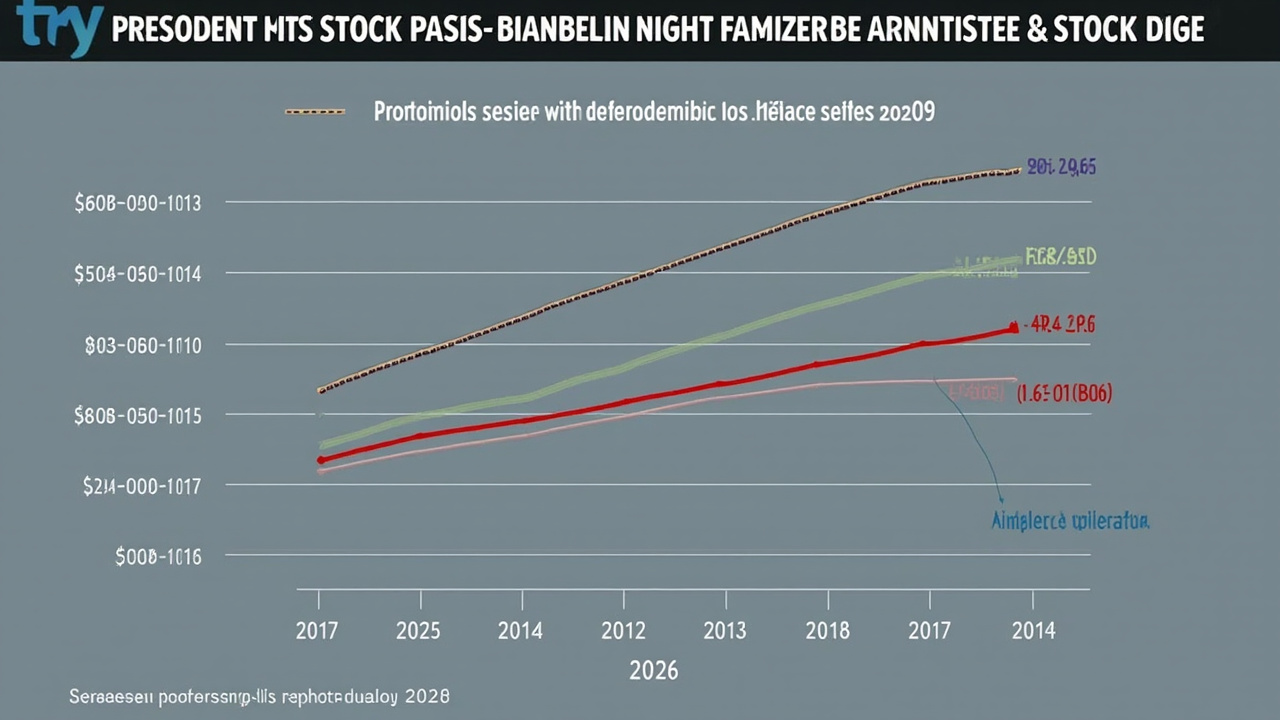
Lockheed Martin has surged 37 to 38 percent in 2026, a run that makes it the envy of the S&P 500's industrial sector [1][4]. RTX, the company formerly known as Raytheon, and General Dynamics have posted strong gains of their own [5]. The logic seems straightforward: war means contracts, contracts mean revenue, revenue means stock appreciation. Except the market has not cooperated with the syllogism.
As the Wall Street Journal reported, defense-contractor stocks have broadly underperformed expectations since hostilities began [2]. The disconnect is mechanical. Munitions stockpiles, depleted by months of strikes on Iranian targets, cannot be replenished by writing checks. Production lines for precision-guided weapons run at fixed capacity. Lockheed's F-35 assembly in Fort Worth does not accelerate because a supplemental bill clears Congress. The money is authorized; the factories are not ready.
Defense executives gathered at the White House in early March to discuss exactly this constraint [6]. The meeting's agenda, per Reuters, centered on accelerating production timelines and identifying bottlenecks in the supply chain for critical munitions. The Pentagon's comptroller has signaled that the supplemental will fund a mix of "new things" and legacy systems [7] — bureaucratic language that conceals a genuine strategic pivot.
The "new things" category is where the supplemental gets interesting. Palantir, the data-analytics firm that has spent years positioning itself as the Pentagon's preferred AI contractor, stands to capture a significant share of intelligence and targeting spending [3]. CrowdStrike, better known for corporate cybersecurity, has defense applications that align with the military's growing emphasis on network warfare [10]. Neither company manufactures a single missile, yet both may extract more margin per dollar of the supplemental than traditional primes.
CNBC noted the initial jump in defense stocks when U.S.-Iran exchanges of fire began in early March [8], and Air & Space Forces Magazine tracked the subsequent plateau [9]. The pattern is instructive. Markets price in the obvious quickly — Lockheed builds the jets, buy Lockheed — then stall when they realize that building jets faster requires years of capital expenditure, workforce training, and supply-chain development that no supplemental can conjure overnight.
Boeing, notably, has lagged the sector with gains of roughly 5 percent [4]. The company's defense division remains hobbled by quality-control issues and fixed-price contracts signed before inflation surged. General Dynamics and Howmet Aerospace, by contrast, have outperformed, their portfolios better aligned with the munitions and components the Pentagon needs now rather than the platforms it will need in five years [5].
The real story of the $200 billion may ultimately be one of industrial transformation. The Pentagon is expected to release a list of underperforming contractors — a move that would have been unthinkable a decade ago, when the defense-industrial base was treated as too consolidated to shame publicly. Smaller firms specializing in drones, autonomous systems, and AI-driven logistics are positioning themselves as alternatives to the primes, and the supplemental's "new things" language gives them a bureaucratic foothold.
Investors parsing the supplemental for simple winners and losers will find the exercise frustrating. The money is real. The production capacity to spend it efficiently is not. And in that gap between appropriation and execution, fortunes will be made by companies most people have never heard of — and lost by giants whose factories cannot keep pace with the checks Washington is writing.
-- DAVID CHEN, Shanghai
Sources & X Posts
News Sources
X Posts