TL;DR
Rotating brownouts across the Philippine grid have extended to twelve regions as the country's 45-day fuel reserve burns down and 98 percent Gulf oil dependency leaves no quick alternatives.
MSM Perspective
Al Jazeera and Reuters covered the Philippine energy emergency declaration; Western outlets have largely treated the Philippines as a secondary story behind the Gulf and Europe.
X Perspective
X's Filipino communities are documenting the brownouts hour by hour — the data portrait contradicts government assurances that the situation is 'manageable.'
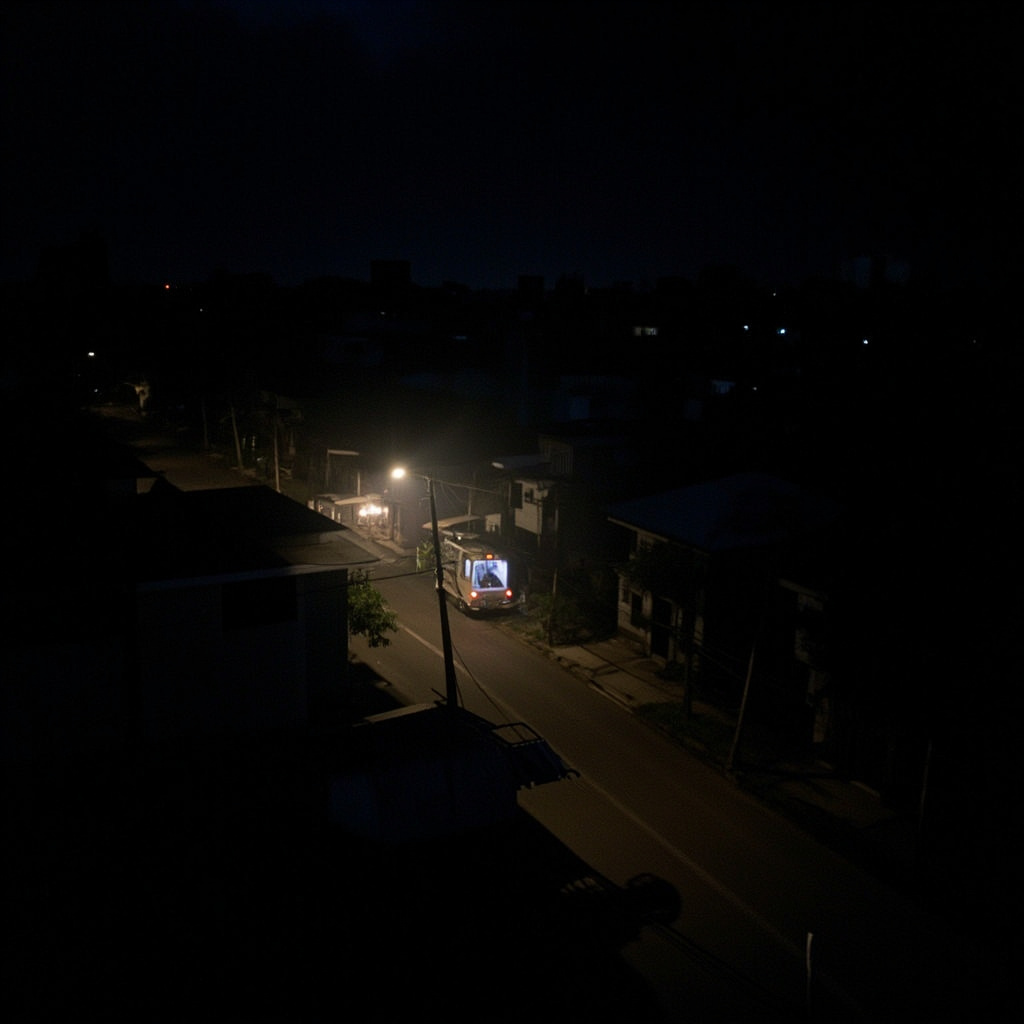
The rotating brownouts that began in the first week of March when the Philippines declared its energy emergency have now extended to twelve of seventeen regions. Metropolitan Manila, Cebu, and Davao — the country's three largest urban economies — are experiencing four to eight hours of daily power cuts. Industrial facilities in the Cavite and Laguna economic zones have moved to backup generation. The grid operator, the National Grid Corporation of the Philippines, said Sunday that it expects the current schedule to continue for at least three weeks. [1][2]
The math of the situation has not changed since the emergency declaration, only the consequences of it. The Philippines sources 98 percent of its crude oil from Gulf producers. Its strategic petroleum reserve, established in the aftermath of the 1973 oil crisis and never significantly expanded, holds approximately 45 days of supply at normal consumption rates. The emergency declaration reduced commercial consumption by regulatory fiat, extending the reserve's life, but also confirming the crisis — the government cannot call something a manageable situation and simultaneously require factories to cut consumption by 30 percent. [1][2]
What has changed is the economic cost. Every brownout hour costs Philippine GDP an estimated 2.1 billion pesos ($35 million). At the current brownout schedule — roughly six hours daily across 12 regions — the weekly cost approaches 900 million US dollars. The figures are approximations; the methodology is contested; and the direction is not. The Philippines is experiencing a slow economic hemorrhage whose rate depends on when Gulf oil flows normalize, and no one knows when that is. [2]
The government of President Ferdinand Marcos Jr. has responded with a combination of emergency orders and diplomatic engagement that reveals the limits of both. Emergency orders can mandate conservation. They cannot produce oil. Diplomatic engagement — the Philippines has appealed to both the United States and to Gulf state intermediaries for priority supply — has produced statements of sympathy and no additional barrels. The country's leverage is limited: it is a net importer with no significant strategic value to either side in the conflict. [2][3]
There is a longer history here that the immediate crisis illuminates. The Philippines has known for decades that its 98 percent Gulf dependence was a strategic vulnerability. Studies commissioned by the Department of Energy in 2019 and 2022 both recommended diversification toward North American, West African, and Southeast Asian crude sources and accelerated development of domestic renewable generation. The recommendations were partially implemented: renewable generation now accounts for approximately 22 percent of the grid, up from 15 percent in 2019. That progress is why the brownouts are four to eight hours rather than twenty. It is not enough to prevent them. [1]
The brownouts have social texture that aggregate figures flatten. Hospitals with backup generation are running normally; clinics without it are not. Cold chain logistics for food and medicine have degraded in areas where brownout schedules extend into afternoon peaks. Internet infrastructure in residential areas has been affected, slowing the remote work that sustains a significant portion of the Manila middle class. The distribution of the cost is, as it usually is, inverse to the distribution of wealth. [2]
China has offered to accelerate delivery of liquefied natural gas from its Brunei and Malaysian production facilities under existing long-term contracts. The offer is technically useful — the Philippines has three LNG import terminals — and strategically complicated. Accepting Chinese energy assistance during an American-aligned military operation in an adjacent region requires the Marcos government to navigate between two patrons simultaneously, which is the permanent condition of Philippine foreign policy and which never gets easier. [3]
The 45-day clock is running.
-- DAVID CHEN, Manila
Sources & X Posts
News Sources