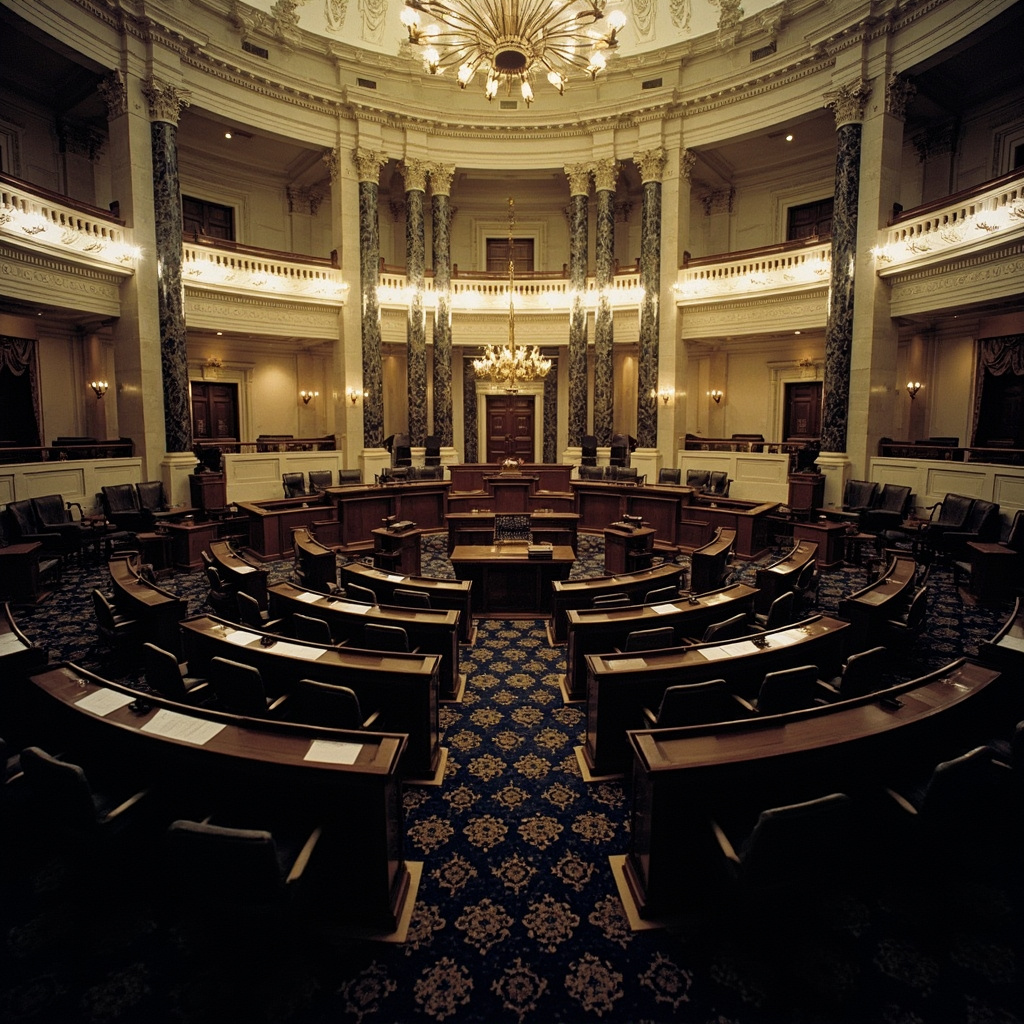
On March 18, Senate Republicans blocked a vote on war authorization for Iran. [1] The vote was 53-47, a party-line kill of the war powers resolution that would have required congressional approval for further military strikes.
Since that vote, the war has expanded. Iran fired missiles at Diego Garcia in the Indian Ocean. The Pentagon deployed 2,500 more Marines from California. CBS confirmed planning for an 82nd Airborne ground operation. CENTCOM published an 8,000-target strike assessment.
This paper reported yesterday that the administration's war narrative was cracking under the weight of its own witnesses. The AUMF block is the legislative companion to that story. Congress refused to authorize what is already happening, then refused to stop it.
Senator Chris Murphy called the silence what it is. "The Senate must debate an authorization for the use of military force," he said in a statement. "The president is waging an illegal war." [2]
Murphy is correct on the constitutional question and irrelevant on the political one. The Senate does not lack the power to force a debate. It lacks the votes. The 53 senators who blocked the resolution chose a specific position: the war may proceed without authorization, and the Senate need not say whether it approves or disapproves.
That is not oversight. It is a deliberate absence of position, and it serves the executive perfectly. A president waging a war without congressional authorization faces one real constraint: Congress choosing to impose one. When the Senate votes not to impose that constraint, the constitutional gap widens by an act of omission.
The practical consequence is straightforward. There is no legal ceiling on what this war can become. No authorization sets limits. No war powers resolution restricts expansion. The president has the military apparatus of a war and none of the legislative scaffolding that would define its scope, timeline, or conditions for ending.
That arrangement has a name. It is not a policy debate. It is a blank check.
-- SAMUEL CRANE, Washington