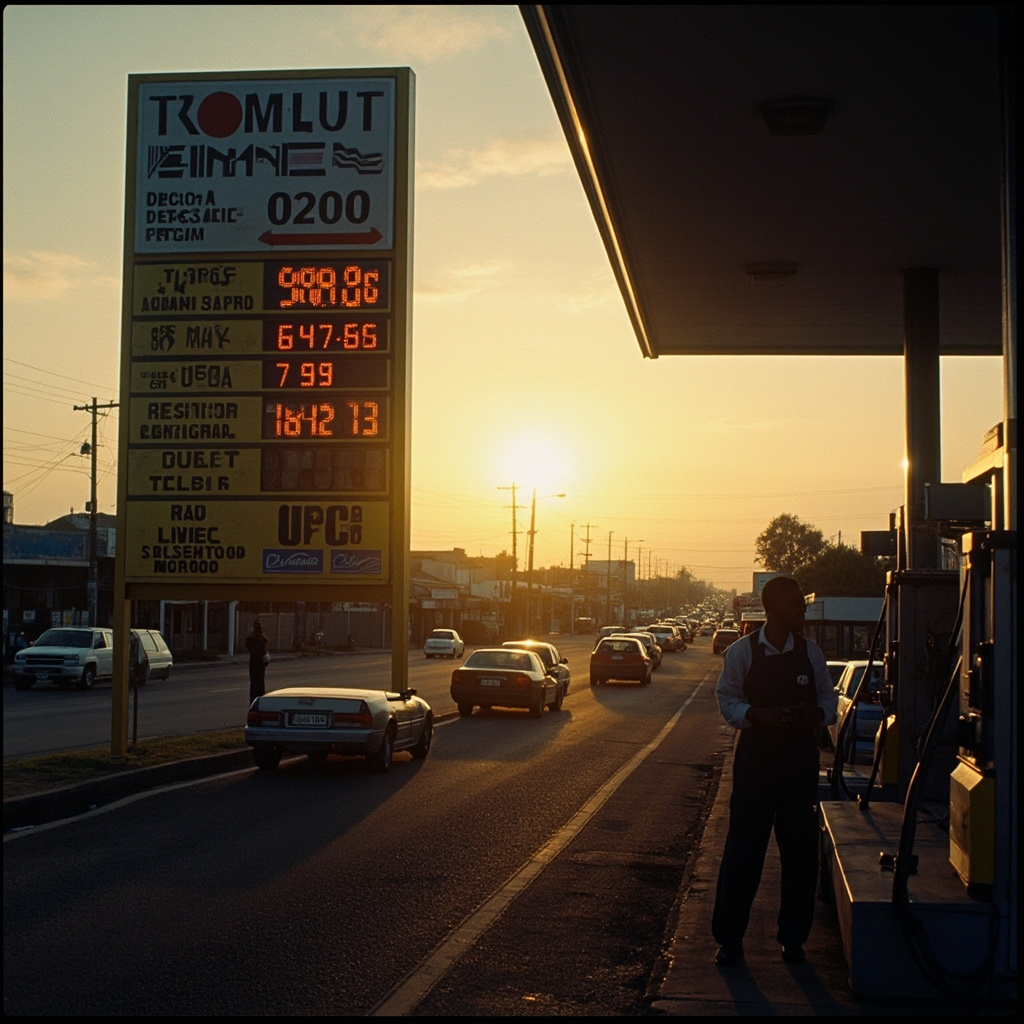
At midnight on Wednesday, April 1, South Africa's April fuel prices took effect. Petrol rose by approximately R3.06 per litre after the government's levy cut — before the cut, the increase would have been approximately R6 per litre. Diesel rose by as much as R8 to R10 per litre, depending on grade and region. [1] These are the largest single-month fuel price increases in South African history. They are not caused by anything that happened in South Africa. They are caused by a war 9,000 kilometers away.
The arithmetic is straightforward and merciless. Brent crude, the global oil benchmark, averaged $72 per barrel in January 2026. By late March, it was above $110. [2] The increase — approximately 53% in two months — is entirely attributable to the US-Israeli war on Iran and the resulting disruption of shipping through the Strait of Hormuz, through which roughly 20% of the world's oil supply passes. South Africa imports all of its crude oil. The international price determines the domestic price, with a lag of approximately four weeks.
The lag expired on April 1. The pump price now reflects the war.
For the average South African motorist filling a 50-litre tank, the cost increase is approximately R275 to R300 per fill — roughly R600 more per month for someone who fills twice. [3] For a country where the median household income is approximately R7,500 per month, R600 represents 8% of total income. For the poorest households, which spend a larger share of income on transport, the figure is higher.
The government moved to cushion the blow. Finance Minister Enoch Godongwana announced a temporary R3 per litre fuel levy cut, effective from April 1 to May 5. [4] The measure reduces the effective increase to R3.06 for petrol — still the third-largest single-month increase on record, but survivable. The levy cut costs the treasury approximately R4.5 billion per month in foregone revenue, money that will not fund roads, schools, or clinics.
Diesel received no levy relief. Commercial transport, agriculture, mining, and manufacturing all run on diesel. The R8+ per litre increase flows directly into the cost of food, construction materials, and goods transport. Economists estimate the fuel shock will add 1.5 to 2 percentage points to South Africa's inflation rate over the next three months. [5] The South African Reserve Bank, which had been cautiously cutting interest rates, is now expected to pause or reverse course.
The distributional cruelty is precise. South Africa's wealthiest citizens drive fuel-efficient vehicles, live close to work, or can absorb the cost. The poorest citizens — domestic workers, informal traders, minibus taxi users — have no margin. The taxi industry, which moves an estimated 15 million passengers daily and runs entirely on minibus vehicles consuming 15 to 20 litres per 100 kilometers, faces fuel cost increases that will be passed directly to passengers in the form of fare hikes. [5]
None of this is South Africa's war. No South African policy contributed to it. No South African vote authorized it. No South African interest is served by it. Yet the economic consequences arrive at the pump with the same certainty as if the bombs were falling on Johannesburg.
This is what it means to be a net oil-importing country in a world where the largest military power can start a war in the world's most important oil corridor. The cost is globalized. The decision is not.
-- DARA OSEI, Johannesburg