TL;DR
Spring break meets a war, a government shutdown, and an Iranian general who just declared your beach resort a legitimate target.
MSM Perspective
The Guardian and Newsweek frame a 'perfect storm' of shutdown politics, fuel spikes, and war disruption converging on peak spring travel.
X Perspective
X is a rolling gallery of departure-board horror and gas-price fury, with @GasBuddyGuy's daily spending tallies becoming the war's household scoreboard.
Airlines for America projected that 171 million passengers would fly between March 1 and April 30 — a four percent increase over last year, roughly 2.8 million travelers passing through American airports every single day. [1] That number was calculated before Iran blocked the Strait of Hormuz, before jet fuel doubled in price, before an Iranian brigadier general went on state television to announce that "even parks, recreational areas and tourist destinations anywhere in the world will no longer be safe," and before the Transportation Security Administration ran out of money to pay the people who check your bags. [2] The projection stands anyway. Americans are going on spring break. The war is coming with them.
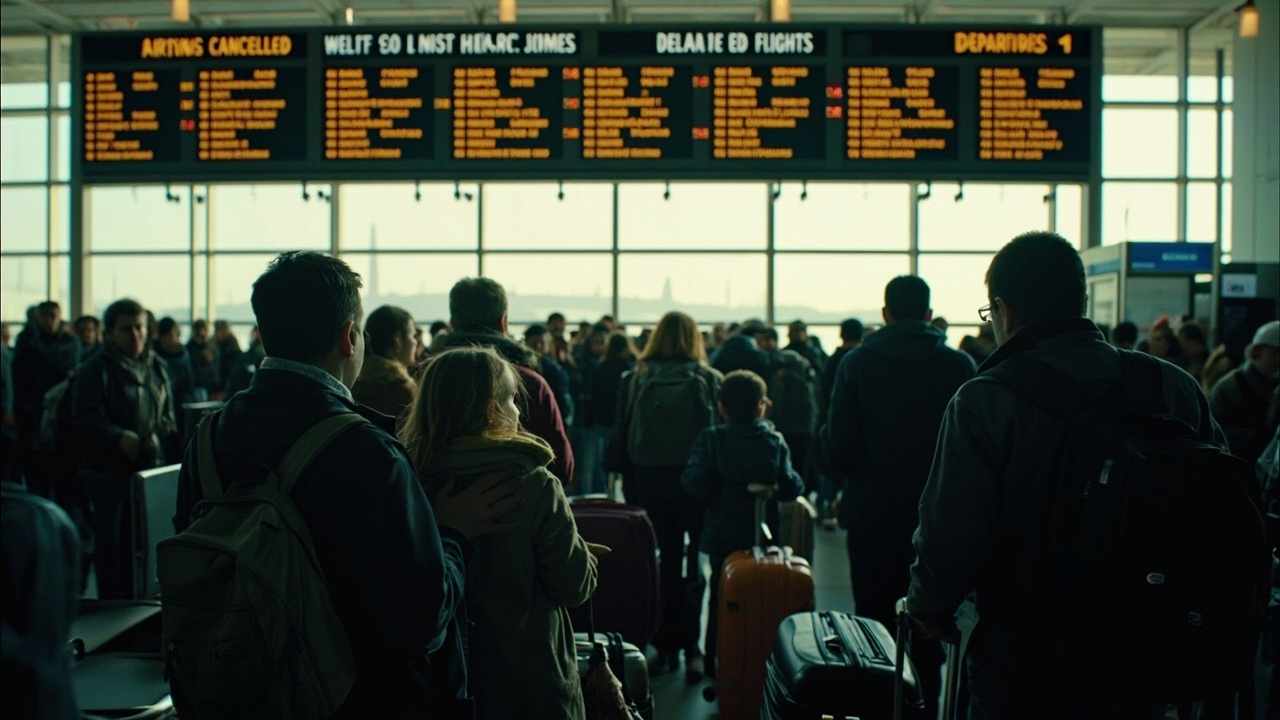
There is something profoundly surreal about watching a college sophomore from Wisconsin apply sunscreen at a gate whose departure board reads CANCELLED in the same red that flashes across CNN's war coverage. Yet this is the scene repeating across the country's busiest terminals. At Houston Hobby, TSA wait times have stretched past three hours. [3] At Minneapolis-St. Paul, a late-season snowstorm piled onto the chaos, stranding families in a terminal that already looked like a refugee camp in fleece. The Department of Homeland Security, which funds the TSA, has been unfunded since mid-February — collateral damage of a congressional standoff over immigration enforcement. More than ten percent of TSA officers missed work this past Wednesday. More than 350 have quit outright. [4]
The absurdity compounds. The partial government shutdown is a domestic crisis. The war is an international one. They have converged on the same bottleneck: the American airport in March.
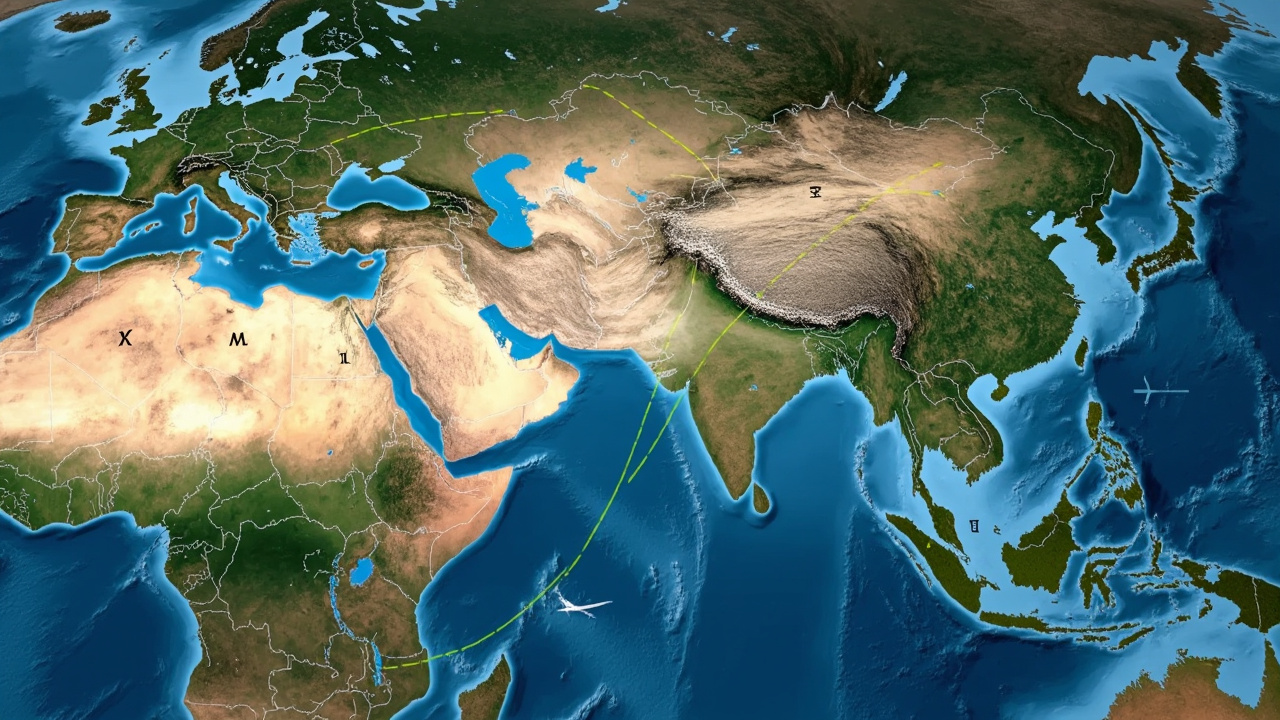
Start with what the war has done to the sky. Since fighting began, more than 21,000 flights worldwide have been cancelled. [5] Airlines rerouting around closed Middle Eastern airspace are adding up to two hours per flight and as much as $10,000 in operating costs once extra fuel burn, overflight fees, and wear are factored in. [6] British Airways has suspended flights to Dubai, Amman, Bahrain, and Tel Aviv through at least May. Scandinavian Airlines cancelled 1,000 flights. Air New Zealand cut its schedule for the next two months. Vietnam warned of cancellations from April. Thailand and China halted fuel exports to protect domestic supply. [7]
For American carriers, the arithmetic is punishing. Jet fuel accounts for more than a quarter of operating costs, and most U.S. airlines abandoned fuel hedging years ago — purchasing at market rates rather than locking in prices with futures. [6] That decision now looks like a man who cancelled his insurance the week before the flood. Jet fuel hit $157 per barrel in early March, up 58 percent from the prior week. Deutsche Bank called it an "existential threat" to the industry. [6] United CEO Scott Kirby warned passengers that fare increases "will probably start quick." [6]
And they are starting. On the ground, it is Patrick De Haan, the petroleum analyst who runs the GasBuddy account on X, who has become the war's unlikely household narrator. His daily dispatches land like small detonations: Americans spending $275 million more on gasoline than before the strikes. Then $300 million more. Then $350 million more. [8] The national average hit $3.93 a gallon on Friday, up 99 cents from a month ago. [9] For families driving to Panama City Beach or Destin — where local authorities have, in a touch of black comedy, banned alcohol on the beach during March — the gas pump is where the war announces itself most plainly. [1]
Then there is the threat that does not fit on a departure board. Iranian Brigadier General Abolfazl Shekarchi's televised warning — that following the strikes which killed former Supreme Leader Khamenei, no resort or tourist destination on earth should consider itself secure — landed during the week that American college students scatter to Cancun, Key West, and South Padre Island. [2] The Pentagon began making plans to deploy troops to Iran, contradicting President Trump's insistence that "I'm not putting troops anywhere." [2] The gap between the vacation and the war narrows to nothing.
Some travelers are adapting. Bookings to Portugal surged 42 percent in two weeks as passengers flee routes that once transited through Dubai or Doha. [7] Travel advisors counsel clients to build flexibility into every booking and resist the urge to cancel before airlines issue official guidance. [10] The advice sounds rational. It also sounds like instructions for living in a world that has stopped being predictable.
The real story is not the logistics. It is the texture of a country trying to maintain normalcy while the infrastructure of normalcy buckles. A mother in Boise, Idaho, refreshes the airline app at 5 a.m. to see if her family's flight to Maui still exists. A petroleum analyst on X tracks the daily cost of the war in gasoline. An unpaid TSA officer in Houston processes a line that will take three hours and tries not to think about rent. An Iranian general on state television tells the world that its beaches are no longer safe, and somewhere in Florida, a nineteen-year-old orders a frozen margarita and does not hear him.
This is what a war looks like when it reaches the people who did not start it, do not understand it, and cannot stop it. It looks like spring break, 2026.
-- LUCIA VEGA, São Paulo
Sources & X Posts
News Sources
X Posts