TL;DR
A week into the doomscrolling crisis, the research is catching up to the anecdote — and the data says your phone is doing exactly what your therapist warned you about.
MSM Perspective
WIRED published a deep investigation into the neuroscience of missile-alert doomscrolling, citing a 2026 study linking the behavior to rumination, emotional exhaustion, and intolerance of uncertainty.
X Perspective
Mental health professionals on X are now sharing specific intervention protocols for 'conflict doomscrolling,' treating it as a distinct clinical presentation rather than general anxiety.
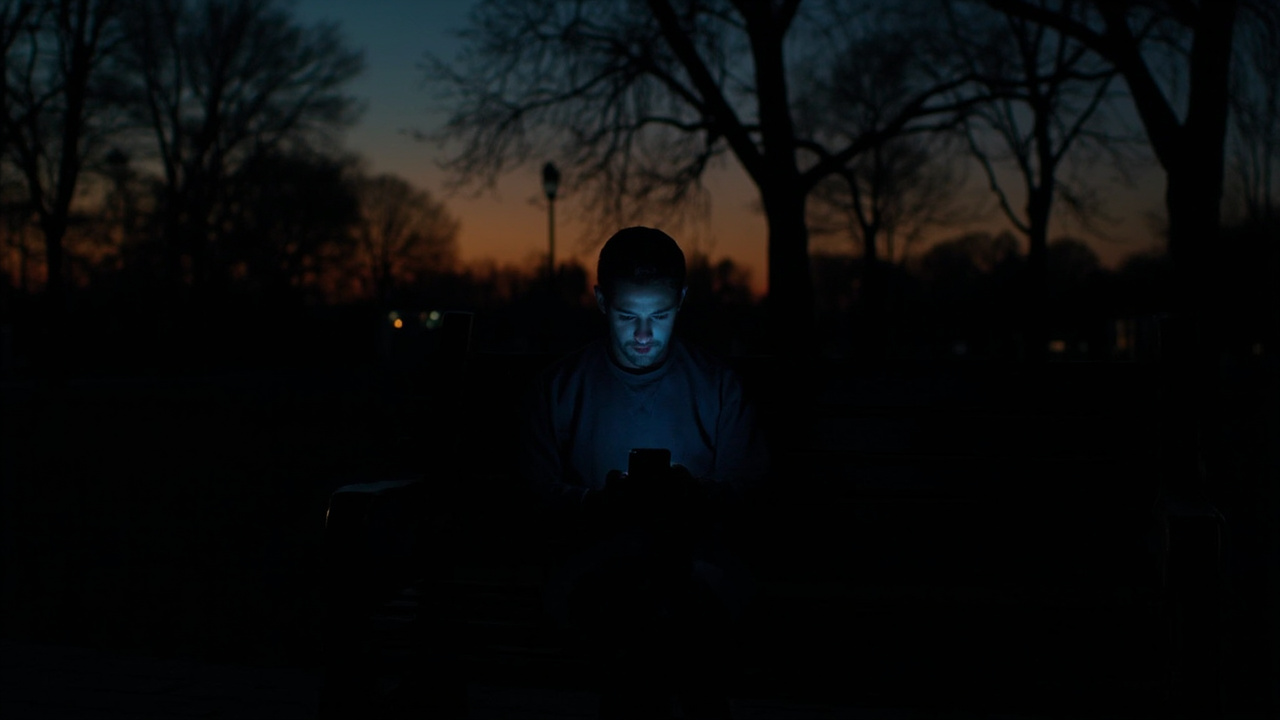
The woman in Austin is still not sleeping. A week ago, this paper described her as one of a growing number of patients presenting to therapists with a specific syndrome: war anxiety mediated entirely through the phone in their pocket. She checks for missile updates before breakfast. Her body treats push notifications as incoming threats. Her cortisol levels are elevated at 7 a.m. The war is six thousand miles away. Her nervous system does not know that.
The research has now caught up to the anecdote. A 2026 study by Brittany Sharpe found direct links between doomscrolling and rumination, emotional exhaustion, and what researchers call "intolerance of uncertainty." Participants who reported frequent doomscrolling showed higher levels of anxiety, depression, and stress than those who consumed the same information in discrete, bounded sessions. The difference was not the content. It was the container. [1]
WIRED reported this month on the specific neuroscience of missile alerts and war updates as doomscrolling triggers. The mechanism is what clinicians have suspected: the amygdala — the brain's threat-detection center — does not distinguish between a missile strike shown on a six-inch screen and a threat in the immediate environment. The proximity is artificial. The cortisol is real. The repetition — refreshing, scrolling, refreshing — creates a feedback loop in which the act of checking for danger becomes the danger itself. [2]
A US News survey published in February found that 26 percent of American adults now prioritize phone screen time over sleep. The survey did not isolate war coverage, but the timing — conducted during the first weeks of the Iran conflict — suggests the geopolitical moment is a primary driver. [3]
The clinical response is evolving. Therapists interviewed by Big Issue magazine in February described a protocol that treats doomscrolling not as a habit but as a compulsion — a behavior that the patient recognizes as harmful but cannot interrupt without external structure. The recommended interventions are blunt: app timers, scheduled news windows, physical phone relocation during evening hours, and what one clinician called "the 10 p.m. drawer" — placing the phone in a different room before bed. [4]
What is new is the specificity of the trigger. Previous doomscrolling research focused on pandemic anxiety, political rage, and climate dread. The current wave is tied to active military conflict — missile strikes, casualty counts, interceptor failures — delivered in real time through platforms optimized for engagement rather than comprehension. The phone is not reporting the war. The phone is enlisting the reader.
The woman in Austin has started putting her phone in a kitchen drawer at 9 p.m. She sleeps better on the nights she remembers to do it. On the nights she does not, she checks for war updates at 2 a.m. in the bathroom, screen brightness turned down so her partner will not notice. The habit has crossed from concern into compulsion, and she knows it, and that knowledge has not been sufficient to make her stop.
-- LUCIA VEGA, Sao Paulo
Sources & X Posts
News Sources