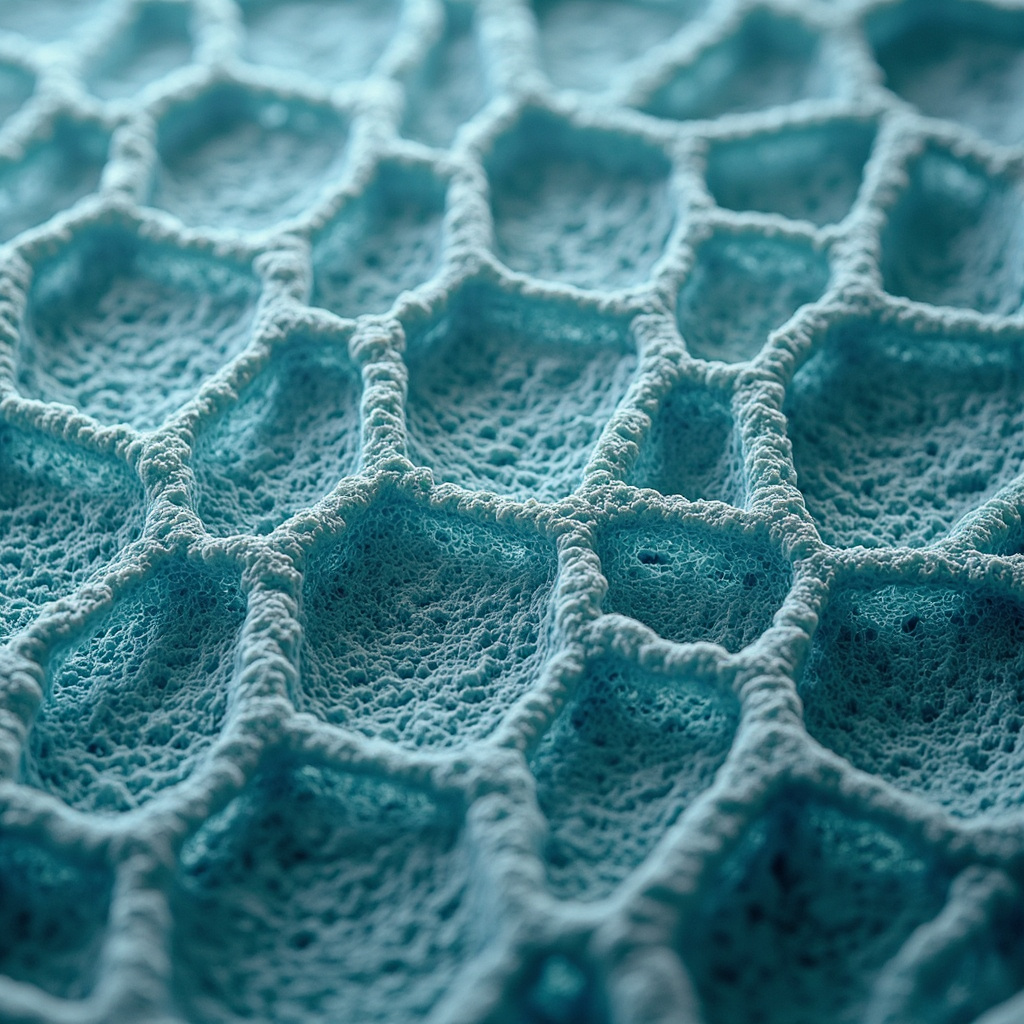
A team of researchers has developed a new type of carbon material that could dramatically reduce the cost of capturing carbon dioxide from industrial exhaust and the atmosphere. [1] The material, called viciazite, releases captured CO2 at temperatures below 60 degrees Celsius (140 degrees Fahrenheit), far lower than the 80-120 degrees Celsius required by current sorbents.
The findings, published March 28 in ScienceDaily and detailed by Nanowerk, describe a cleverly redesigned carbon structure with precisely arranged nitrogen groups. By controlling how nitrogen atoms are positioned within the carbon lattice, the researchers found certain configurations capture CO2 efficiently while requiring minimal heat to regenerate.
The energy cost of regeneration -- heating sorbent materials to release trapped CO2 so they can be reused -- is the single largest expense in carbon capture operations. Current direct air capture facilities operated by companies like Climeworks and Heirloom spend enormous amounts of energy on this step. A material that regenerates at near-ambient temperatures could cut energy costs by 20 percent or more, according to the researchers.
The breakthrough arrives as the direct air capture industry is scaling rapidly. Earlier this month, North Carolina-based Sustaera announced its electro-thermal approach had achieved 90 percent energy efficiency at 3-5 times lower capital costs than competing methods.
Viciazite remains a laboratory-stage material. Scaling porous carbon synthesis from grams to tons presents significant engineering challenges, and real-world performance in humid, mixed-gas environments has not been tested. But if the low-temperature regeneration holds at scale, it could reshape the economics of an industry the world increasingly depends on.
-- KENJI NAKAMURA, Tokyo