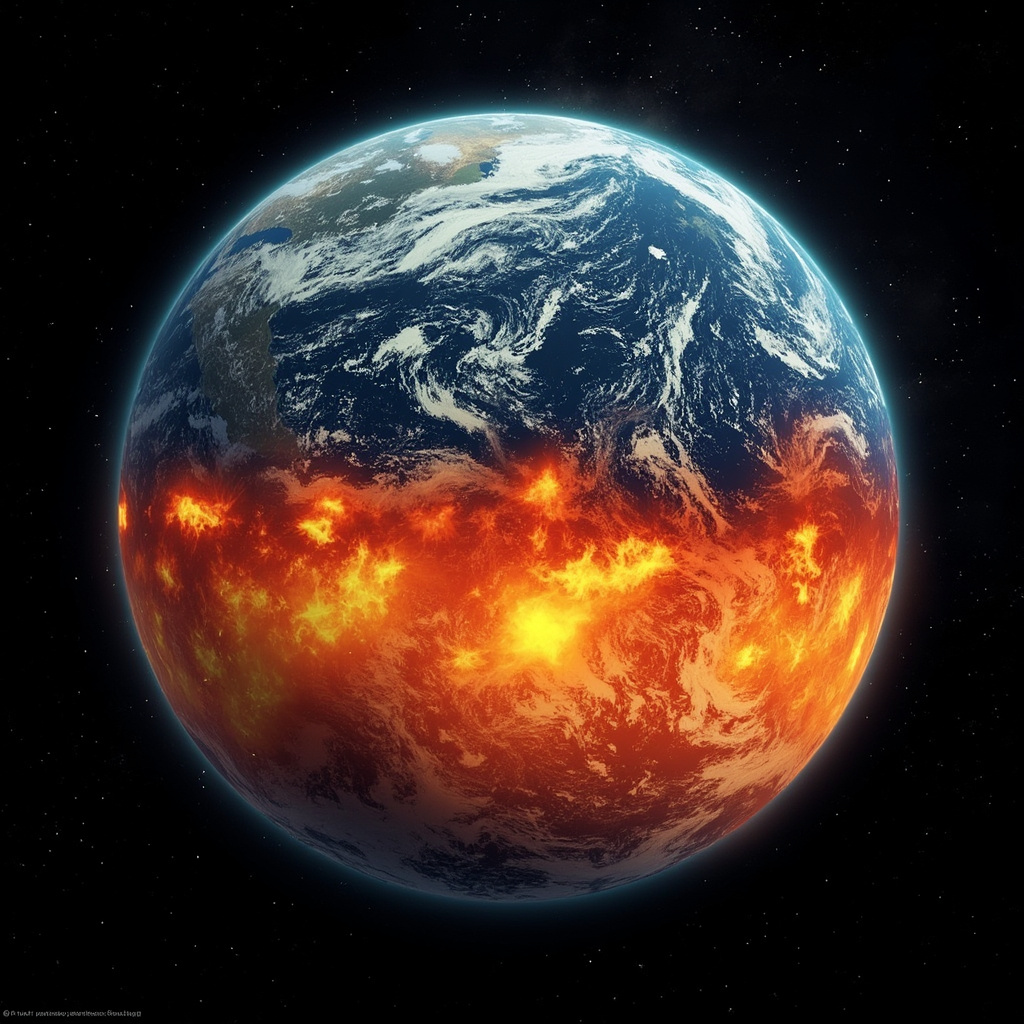
The World Meteorological Organization warned on March 23 that Earth's climate is "more out of balance than at any time in observed history," releasing its annual State of the Global Climate report with a stark new metric: the planet's energy imbalance has reached its highest point in the 65-year record. [1]
For the first time, the WMO included Earth's energy imbalance as a key climate indicator alongside temperature, sea level, and greenhouse gas concentrations. The metric measures the difference between incoming solar energy and outgoing heat radiation. In a stable climate, these are roughly equal. They are not equal now.
The report confirms that 2015-2025 constitute the hottest 11 consecutive years on record. The year 2025 was either the second or third hottest on record, with global average temperatures 1.43 degrees Celsius above pre-industrial levels. Greenhouse gas concentrations surged to new highs.
The energy imbalance means the planet is accumulating heat faster than it can radiate it away, with more than 90 percent of the excess absorbed by the oceans. This drives marine heatwaves, accelerates ice loss, and fuels the extreme weather events that defined 2025 -- from record flooding in West Africa to unprecedented drought across the Amazon.
WMO Secretary-General Celeste Saulo said the findings confirm that Earth is being "pushed beyond its limits." The report was timed for World Meteorological Day, and its message was unambiguous: the warming trend is not stabilizing, it is accelerating.
The UN News service described the findings as evidence that the "planetary warming accelerates."
-- DARA OSEI, Geneva