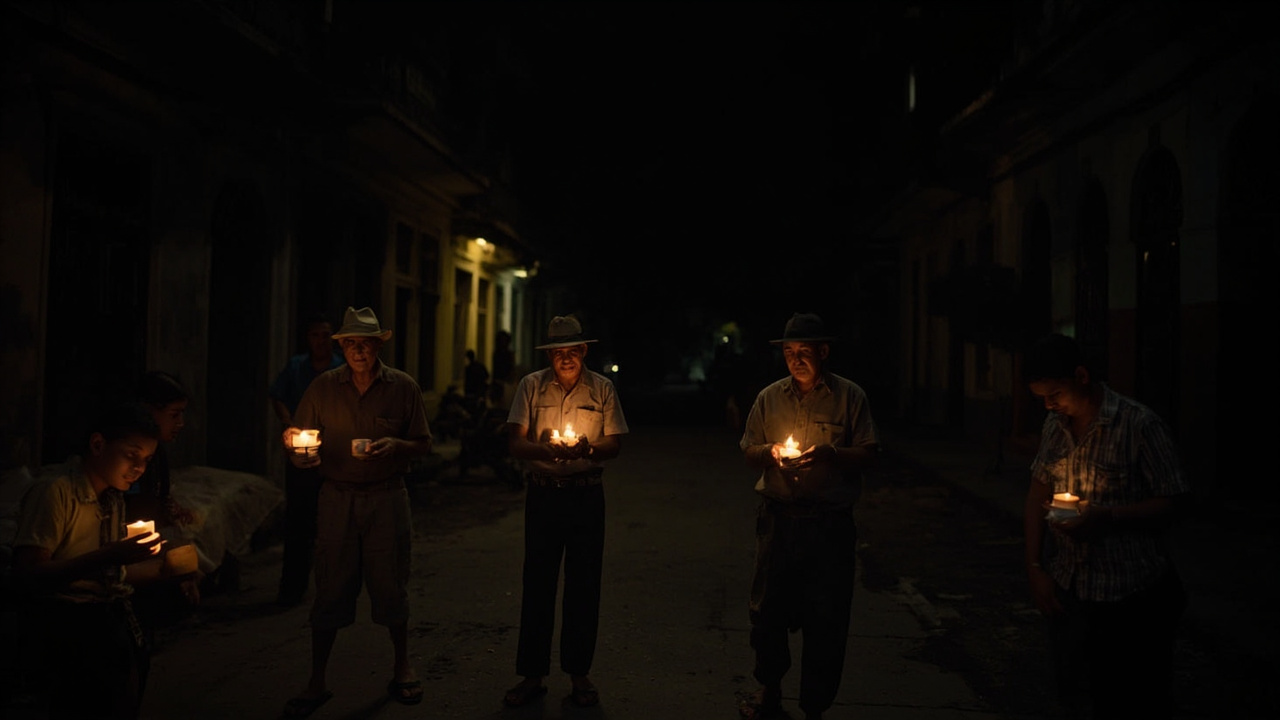
Cuba's national power grid collapsed for the fourth time this month [1]. As this paper reported on April 1, the third collapse on March 22 left all 15 provinces in darkness and disrupted hospitals still running on backup generators from the second collapse five days earlier. The fourth collapse, reported in the final days of March, followed the same pattern: thermoelectric plant failure, cascading grid shutdown, days of partial restoration [2].
The first nationwide blackout on March 16 was a CNN banner headline. The second, on March 21, made Reuters and NPR. The third, on March 22, received a single NPR update. The fourth barely registered in English-language media.
This is normalization as a news phenomenon. An entire nation of 10 million people loses electricity — repeatedly — and each occurrence generates less coverage than the last. The story has not changed, which is precisely why it has stopped being a story. Cuba still imports no fuel because the U.S. oil embargo cut off Venezuelan supplies [3]. The grid still cannot sustain itself. Hospitals still depend on generators that depend on diesel that is not arriving.
The crisis has not resolved. It has simply become ordinary. On the island, people light candles and wait. In the newsrooms, editors scroll past.
-- Lucia Vega, Sao Paulo