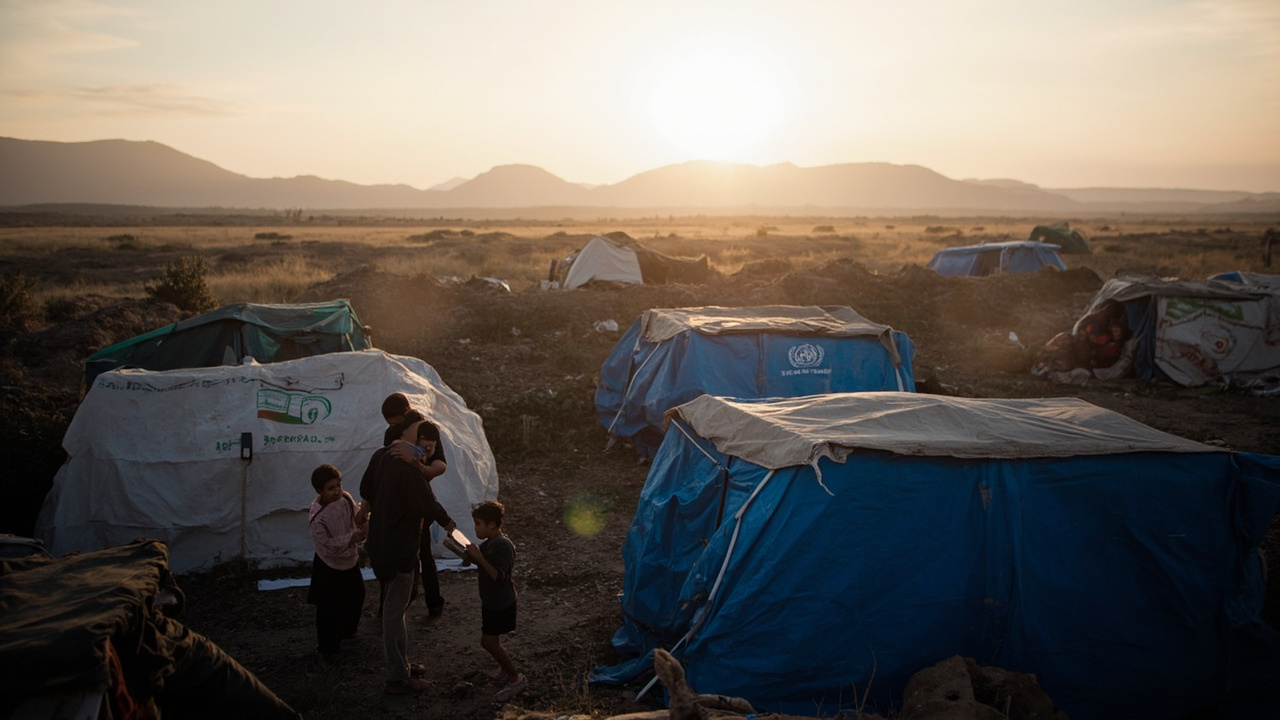
The numbers arrived in the form of a UNHCR flash update — the ninth since the conflict began on February 28. They said that 68,600 Iranian nationals had crossed into Turkey, while 53,000 had returned. The arithmetic produces a net figure of approximately 15,600 people now living somewhere they did not live six weeks ago, in a country that had already announced it was hardening its border before the first shells fell.
Those 15,600 are not in the numbers the way people are in numbers. They are in the same mountains that this paper described when the first camps appeared, when the first families from Tabriz and Urmia made the crossing with whatever a person can carry when they decide to leave in a morning. The mountains have not changed. The UNHCR has now arrived with registration tables and blue tarps. The registration tables are proof that the crisis has achieved institutional recognition. The blue tarps are proof that shelter remains improvised.
Turkey's official position has been consistent since early March: the border is hardening, returns are encouraged, Europe will not receive a new wave if Ankara can help it. The border crossing statistics carry this policy in their DNA. Fifty-three thousand people returned to Iran — most of them Afghans who had been living in Iran and found themselves twice displaced, by a war that was not theirs, in a country that was not quite theirs either. The returning Afghans are a separate tragedy folded inside the Iranian one.
The UNHCR's flash update noted that protection needs are rising alongside the risk of internal displacement, new cross-border outflows, and onward movement toward Europe. This is the language of a bureaucracy that has assessed a situation and found it deteriorating. It is also, in its careful way, a warning that what has happened so far is not the full story.
The 3.2 million people internally displaced within Iran — the figure the UN issued in mid-March — remain where they are, in the south and west of a country being bombed. Some percentage of them will eventually decide that the border is worth crossing. The ones who have already crossed are the advance party.
What the UNHCR update does not say, because it cannot say it, is whether the camps on the Turkish side are livable. Reports from the first weeks described conditions that were orderly by the standards of crisis camps and harsh by any other measure. Water. Shared latrines. Food distribution that worked on most days. Children who should have been in school sitting in mud when the rains came.
The rains have come and gone. It is April now, and the mountains between Iran and Turkey carry a cold that lasts into late spring. The tents hold heat the way tents hold heat — which is to say, not well, and not at night. The UNHCR has arrived with its flash updates and its funding requirements — $454 million for the region through 2026, according to its own published figures. Whether the money follows at the speed the tents require is the question no flash update answers.
What Turkey has agreed to contain, Europe has agreed to finance from a distance, and the United States has agreed to address through force — none of it solves the problem of a family in a tent on a mountainside who watched their neighborhood absorb a strike and decided that a tent was the better option.
The ceasefire proposal that Iran rejected today would have, if it had held, reduced the conditions producing the crossings. It did not hold. The ninth flash update will be followed by a tenth.