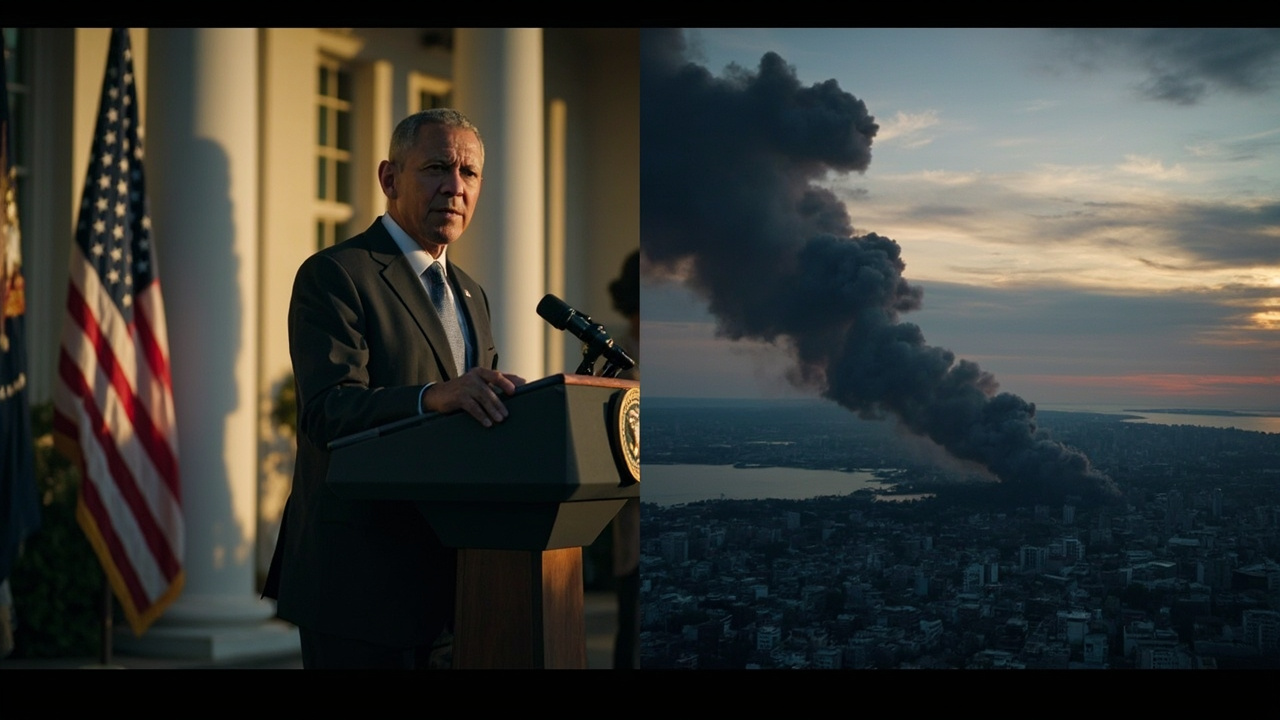
The ceasefire this paper said would fail on arrival arrived on Tuesday — and began to fail within hours.
Shortly before 8 PM Eastern, Donald Trump announced that the United States and Iran had agreed to a two-week cessation of hostilities. Both sides would stand down. Iran would reopen the Strait of Hormuz to commercial shipping. Negotiations would begin in Islamabad on Friday, April 10, using Iran's own 10-point plan as the basis. Trump told AFP it was "total and complete victory. 100 percent. No question about it." Iranian state media called it a vindication of Iran's resistance. The war that began 39 days ago was, officially, on pause. [1]
The paper took a different position on April 6: that the Egypt-Pakistan-Turkey framework was "dead on arrival" not because of a deadline but because of the Hormuz clause. The IRGC Navy had said "never." Iran's foreign ministry had rejected deadlines. The analysis was premature. Something did produce a ceasefire. What it produced is the question that matters more.
Within two hours of the announcement, Israeli Prime Minister Benjamin Netanyahu's office issued a statement. [2] The ceasefire, it said, "does not include Lebanon." Israel's military had already begun what the IDF described as its "largest coordinated strike across Lebanon since March 2." Fourteen people were killed. The rockets that hit the Negev — three children injured in the vicinity of Beersheba — came after the ceasefire was announced. Whether they were a final volley or a sign of what the ceasefire actually covers is a question neither side has answered. [3]
What the Ceasefire Is and Is Not
The formal agreement, as described by both governments, commits the United States and Israel to suspend bombing runs against Iran for two weeks. In exchange, Iran agrees to reopen the Strait of Hormuz to commercial shipping and to enter negotiations in Islamabad on Friday. The basis of those negotiations is Iran's 10-point plan — a document that includes a permanent ceasefire, lifting of all sanctions, a US withdrawal from the region, and a guarantee of Iran's right to civilian nuclear energy. The United States has not agreed to the 10-point plan. It has agreed to discuss it. [4]
This distinction matters. Iran's state media described the ceasefire as "a complete acceptance of Iran's terms." The White House has not confirmed this framing. What both sides agreed to is a 14-day window. What they will negotiate during that window is, at present, incompatible. The US position entering Islamabad is that Iran must dismantle its enrichment program. Iran's position is that enrichment is non-negotiable. The ceasefire creates space for talks. It does not create conditions for agreement. [1]
The Lebanon exemption is the ceasefire's most consequential structural flaw. From the beginning of this war, this paper has argued that Hezbollah is Iran's primary military deterrent — not its ballistic missiles, not its navy, but the proxy force that can threaten northern Israel regardless of what happens to Iranian air bases. If Hezbollah remains outside the ceasefire, if Israel retains the right to pursue it in Lebanon, and if Lebanon's government has no say in whether the fighting continues, then the "ceasefire" is a bilateral truce on one theater of a multi-theater war. [2]
Netanyahu's statement confirmed this reading. Israel "supports President Trump's decision to suspend strikes against Iran," it said, while making explicit that Lebanese operations continue. The word "supports" is careful. Israel did not agree to the ceasefire. It endorsed the US decision. The legal and operational posture is different: if Hezbollah fires into Israel tomorrow, Israel retains full freedom of action under this formulation. Hezbollah's announced pause is voluntary. It has no treaty status, no enforcement mechanism, and no duration.
Lebanon has lived inside exactly this kind of arrangement before, and the record explains the panic. The November 2024 truce that ended the last round of Hezbollah-Israel fighting survived because it had machinery: a US-French chaired implementation mechanism, logged complaints, defined response ladders. Today's pause has none of that — no committee, no hotline, no third party empowered to adjudicate a violation before either side answers one with a strike. A ceasefire without verification does not prevent escalation. It merely assigns blame after each round of it. [3]
The Market Believed It
Oil markets did not wait for the Lebanon clause. Brent crude fell $15.54 to $93.73 per barrel — a 14% single-session drop, the largest since the war began. WTI crude fell 19% in overnight Asian trading. Global stock markets surged: European indices opened sharply higher, US futures rallied. The physical question — whether tankers would actually route through Hormuz on Wednesday morning — was answered partially: the Greek-owned bulk carrier NJ Earth and at least two other vessels completed transits under what shipping companies described as "cautious optimism." [5]
Shippers are not caution-free. Maersk, one of the world's largest container carriers, said Wednesday morning that it would seek clarity before committing to Hormuz routing. The insurance frameworks that classify Hormuz as a war zone remain in place. War-risk premiums do not vanish with a 14-day ceasefire. The physical infrastructure of the blockade — patrol boats, seized vessels, the IRGC's positioning of forces — does not disappear with a phone call between presidents. [6]
This paper's prior reporting on the oil market's structural problem holds: the market has been trading sentiment, not reality, and the sentiment has swung dramatically in both directions. The ceasefire dip to $93 mirrors the ceasefire-hope dip to $108.58 on April 6 — the market moved on a headline, not on a verified supply chain recovery. [7]
The critical variable is the April 19 sanctions waiver expiration. That waiver — 30 days of licensed sales of Iranian oil stranded at sea — expires in 11 days. If Hormuz is genuinely reopening, the waiver's relevance diminishes. If the ceasefire collapses before April 19, the waiver expiration becomes the market's next crisis point. The administration has not indicated whether it will renew. [8]
The Ceasefire's Forty-Eight Hours
The next two days will determine whether this ceasefire is real. Three tests:
First: Does Hormuz reopen in fact? The NJ Earth transited Wednesday. One bulk carrier is not a reopened strait. The test is whether the same volume of commercial traffic that used Hormuz before February 28 — approximately 20% of global oil trade — begins transiting again. Shippers tracking IRGC patrol boat movements will make that judgment faster than any diplomatic communique. [6]
Second: Does the Lebanon fighting stop? Netanyahu has said it won't. Hezbollah has said it's pausing. The tension between those positions will produce either a tested truce or an escalation within 48 hours. If Israel kills a senior Hezbollah commander during the "pause," the ceasefire's credibility collapses. [3]
Third: Do the Islamabad talks start? Friday, April 10. Iran's 10-point plan on the table. If the US delegation arrives and the two sides are negotiating, the ceasefire has produced something. If the US delegation demands preconditions Iran cannot meet before talks begin, the 14-day clock will expire without a framework. [4]
Trump declared "total and complete victory." Iran hailed its resistance. Both descriptions are true, in the way that a draw is simultaneously a win for anyone who expected to lose. This paper's position entering the Islamabad talks is straightforward: a ceasefire that exempts Lebanon, lacks verification, and rests on two irreconcilable positions is a pause. Whether it becomes a peace is a question with a 14-day deadline. The honest scoreboard after day one reads one victory apiece and no settlement at all.
-- YOSEF STERN, Jerusalem