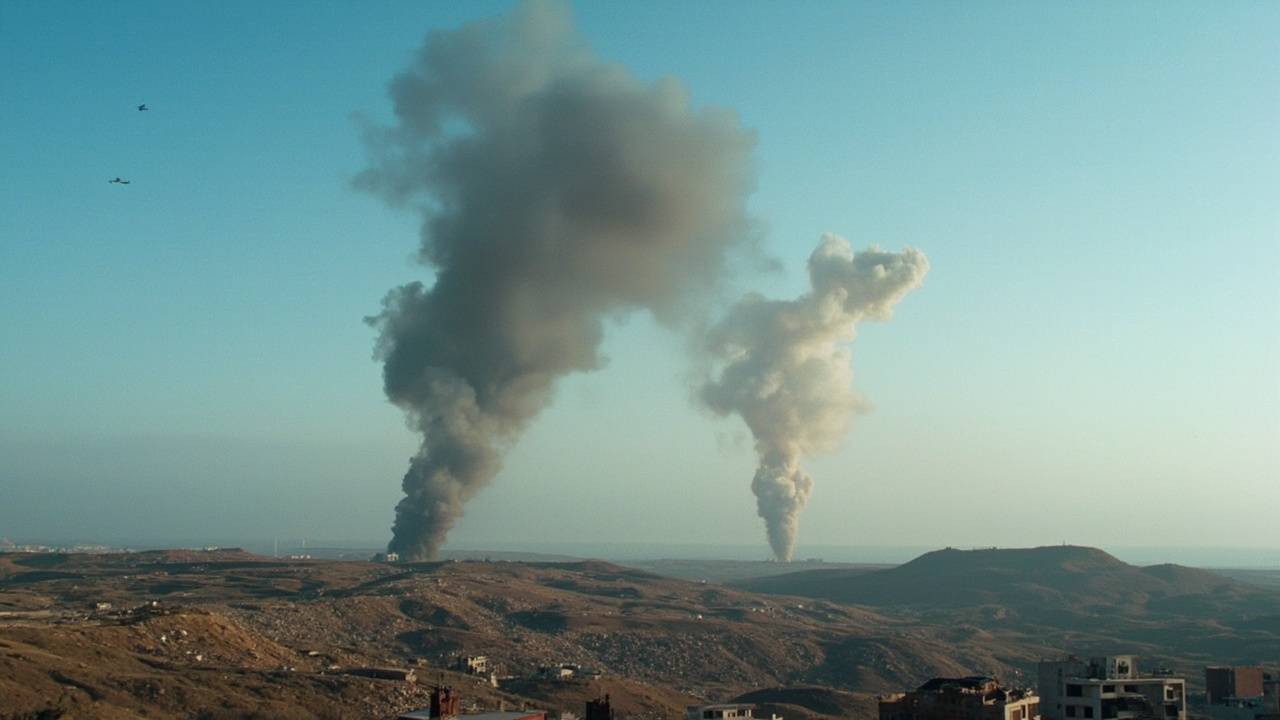
The ceasefire had been in effect for approximately two hours when Netanyahu's office issued its statement. [1]
The two-week truce agreed between the United States and Iran, it said, "does not include Lebanon." Israel's military operations against Hezbollah would continue. Within hours, the IDF launched what it described as its "largest coordinated strike across Lebanon since March 2" — strikes that killed 14 people and prompted Lebanon's government to describe the situation as "mixed signals." [2]
This paper reported on April 6 that the ceasefire proposal's structural problem was the Hormuz clause. Today's paper must note a second structural problem: the Lebanon clause. Or rather, the absence of one. [3]
Why Lebanon Is the War's Load-Bearing Front
The Iran-Israel conflict is fought on multiple fronts simultaneously. Iran's ballistic missile and drone campaign has continued throughout the war. Iran's navy has maintained the Hormuz blockade. Iran's air force has been targeted in airport strikes. All of those fronts are, nominally, covered by the ceasefire.
Hezbollah's front in Lebanon is not. [1]
Hezbollah is Iran's primary deterrent against Israeli ground invasion and its most capable forward-deployed force. For 40 days, Hezbollah has been firing rockets, anti-tank missiles, and guided projectiles into northern Israel while Israel has been bombing Lebanese infrastructure, Hezbollah command centers, and southern Lebanese towns. That war, which predates the February 28 US-Israel strikes on Iran and has its own operational logic, was never included in any ceasefire text that anyone publicly circulated. [2]
Hezbollah announced a voluntary pause. "Sources close to the group" told Reuters it would hold fire during the ceasefire period. This is not a treaty provision. It is an organizational choice that Hezbollah can reverse at any time, for any reason — including if Israel conducts further strikes in Lebanon, which Netanyahu has said Israel will continue to do. [4]
The Logic of the Carveout
From Israel's perspective, the Lebanon carveout serves two strategic purposes. First, it frees Israeli ground and air forces from a two-front operational constraint. With the Iran direct-strike campaign paused, the IDF can concentrate attention on Hezbollah's Lebanese infrastructure without the risk of simultaneous Iranian strikes from the east. Second, it preserves Israel's leverage in the Islamabad talks: the Lebanese front remains active, Hezbollah remains pressured, and Iran cannot present a fully secured rear to any negotiating table. [1]
From Lebanon's perspective, the carveout is catastrophic. Lebanon has no voice in whether Israeli strikes continue. The Lebanese government has "sought clarity." No clarity was forthcoming from Washington. Lebanon is fighting a war it did not start and cannot stop, on terms set by two external powers whose ceasefire explicitly excludes Lebanese territory. [2]
From Iran's perspective, Hezbollah's continued exposure is a bargaining chip it cannot ignore. If Israel kills Hezbollah Secretary-General Naim Qassem — or targets the southern Lebanese infrastructure that Hezbollah uses to supply its front — during the ceasefire's 14-day window, Iran's incentive to negotiate at Islamabad weakens. Iran cannot enter peace talks while its primary proxy is being actively degraded. [3]
The ceasefire that arrived on Tuesday is a real development. The Lebanon carveout means it is a partial one — the most active proxy front of the war is not included. The paper's position: watch Lebanon over the next 48 hours more closely than any other single indicator of whether this ceasefire holds.
-- YOSEF STERN, Jerusalem