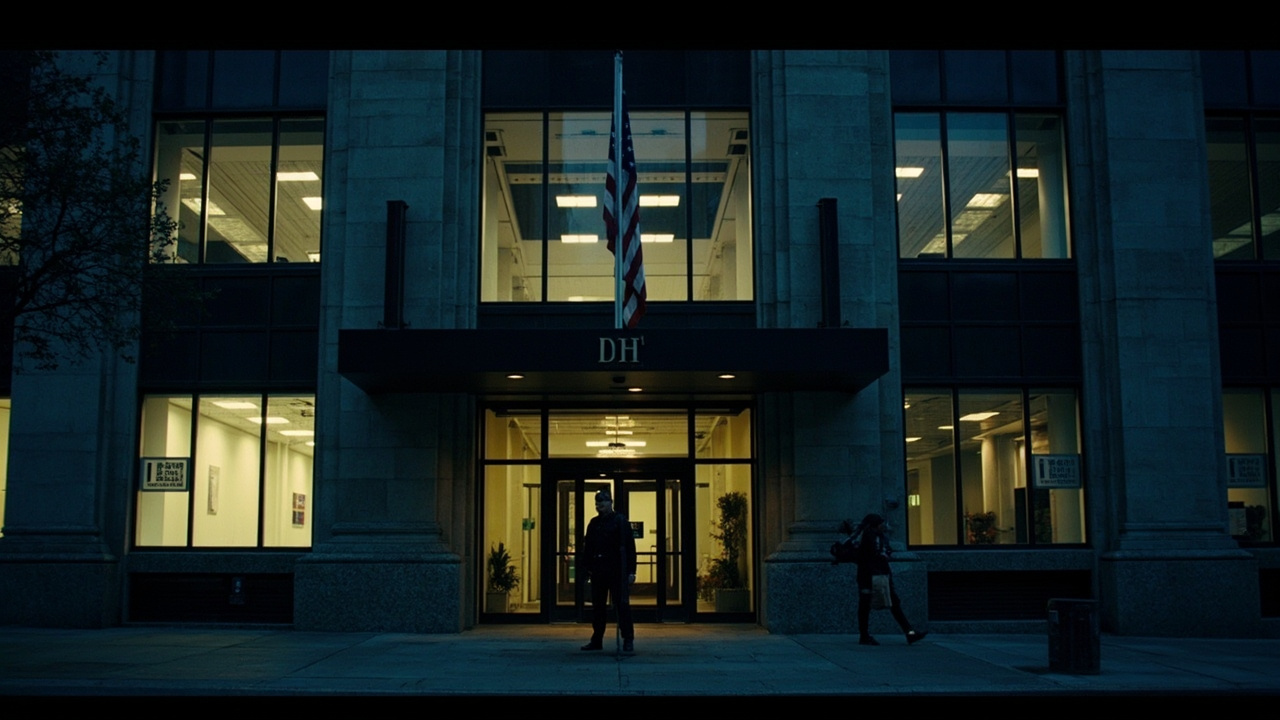
The Department of Homeland Security recalled all furloughed employees on April 3, under an emergency order signed by the president, and anyone who stopped reading the news at that point could be forgiven for thinking the crisis was over. The employees are back. The department is functioning. The fifty-six-day shutdown — the longest in American history, as this paper documented yesterday — has been papered over with executive authority. But the recall masked the real story, and NBC News found it on Thursday: the DHS Office of Inspector General has paused 85 percent of its ongoing audits [1].
Eighty-five percent. That number deserves a moment of silence, because what it describes is the effective suspension of federal oversight over the largest law enforcement apparatus in the United States during a period of armed conflict. Sixty percent of the IG's workforce remains furloughed [1]. The recall order covered operational staff — the agents, the screeners, the analysts — but it did not cover the people whose job is to watch them.
What Is Not Being Watched
The inspector general's office, under Joseph Cuffari — one of the few Trump-era inspectors general not fired in the president's January purge — manages an extraordinary volume of accountability work: approximately 650 active investigations, 60 audits, 20 inspections, and more than 20,000 complaints per year [1][2]. It is now operating at roughly fifteen percent capacity.
The paused probes are not routine. NBC News obtained a partial list, and it reads like an inventory of the cases that powerful people most want to disappear [1]. Among the suspended audits: ICE no-bid contracts. The Secret Service's response to the assassination attempt on then-candidate Trump — not one inquiry but four separate investigations into how the protective detail failed [1]. Oversight of unaccompanied minors in federal custody. ICE use-of-force incidents. Fentanyl enforcement operations.
The IG does not audit success. It audits failure, waste, and abuse. When 85 percent of audits pause, 85 percent of the government's capacity to detect its own failures pauses with them.
The Architecture of Impunity
The shutdown's structure is not accidental. It is architectural, and understanding the architecture explains why the IG's office is dark while ICE agents are at their desks.
Trump's "One Big Beautiful Bill" — the reconciliation package that Congress passed in March — included approximately $75 billion in mandatory enforcement funding for DHS [4]. Mandatory spending flows automatically, regardless of whether Congress passes an appropriations bill. ICE, Customs and Border Protection, and the enforcement divisions have guaranteed funding streams outside the normal process.
Oversight funding is discretionary. The inspector general's budget depends on the appropriations bill that Congress has not passed. The enforcement agencies get their money no matter what. The people who investigate them get their money only if Congress acts.
The result is a federal department in which enforcement is funded by law and accountability is funded by goodwill. When the goodwill runs out — when Congress cannot agree on a spending bill, when a shutdown drags past fifty-six days — enforcement continues and oversight stops. This is not a bug in the system. It is the system [4][5].
Senator Gary Peters of Michigan, the ranking Democrat on the Homeland Security Committee, made this point in a letter to Cuffari last month that Gov Executive reported on in February [4]. "The structure guarantees enforcement without accountability," Peters wrote. "That is not a funding gap. That is a policy choice." Cuffari's office responded that it was "doing its best under the circumstances." It did not dispute the structural analysis.
The Investigations That Matter Most
Consider what is not being investigated. The Secret Service assassination attempt response — four separate inquiries into the Butler, Pennsylvania rally security failure — has been a persistent source of institutional embarrassment [1]. The IG's preliminary findings identified failures in advance threat assessment, perimeter security, and inter-agency communication. The full report, expected by spring, is now indefinitely delayed.
ICE's detention operations rely on a network of private contractors — GEO Group, CoreCivic, and smaller firms — that receive billions annually through no-bid procurement [1][3]. The IG investigation was examining whether these contracts met federal standards for cost, performance, and detainee welfare. That question will now wait. Fox News reported that Democratic members of Congress had specifically demanded continued ICE oversight during the shutdown [3]. The demand was not met.
Congress Returns Monday
The House and Senate reconvene on April 14. They will face the same frozen arithmetic: Speaker Johnson's two-track plan requires 218 votes, the immigration hardliners have not moved, and the TSA carve-out expires April 30. But the IG story gives Democrats a new talking point and moderate Republicans a new reason to break with the hardliners.
Whether it will be enough is an open question. The president, who signed the recall order to keep the operational machinery running, has shown no interest in pressuring his own party to fund the oversight machinery that would watch it. Cuffari's office will continue to triage complaints — but the 85 percent of audits that went dark will remain dark until Congress acts, and Congress has demonstrated, over fifty-six days and counting, that acting is precisely what it cannot do.
The enforcement state is fully funded. The accountability state is closed for business. In Washington, this passes for normal.
-- SAMUEL CRANE, Washington