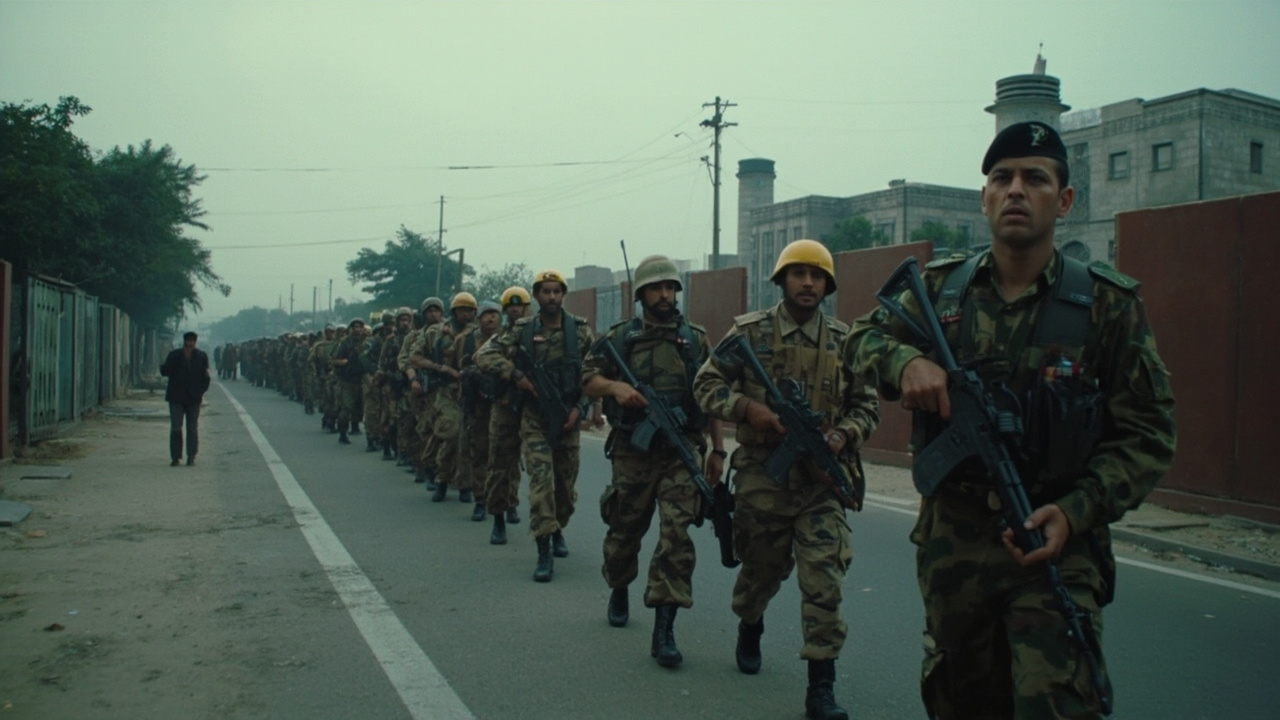
Islamabad transformed itself for the US-Iran talks. More than 10,000 police and security personnel deployed across the capital. The Red Zone was barricaded, accessible only via Margalla Road. The government declared a public holiday. Pakistan's evolution into host was now physically visible in concrete barriers and checkpoints [1].
Prime Minister Shehbaz Sharif called the talks "make or break" and personally invited Iran's 10-member delegation [2]. A visa-on-arrival facility was announced for delegates and journalists. Multi-layered security — police, Rangers, and army units — sealed the diplomatic quarter. US Vice President JD Vance headed the American delegation. UN Secretary-General António Guterres called the talks an opportunity for de-escalation [1].
The physical transformation of Islamabad mirrors Pakistan's diplomatic transformation. A country that has spent years managing perceptions of instability converted its capital into a stage for the most consequential negotiations of the year. The barricades and checkpoints are not just security measures — they are signals of seriousness to Washington, Tehran, and the rest of the world watching.
Pakistan moved from mediator to host in a matter of days. The infrastructure it erected — the security cordons, the visa waivers, the public holiday — represents a bet that the act of hosting itself generates leverage. Whether the talks produce results is a separate question. That they are happening in Islamabad, and not Geneva or Doha, is already an outcome Pakistan intends to collect on.