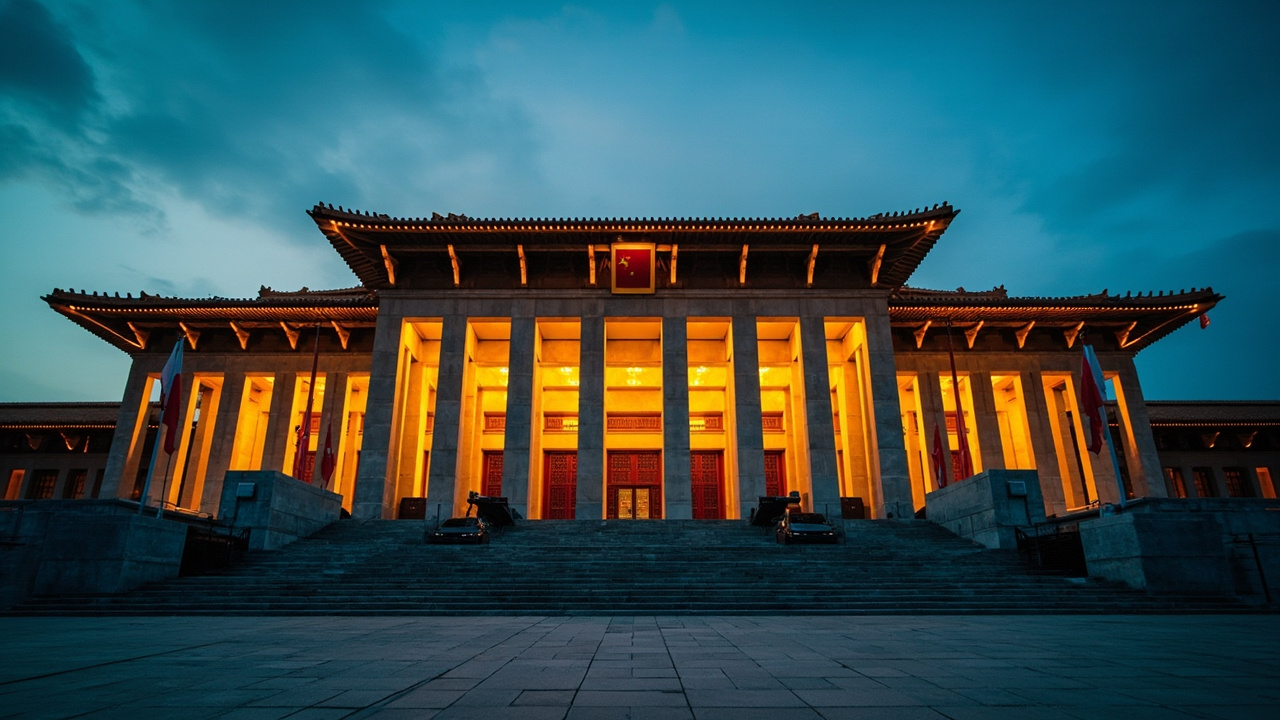
On April 10, 2026, while Vice President JD Vance was landing in Islamabad for nuclear talks with Iran, Chinese President Xi Jinping welcomed Cheng Li-wun, chairwoman of Taiwan's main opposition Kuomintang party, into the Great Hall of the People in Beijing. [1] The meeting — the first between CPC and KMT leaders in approximately a decade — was photographed, televised on CCTV, and framed by both sides as a moment of historic warmth. [2] It was also the most consequential thing that happened in the Indo-Pacific on a day when nobody in Washington was paying attention.
Cheng arrived on April 7 as part of what the KMT branded the "2026 Peace Journey," a weeklong trip running through April 14. [2] The KMT has been running this playbook since 2005, when then-chairman Lien Chan made the first visit to mainland China since the civil war. But that visit took place in a geopolitical era when the United States had bandwidth to notice.
As this paper's April 9 account of Beijing watching the Hormuz ceasefire through a yuan-denominated lens noted, China's strategy during the Iran crisis has been opportunistic rather than confrontational. While America fights, China talks. The contrast is not accidental. It is the product.
Both Xi and Cheng affirmed the "1992 Consensus" — the deliberately ambiguous formula under which both sides acknowledge there is "one China" while disagreeing about what that means. [1] [3] The specific words — "peaceful reunification," "deepening cross-strait exchanges" — matter less than the visual: the leader of Taiwan's largest opposition party, agreeing on camera that the island's future lies in negotiation with Beijing rather than deterrence backed by Washington.
The "party-to-party" framing is the essential fiction. Cheng is not Taiwan's head of state. The KMT lost the presidency to the DPP's Lai Ching-te. The meeting is technically between two parties, not two governments — allowing Beijing to engage Taiwan without conceding it has a government worth engaging. [2] The fiction is transparent. Its utility is that it provides deniability in the proportions each side requires.
President Lai urged the KMT to return to Taipei and approve the defense budget the opposition has been blocking in the Legislative Yuan. [3] Taiwan's Mainland Affairs Council condemned the trip, warning it risks "sending wrong signals to Beijing about Taiwan's democratic consensus." [3]
The signals Beijing received were exactly the ones it wanted. "By getting the KMT to play along, Xi Jinping is attempting to build a narrative where the world has no right to help Taiwan," one widely circulated analysis on X argued. [4] If reunification is a domestic Chinese matter that even Taiwan's own opposition supports, then American intervention becomes not a security guarantee but an interference in someone else's family conversation.
The timing amplifies the message. The United States is fighting a war in the Middle East, negotiating in Pakistan, and managing a Hormuz blockade that has collapsed ninety-five percent of commercial shipping. The Taiwan Strait is the theater where America is least present and most vulnerable. Beijing did not create these conditions, but it is exploiting them with the precision of an actor who knows when the audience is looking elsewhere.
The previous CPC-KMT leadership meeting, between Xi and then-chairman Eric Chu roughly a decade ago, took place when cross-strait relations were managed through economic interdependence and quiet American deterrence. [5] Both pillars have eroded. What replaces them is what Xi is building in these photographs: a bilateral relationship independent of American influence, American approval, or American attention.
Cheng's trip continues through April 14. The American diplomatic apparatus, consumed by Islamabad and Hormuz, will issue no statement about a party-to-party meeting between a Chinese political party and a Taiwanese political party. That silence is the point. The meeting in the Great Hall was not a breakthrough. It was a reminder that while America spends its attention on the Middle East, China spends its attention on the thing it has always wanted most.
-- DAVID CHEN, Beijing