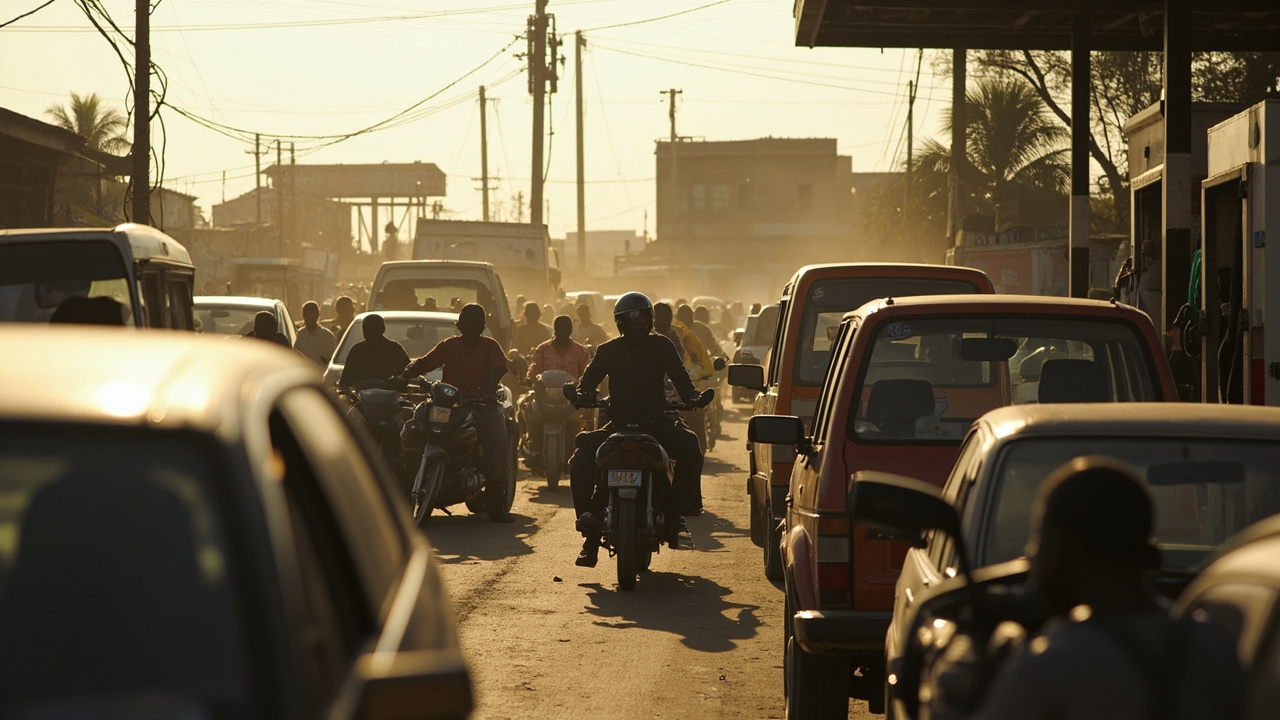
Five days into the Iran ceasefire, fuel queues in Lagos, Nairobi, Dar es Salaam, and Accra remain as long as they were during active hostilities. As yesterday's edition reported, the ceasefire's impact on oil futures has been immediate. Its impact on physical delivery has been zero. [1]
The gap is structural. Sub-Saharan Africa depends on refined petroleum products shipped from refineries in India, the Middle East, and Europe. The Strait of Hormuz blockade disrupted tanker routes for weeks. Even with the ceasefire holding, vessels that were rerouted around the Cape of Good Hope are still in transit. New shipments loading at Persian Gulf terminals today will not reach West African ports for 14 to 21 days.
Nigeria, the continent's largest economy, imports roughly 90 percent of its refined fuel despite being Africa's top crude producer — a dependency that the war exposed as a critical vulnerability. Kenya's fuel reserves dropped below the statutory 20-day minimum during the conflict. Ghana's fuel subsidy program, already strained before the war, is now operating at emergency levels.
The ceasefire brought price relief on commodity trading screens in London and New York. It has not brought a single additional liter of fuel to the filling stations where African consumers actually purchase gasoline. The physical economy moves at the speed of ships, not spreadsheets.
-- LUCIA VEGA, São Paulo