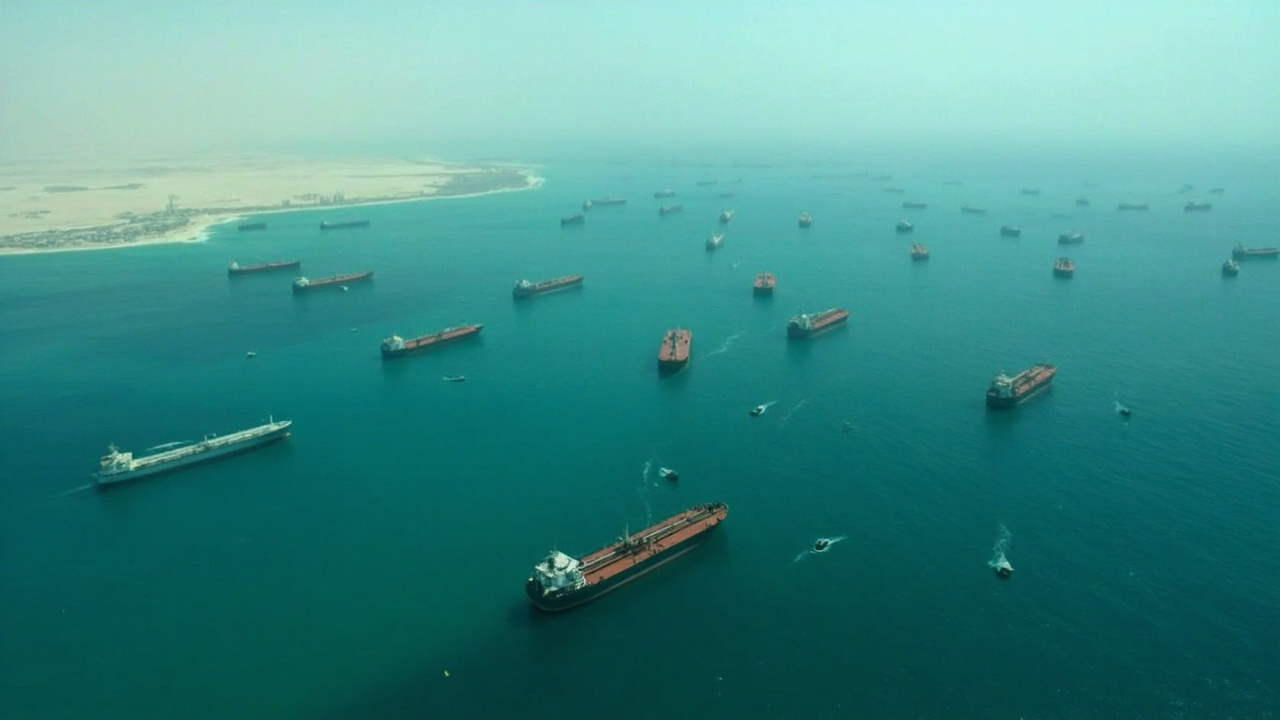
LONDON — An estimated 500 to 700 vessels over 10,000 deadweight tonnage remain stuck in the Persian Gulf, according to Lloyd's List Intelligence. The number is higher when smaller ships are counted. The ceasefire is five days old. The mines are being cleared. The ships are not moving. [1]
As this paper reported Friday, Maersk remains on the sidelines. The reason is not mines — or not only mines. The reason is insurance, and the insurance market has not received the ceasefire the way governments have.
The mechanics are straightforward. Before the war, war-risk insurance for a Hormuz transit cost roughly 0.02% of a vessel's value per month — about $2,000 for a $100 million tanker. At the conflict's peak, that figure hit 15-20%, or $300,000 per month. The ceasefire has not restored pre-war pricing. Insurers are quoting on a voyage-by-voyage basis with short validity windows, conditional coverage, and detailed disclosures on ownership, cargo, and financing. [2]
P&I clubs — the mutual insurance associations that cover hull damage, pollution, and crew liability — have issued formal notifications that new Hormuz transits require case-by-case approval. Some are demanding proof of diplomatic clearance from Iranian authorities before issuing coverage. The U.S. doubled its maritime insurance backstop to $40 billion through the DFC and Chubb earlier this month, but industry sources say there have been virtually no takers. [2]
The trapped fleet is not a homogeneous mass. Lloyd's List data shows 426 tankers hauling crude oil and clean fuels, plus 34 LPG carriers. No loaded LNG carrier has made it through the strait since the war began. One attempted transit by two tankers ended in a last-minute U-turn. The International Maritime Organization tallied approximately 20,000 civilian seafarers stuck on board trapped vessels at the end of March. [3]
BBC Verify tracked only eleven ships — three tankers, one container ship, and seven bulk carriers — crossing the strait in the first 48 hours after the ceasefire took effect. That is less than 10% of normal daily flow. Shipping analyst Guy Meade of MSI warned that fully loaded tankers will be the first to attempt transit, driven by the commercial pressure of stranded cargo. But empty vessels heading into the Gulf to load? "I doubt there will be a large influx," said BIMCO analyst Niels Rasmussen, "because they do not want to risk being trapped after the two-week window closes." [3]
The ceasefire opened a door. Insurance has not yet walked through it. Until it does, the Gulf remains a parking lot.
-- DARA OSEI, London