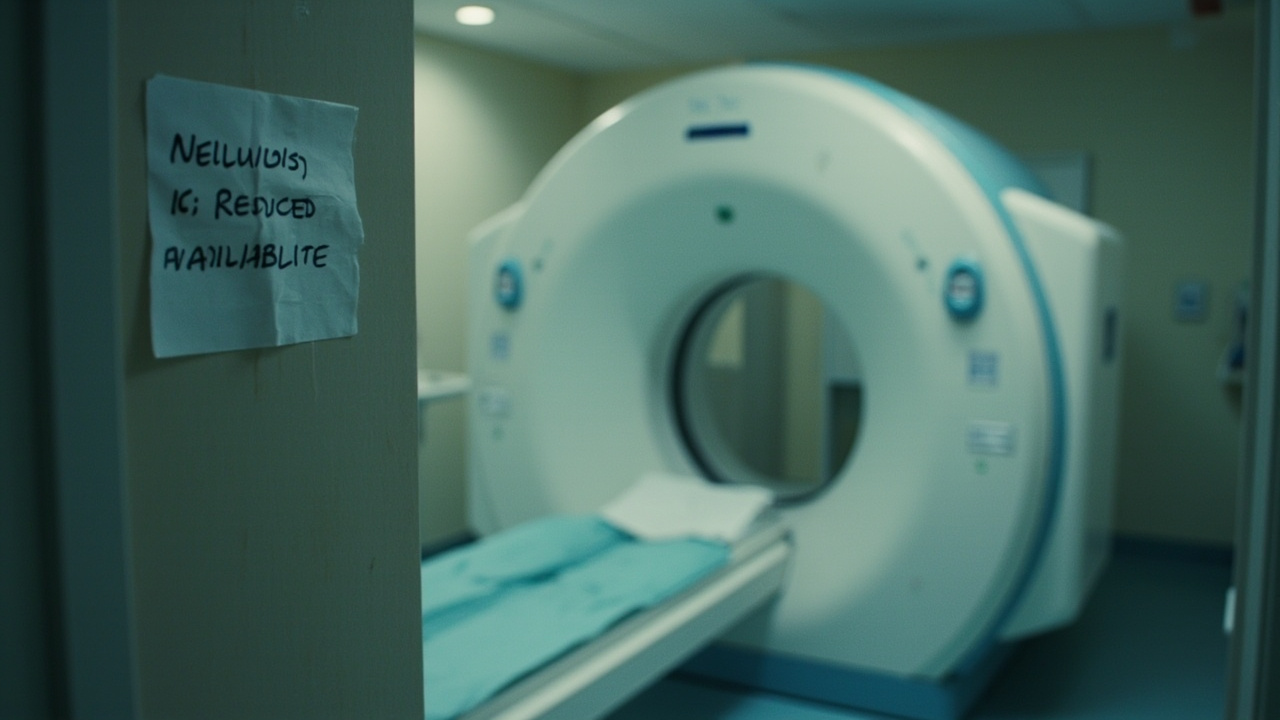
Helium distributors began rationing deliveries in early April, extending a shortage this paper first tracked two weeks ago into what supply analysts now call a structural deficit rather than a cycle [1].
The Hormuz blockade is compounding a pre-existing wound. Qatar supplies roughly 33% of the world's traded helium [1]. A plant fire in late 2025 took 14% of Qatar's capacity offline — the operator declared force majeure, and repairs are expected to take three to five years. The blockade has now added shipping constraints on top of the production gap.
Hospitals cannot substitute another gas for MRI operations. Superconducting magnets require liquid helium cooled to near absolute zero — minus 269 degrees Celsius. When the liquid boils off or supplies are interrupted, the magnet quenches. Quench events are expensive and occasionally dangerous [2].
The semiconductor industry is competing for the same supply. Chip fabrication requires helium for cooling and as a carrier gas in certain deposition processes. Hospital purchasing departments, which cannot pay commodity premiums the way a TSMC fab can, are losing the bidding [2].
Scan costs at facilities paying spot helium prices have risen 15 to 30% since February. Wait times for non-urgent MRIs at urban hospitals have extended from weeks to months in markets where distributors have cut allocations [1].
The practical consequence arrives in oncology and cardiology, where delayed imaging delays diagnosis. The shortage is not measured in headline numbers — it is measured in the distance between when a patient needs a scan and when one is available.
-- KENJI NAKAMURA, Tokyo