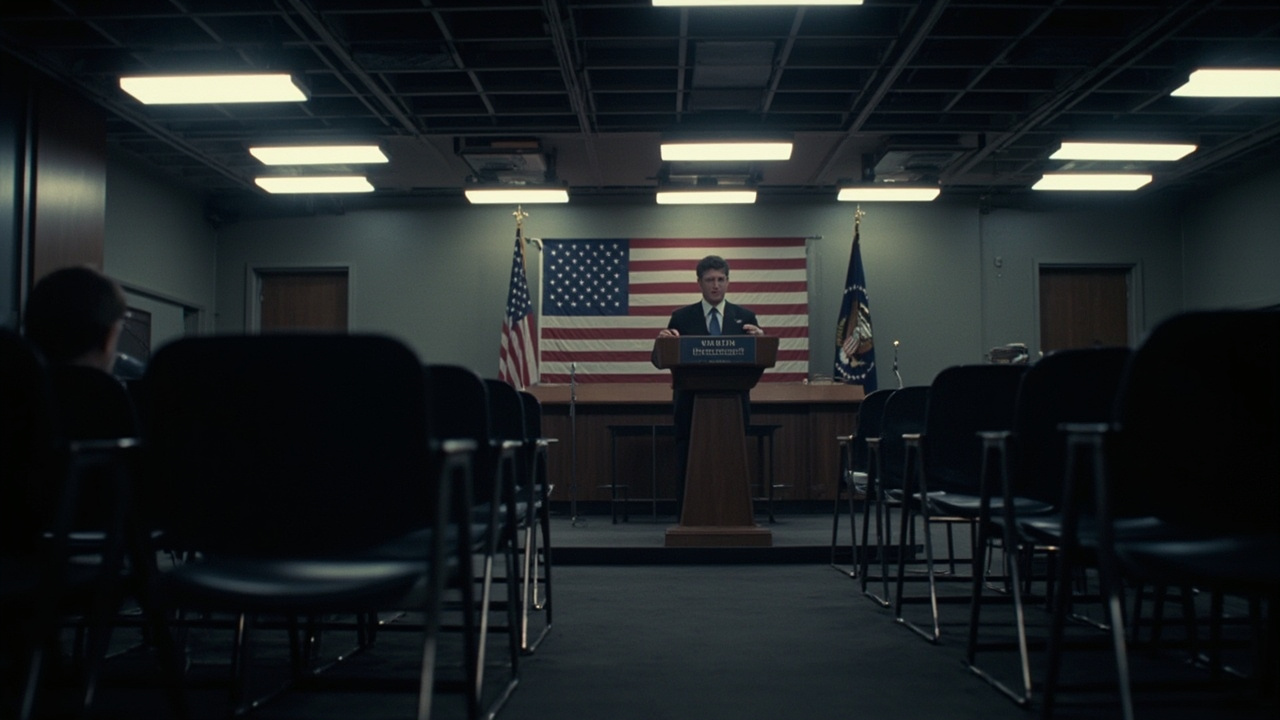
House Democrats filed six articles of impeachment against Defense Secretary Pete Hegseth on Wednesday. Among them is a count alleging systematic violation of federal court orders restoring press access to Pentagon facilities. For the first time in this paper's tracking, the executive branch's refusal to comply with a specific judicial ruling is simultaneously a live legal finding and a live impeachment charge. [3]
This paper argued Thursday that the pattern of ignored rulings is no longer in dispute. The companion piece that day examined Pentagon noncompliance alongside Novaya Gazeta's silencing as parallel press-suppression stories. Friday's development is the legal escalation the Thursday pieces predicted without naming: administrative contempt has become impeachable contempt. The question is no longer whether the Pentagon will obey the courts. The question is whether the political system has a mechanism to force the obedience the judicial system cannot.
The judicial record now stands at two rulings. Judge Paul Friedman issued the original March 20 order finding the Pentagon's selective-exclusion media policy unconstitutional. He ruled again on April 9 that the Defense Department was violating that order, using what he called "slightly different language" to produce the identical exclusionary effect on named outlets. [1] Each ruling has been appealed. Each appeal has produced the procedural delay that is the actual policy — because delay is what keeps the excluded outlets excluded, regardless of the ultimate appellate outcome. [2]
The impeachment articles list six counts. Four involve conduct related to the Iran war — the Signal channel breach, classified-information leaks, war-crimes allegations tied to rules-of-engagement changes, and unauthorized use of military personnel for domestic purposes. Two involve the Pentagon press policy — the original exclusion itself, and the pattern of noncompliance with Judge Friedman's orders. The Hill's reporting Thursday evening placed the press-access count as the sixth article, but several legal analysts quoted in the RCFP's commentary noted that it is the count with the clearest judicial record behind it. [3] [2]
That distinction matters. Impeachment counts typically rely on congressional fact-finding — hearings, testimony, evidence presented to a House committee. The press-access count does not need any of that. A federal judge has made the findings of fact twice, on March 20 and April 9. The articles cite those findings by docket number. The House does not need to prove the noncompliance happened. The courts have already proven it. The question for the House is whether noncompliance with two successive federal orders constitutes a high crime or misdemeanor.
Historically, the answer has been yes when the noncompliance is persistent, specific, and directed at individualized judicial orders. That is what the record now shows. What is less clear is whether the political calculus supports the legal one. The House is the body that filed the articles. The Senate is the body that would try them. The Senate's current composition — 53 Republican, 47 Democrat — does not produce the two-thirds majority required for removal. The articles will likely never reach trial. That is not the same as saying they will have no effect.
The effect, if it materializes, is informational. The articles enter the Congressional Record. The court findings enter the Congressional Record. The press-access count travels with five other counts, all of which sharpen the picture of a cabinet secretary operating outside both judicial and administrative constraints. The Reporters Committee for Freedom of the Press published commentary Thursday calling the pattern one of the clearest instances of executive defiance of the judiciary on press matters in recent memory. [2]
What the impeachment filing does that Thursday's ruling could not is politicize the stakes in a way that forces an institutional response. Until now, the Pentagon could treat the rulings as a legal matter handled by DoD counsel. A House impeachment count pulls the same facts into the political register. The Pentagon will need a political answer, not just a legal one. Secretary Hegseth has not provided either. The silence is itself the unwritten third ruling — the one he issues by not issuing anything.
Two rulings and an impeachment article together amount to a constitutional confrontation. The confrontation now waits for a Senate that will not hold the trial, or for a November 2026 election that might change the body that would.
-- ANNA WEBER, Berlin