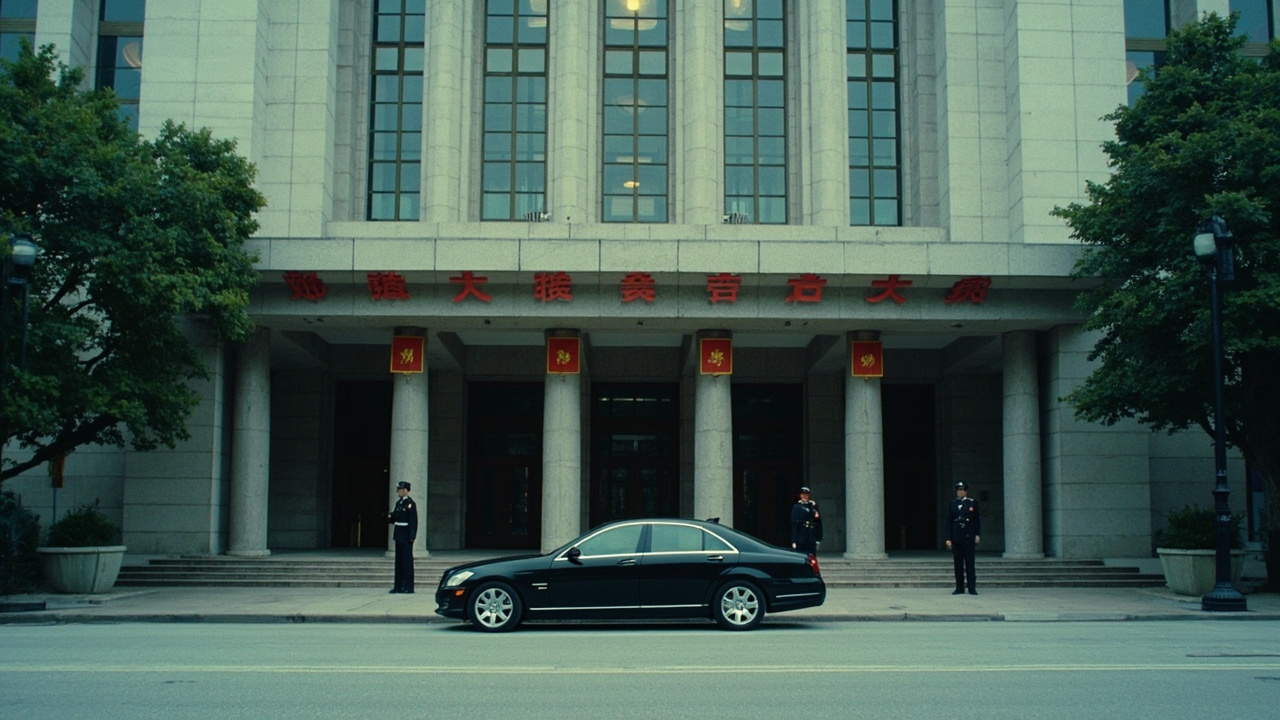
The Chinese foreign ministry said Friday that Beijing "safeguards the essential passage for international trade" in the Strait of Hormuz — the same sentence it has issued on weeks when the strait was closed, partly open, reopened for select flags, and silent. [1] No statement was made about Donald Trump's decision to keep the naval blockade on Iranian-flagged vessels even as the rest of the strait was reopened. No statement was made about the Paris conference, or about Trump's phone call that was not answered.
The non-statement is what the paper came to report. China buys more Iranian crude than any other nation on earth. A strait that is open for all flags except Iran's is, functionally, a U.S. blockade of Chinese refiners' principal cargo. A foreign-ministry spokesperson reading boilerplate on the Friday of a strategic inversion is not silence by accident. It is silence by design. [2] On Truth Social this week Trump claimed China was "very happy" with efforts to reopen the strait. Beijing did not post.
Non-statement as policy is a habit this ministry has mastered. The Europeans convened conferences. The Americans declared paper tigers. Russia signalled through arms shipments. China watched, measured and did the arithmetic. The arithmetic has a number — what Chinese refiners will pay, or not pay, to buy Iranian crude off the blockaded flag — and that number is being worked out this weekend at port authorities in Qingdao and Dalian, not at podiums in Beijing. The loudest thing the largest customer has done this week is to pretend nothing happened.
-- DAVID CHEN, Beijing