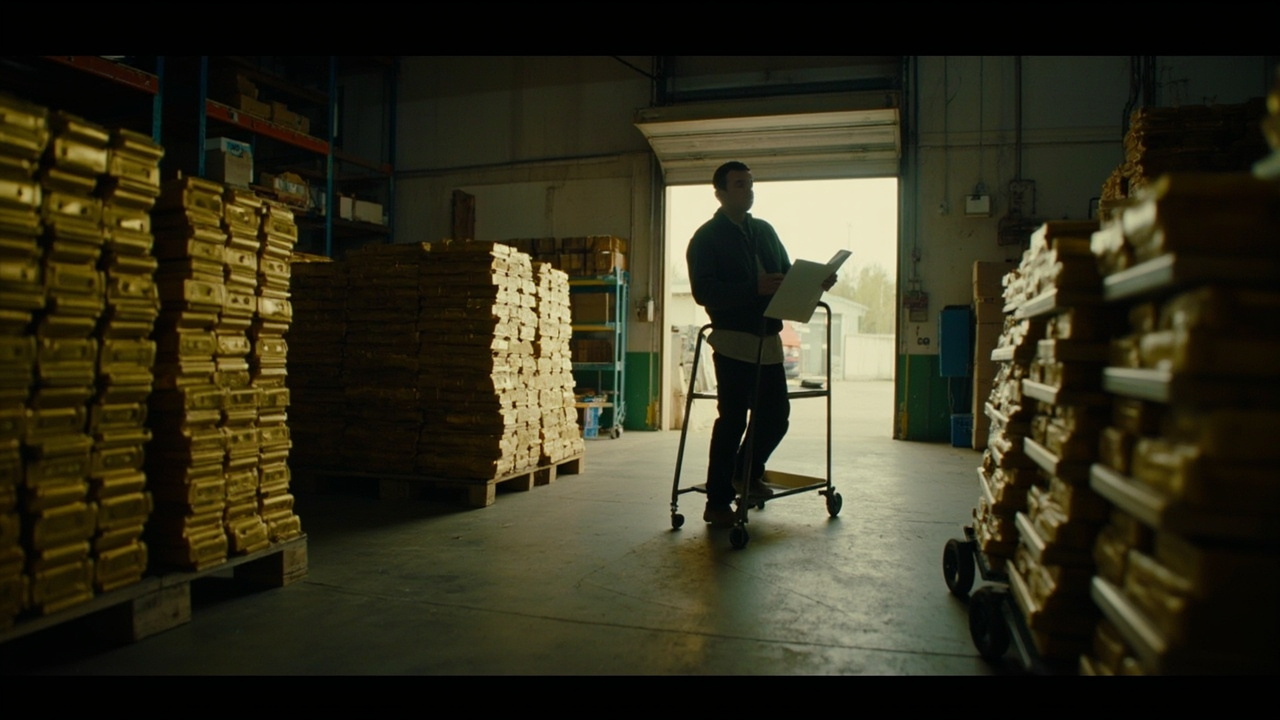
Gold closed Friday at $4,885 an ounce, up 1.6% on the session. The same session produced a 9.07% fall in Brent crude, a 7,126 close on the S&P 500 and an 868-point gain on the Dow. The paper's Thursday observation — that gold never read the ceasefire — was tested on Friday by the session that came closest to being an actual ceasefire. The haven buyer kept bidding.
Three instruments, three stories. Oil read an open strait and priced peace. Equities read relief and priced an all-time high. Gold read neither; or rather, gold read a Friday in which the American president kept a blockade on Iranian-flagged ships, claimed Iran had surrendered its enriched uranium (Tehran denied within hours), called NATO a paper tiger, and watched fifty countries design a Hormuz mission without him. A haven asset does not reprice for communiqués. It reprices for counterparty risk, and Friday's counterparty risk did not fall.
The paper's hexagon thesis argued that the banks priced the war in their reserve builds. That framework held on Friday on gold alone. The banks wrote the reserves; the equity market wrote them off; the oil futures curve wrote them off. Gold held. [1] It is now the single instrument that still reflects the paper's argument that the war's operational reality has diverged from its narrative. Monday's gold open will be the simplest test in markets: if gold follows oil into relief, the paper's hexagon thesis weakens. If gold holds, the thesis walks into next week intact.
-- THEO KAPLAN, San Francisco