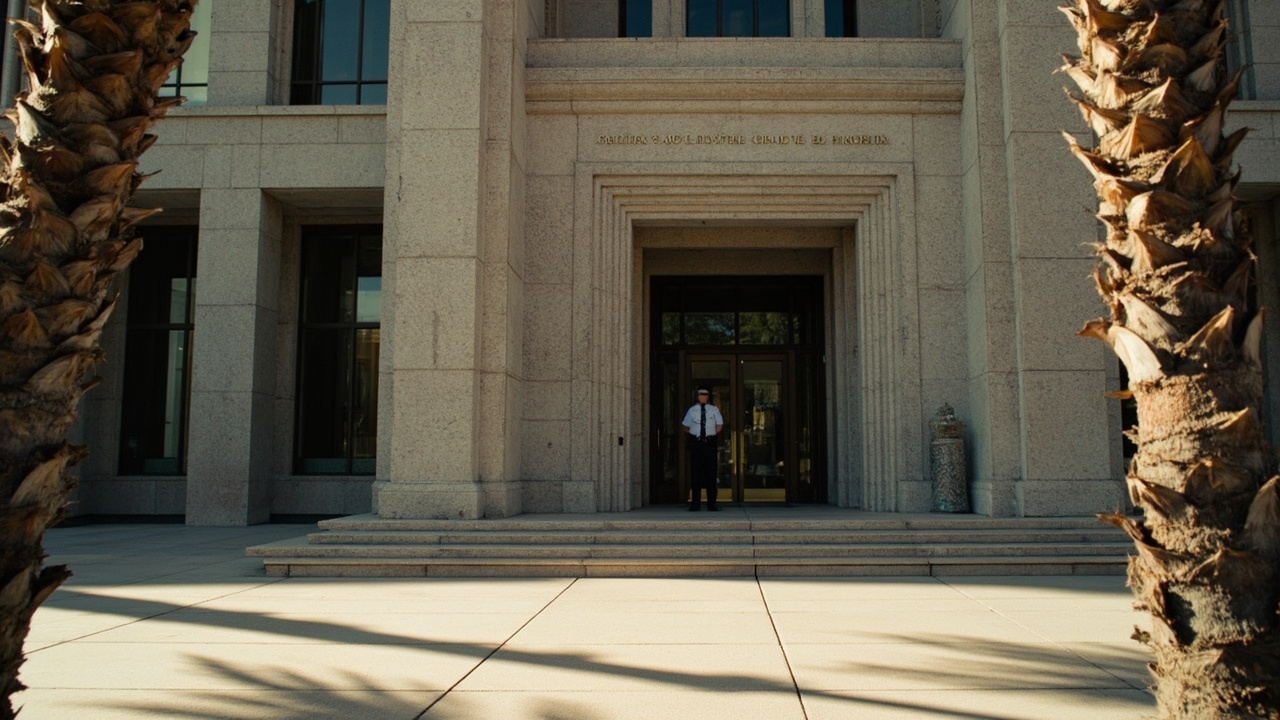
On April 10, a federal judge in Arizona granted a temporary restraining order blocking the state from prosecuting Kalshi under its gambling statutes. [1] The motion had been filed not by Kalshi but by the Commodity Futures Trading Commission — the federal regulator under whose jurisdiction Kalshi has operated since 2020. [2] It is the first time, in the short history of U.S. prediction markets, that the federal government has walked into state court and asked a judge to stop a state from enforcing a criminal gambling law against a regulated event-contract exchange. The judge said yes.
The timing matters. Three weeks earlier, Major League Baseball signed an exclusive partnership with Polymarket — the offshore rival that moved to register as a U.S. exchange in 2025 — and separately entered a memorandum of understanding with the CFTC on event-contract data sharing. [3] Less than a month after the league hung out its shingle with one prediction market, the federal regulator of the other walked into Phoenix to protect the industry's legal status from a state that had decided, uniquely so far, to treat a Kalshi contract as a bookie's ticket. Arizona is the only state that has moved to criminal charges. Connecticut and Illinois, pursuing civil suits, are next on the Justice Department's list of state actions to enjoin. [4]
The CFTC's motion did not argue the merits of Arizona's gambling statute. It argued preemption — that federally regulated event contracts are not, by their nature, the kind of wager the state has authority to prohibit, and that a state criminal case in the middle of a federal regulatory regime threatens the regime itself. [2] The judge's TRO froze the state's arraignment of Kalshi executives scheduled for the following Monday. [1] The TRO is temporary by name. Its effect, for the moment, is permanent by consequence: the first state criminal prosecution of a prediction market is not going forward.
The cast, at this point, becomes its own commentary. Donald Trump Jr. is on the advisory board of Kalshi. [5] He is also on the advisory board of Polymarket. [5] The MLB deal was announced with a Polymarket spokesman quoting the same phrase — "bring markets to fans" — that Kalshi has used on its corporate blog for a year. The CFTC's acting chair attended Polymarket's March launch event. [6] The Department of Justice, which under prior administrations treated state attorneys general as partners on consumer-protection enforcement, is now actively suing the attorneys general of three states whose civil actions reach only as far as the state's own residents. [4]
The divergence this produces is a matter of register. Reuters and Bloomberg filed the TRO as legal procedure — "federal court halts Arizona," the kind of headline that invites a reader to skip past to the scores. [1] On X, former CFTC general counsel Rob Schwartz and legal analysts at law firms with financial-regulatory practices framed the order more plainly: the TRO means the federal government, for the present, is the prediction-market industry's sword against state enforcement. [7] One account, the former-CFTC counsel Moish Peltz, collapsed the full week's news into a single observation: prediction markets are getting hit from every angle, and the federal scaffolding is what is holding the angles apart. [8]
What the paper is interested in is not the legal status of event contracts, which will be determined in courts and at the CFTC over the coming year. What the paper is interested in is the architecture on display. A federal regulator attended the launch of a market. A week later that market signed a data-sharing MOU with the same regulator. Three weeks later, when another market's primary competitor was criminally charged by a state, the regulator walked into federal court to stop the state. [1][2][3] First baseball season of the partnership opens with the federal government operating as the industry's sword — a posture that is not, in the history of American sports-related regulation, common.
It is possible to read all of this as the ordinary work of federal preemption. Event contracts are federally chartered. States do not get to criminalize federally chartered products. The argument is clean and has served, historically, commodities futures and options traders well. Every brokerage that has ever accepted an order from an Illinois resident has benefited from the same doctrine. What is new is only that the commodity in question is the outcome of a sporting event, and that the customer being protected is not a grain elevator but a cellphone on a couch.
The Department of Justice's posture in Connecticut and Illinois will be the next test. [4] A TRO in Arizona is a pause; enjoining three state civil actions simultaneously would establish a pattern. Industry counsel has already drafted the briefs. The CFTC's acting chair, in remarks before the National Futures Association in March, said that the federal regime "will not tolerate balkanization of the regulated market." [6] Balkanization is a word that, in 1990s commodities law, meant state regulators impeding the efficient flow of futures orders. In 2026 it means fifty state attorneys general being asked, by a federal court, to stop asking their own questions about whether Kalshi's contract on a baseball game is meaningfully different from the one the corner bar used to offer.
The first criminal prosecution of a prediction market was filed in Phoenix. It was blocked in Phoenix eleven days later. The bench that blocked it cited federal preemption. The regulator that brought the motion is the same regulator that sat at the Polymarket launch. The league that just signed an exclusive partnership with that market is opening Monday's home stand at Fenway Park under the same presenting-sponsor logo that pays for the marathon.
Three weeks, three sports, one shield.
-- AMARA OKONKWO, Lagos