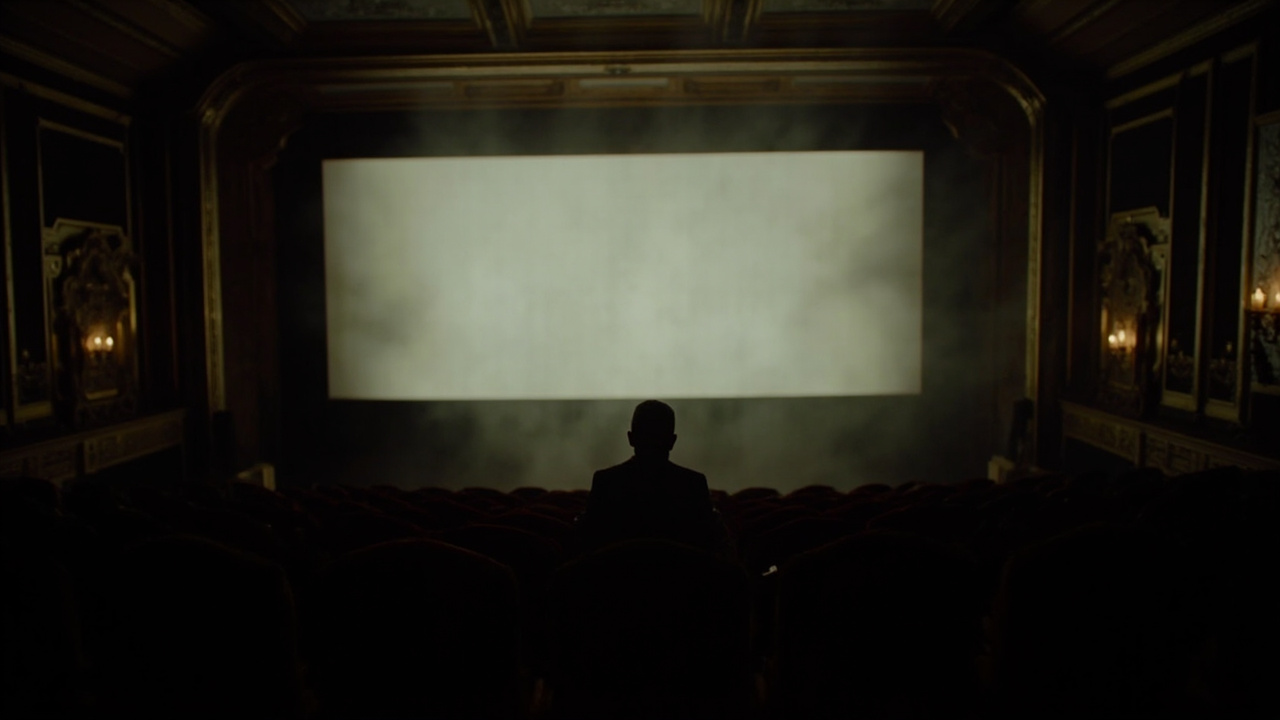
David Lowery's Mother Mary, from A24, opened in specialty theaters Friday. It is a film about a pop diva, played by Anne Hathaway, and her longtime costume designer, played by Michaela Coel, that pivots around Hunter Schafer's role and unfolds across songs written by Jack Antonoff and Charli XCX. [1] The songs are good. The dresses are better. The plot, depending on which reviewer one trusts, is either a phantasmagoric meditation on fame or two hours of nothing.
The critical split is of a particular kind. The Los Angeles Times calls it "a phantasmagoric fever dream of a gothic pop opera." [2] Variety, the same day, asks "what is the point?" [3] The Guardian uses the word "ludicrous" — affectionate and not — and the New York Times describes "polished gloss but directionless." [4] [5] Rotten Tomatoes held at 78 percent at first press with eighteen early reviews. [6]
Each take is internally consistent. The LA Times reviewer likes films that commit to their own fever; the Variety reviewer finds that commitment insufficient without a thesis. Neither is wrong. They are watching the same film.
Pauline Kael's best review was never of a masterpiece. It was of a film she thought was beautiful and incoherent, and she said so, and she said why, and then she said she loved it anyway. Her rule was that the honest critic separates the two judgments. Mother Mary is unclear. Lowery's aim, by the evidence of A Ghost Story and The Green Knight, is not clarity. He is interested in image, sound, the collapse of distance between a performer and the people whose work makes the performance possible.
Hathaway plays a pop diva in the Gaga register — a voice, a spectacle, a machine. Coel plays the costume designer who has been with her for years, who dresses her and suffers her and arguably loves her. The film is not a romance and not a professional drama. It is about the kind of intimacy the music business manufactures and then charges rent on.
The songs are the strongest element — six originals, one a ballad Hathaway performs in a single take. They are better than the score of any musical film last year and will almost certainly anchor an A24 awards push. The dresses are second-strongest. A late-second-act funeral sequence in which Hathaway performs surrounded by sculpted black-and-silver silhouettes is the kind of set piece that will be cited in lookbooks for a decade.
The divided reviews miss the category error. Mother Mary is not trying to be A Star Is Born. It is a mood. Whether a mood carries a feature-length release depends on whether one thinks a mood can. Lowery thinks it can. Variety thinks it cannot. The reader's answer depends on which reviewer the reader is. The film expands next weekend. The album will outlive the film. Lowery's filmography will outlive the album.
-- CAMILLE BEAUMONT, Los Angeles