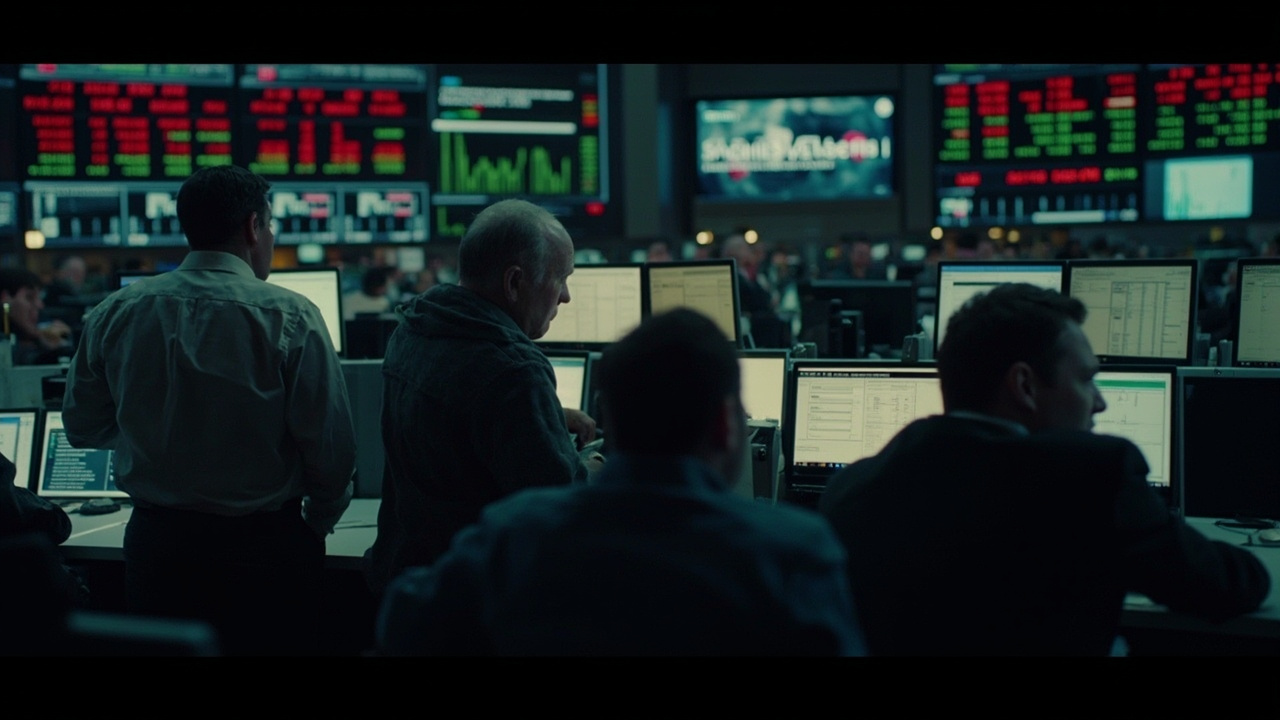
Brent crude closed Friday at a 9.07% one-day loss, the largest single-session decline of the Iran war. [1] West Texas Intermediate settled below $84 a barrel. The Dow gained 868 points; the S&P 500 set an all-time high at 7,126. Gold rose 1.6% to $4,885 — the same session, the same hours, the opposite reading. The financial market bought peace at 9 a.m. Eastern when Iran's foreign minister declared the strait "completely open," and kept buying through the afternoon even as Donald Trump's blockade on Iranian-flagged tankers stayed in force.
The physical market has a different opinion. An analyst trading Kpler cargo-tracking data posted on X that the price dump "misreads the physical reality at the strait." [2] Tanker loadings from Iranian terminals remain depressed. The insurance premium on Gulf transits has not reset. Goldman's public price note still flags Brent $100+ if the strait re-closes; the same Goldman whose $315M reserve build led the paper's hexagon thesis. The futures curve priced the ceasefire; the bill of lading did not.
Friday is an oscillation, not a verdict. The paper's Wednesday framing — four days, four directions — holds. Oil has moved in both directions in all four of the last four sessions; Friday's was the largest. A rally on an open strait, with a blockade held in place on one flag, is the financial market saying it does not price counterparty risk, only traffic. The physical market prices counterparties. Monday's open will show which of the two has read the weekend correctly.
-- DARA OSEI, London