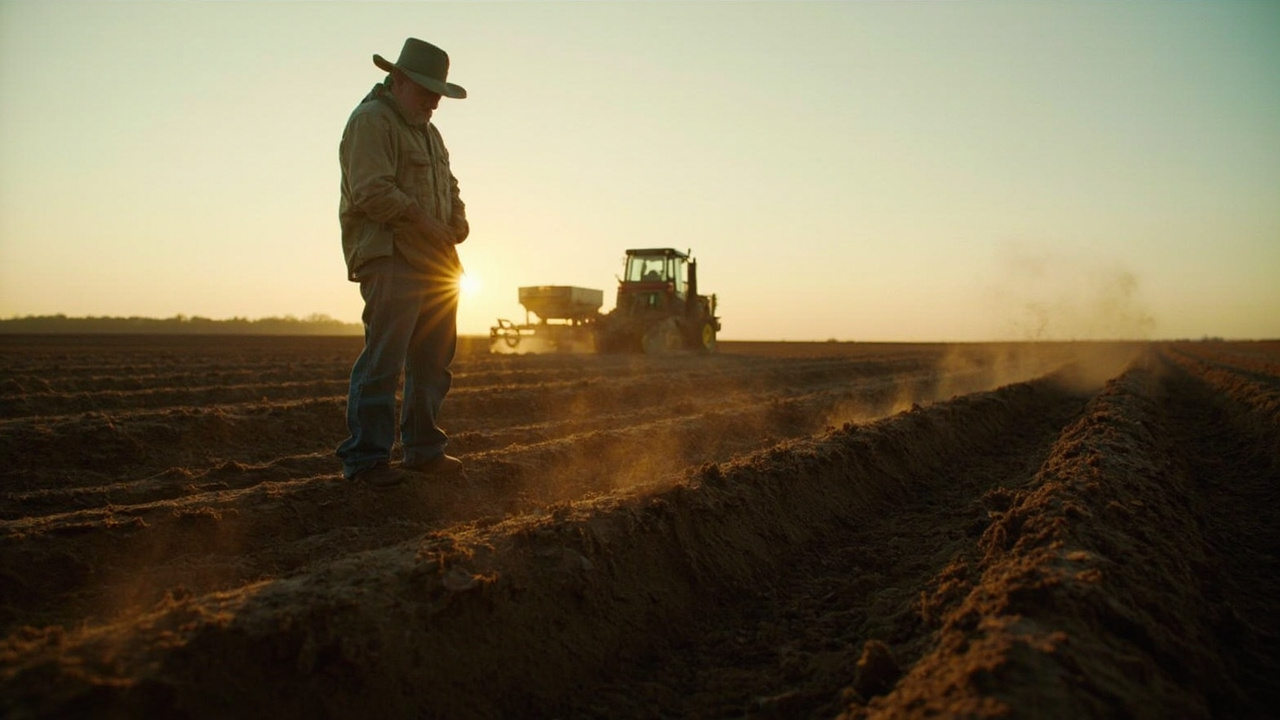
The paper's Sunday lead on the Lower 48 drought covers the physical accounting — Palmer Index at its highest March reading since 1895, sixty-one percent of the contiguous states in drought. [1] This brief covers the farmer's end of the same story: the operating margin on Monday morning's planting decision.
The American Farm Bureau Federation surveyed 5,700 farmers between April 3 and April 11. [2] The findings: nitrogen fertilizer prices are up more than thirty percent since the Hormuz closure; combined fuel and fertilizer costs are up twenty to forty percent. Seventy-eight percent of Southern farmers reported being unable to afford full fertilizer application this season. Sixty-nine percent of Northeastern and sixty-six percent of Western respondents said the same. The Midwest, where sixty-seven percent of farms pre-booked fertilizer earlier in the season, reported the lowest figure at forty-eight percent. [2]
Ninety-four percent of farmers told the Farm Bureau their financial situation is worse than or the same as last year. Only six percent reported improvement. Smaller farms are the most exposed — in the West, twenty-five percent of farms under 500 acres pre-booked, compared with fifty-four percent of operations over 2,500 acres. [2]
Arkansas urea hit $800 a ton last week; Faulkner County extension agents report diesel and urea are "all farmers are talking about." [3] The USDA's end-of-March Central U.S. Drought Monitor showed 69.81 percent of the region in some phase of drought — the highest such figure among the top three weather analog years of 2023, 2015 and 2009. [4] Rain, still, is the only line on the spreadsheet farmers cannot negotiate.
-- DARA OSEI, London