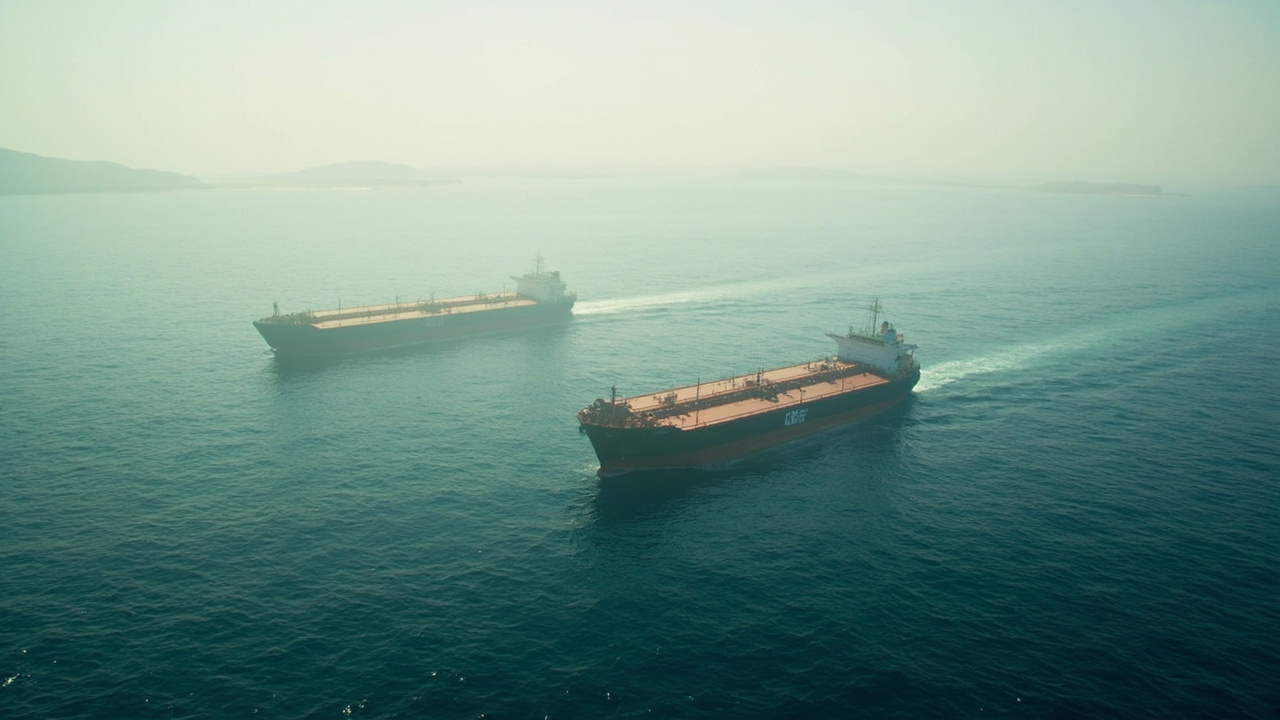
Six loaded tankers turned around on Saturday morning before reaching the Strait of Hormuz, stranding about 8.3 million barrels of non-Iranian crude that Bloomberg's ship-tracking data said would have been the highest single-day flow from the gulf since the war began on February 28. [1] The Nissos Keros, a Greek-managed supertanker carrying 1.8 million barrels of UAE crude, turned back first and idled near Iran's Qeshm island. [1] The India-flagged Sanmar Herald and Desh Vaibhav followed within the hour. [1]
The paper said yesterday that the strait had become open for all except Iran, with the blockade on Tehran's own ports still in force. Saturday's u-turns pointed the other way. Foreign Minister Abbas Araghchi said Friday that passage was "completely open." Hours later Iran's semi-official Fars news agency said the strait would stay closed while the US naval blockade of Iranian ports remained in place. [2] Shipowners with vessels inside the gulf told Bloomberg they had heard radio warnings late Friday that Iranian navy permission was still required to transit. [1]
The sixth vessel, the Aframax Desh Garima, went dark at 4:20 a.m. local time and had not broadcast a position hours later. [1] Three liquefied petroleum gas carriers and an oil product tanker that had been following the crude flotilla east reversed into the Gulf of Oman behind them. [1]
Insurance has already priced this ambiguity. Hull premiums for Hormuz transits now run between 1.5 and 3 percent of vessel value, up from the quarter-point norm before February. [2] Reuters reported Thursday that ship traffic through the strait was at less than 10 percent of pre-war volumes, with just seven passages in 24 hours against a normal 140. [3] The market is closing the strait even when Tehran says it isn't. Saturday's 8.3 million barrels is the price tag on that gap.
-- DARA OSEI, London