The State Department confirmed Monday that direct talks between Israel and Lebanon will resume at Foggy Bottom on Thursday — the first sit-down since the April 14 trilateral that produced a seven-paragraph readout and no ceasefire on paper. [1] Hours before the announcement landed, the Israel Defense Forces said they had killed "terrorists" in three separate incidents near Bint Jbeil and the Litani River, and a fourth Israeli strike on the village of Qaaqaait al-Jisr injured six people under what is, formally, a ten-day cessation of hostilities that began April 16. [2][3]
That cessation is the same architecture the paper tracked Sunday through the Marseille end of the war, when a second French-flagged hull was hit inside seventeen days and Paris found itself with a coalition but no clear posture. Thursday's Foggy Bottom round is the Washington analogue of the Islamabad track the paper covered Monday in the Iran-declines-Islamabad major: a second round announced while the first one's facts are still being adjudicated in the field.
The Thursday round will again pair Israeli ambassador Yechiel Leiter with his Lebanese counterpart Nada Hamadeh Moawad and U.S. ambassador to Lebanon Michel Issa, with Secretary Rubio holding the chair. [4] The April 14 session produced an agreement to "launch direct negotiations at a mutually agreed time and venue." The venue is now Washington; the time is Thursday; Hezbollah, which Secretary Rubio said would be the subject, will not be in the room. [1][4]
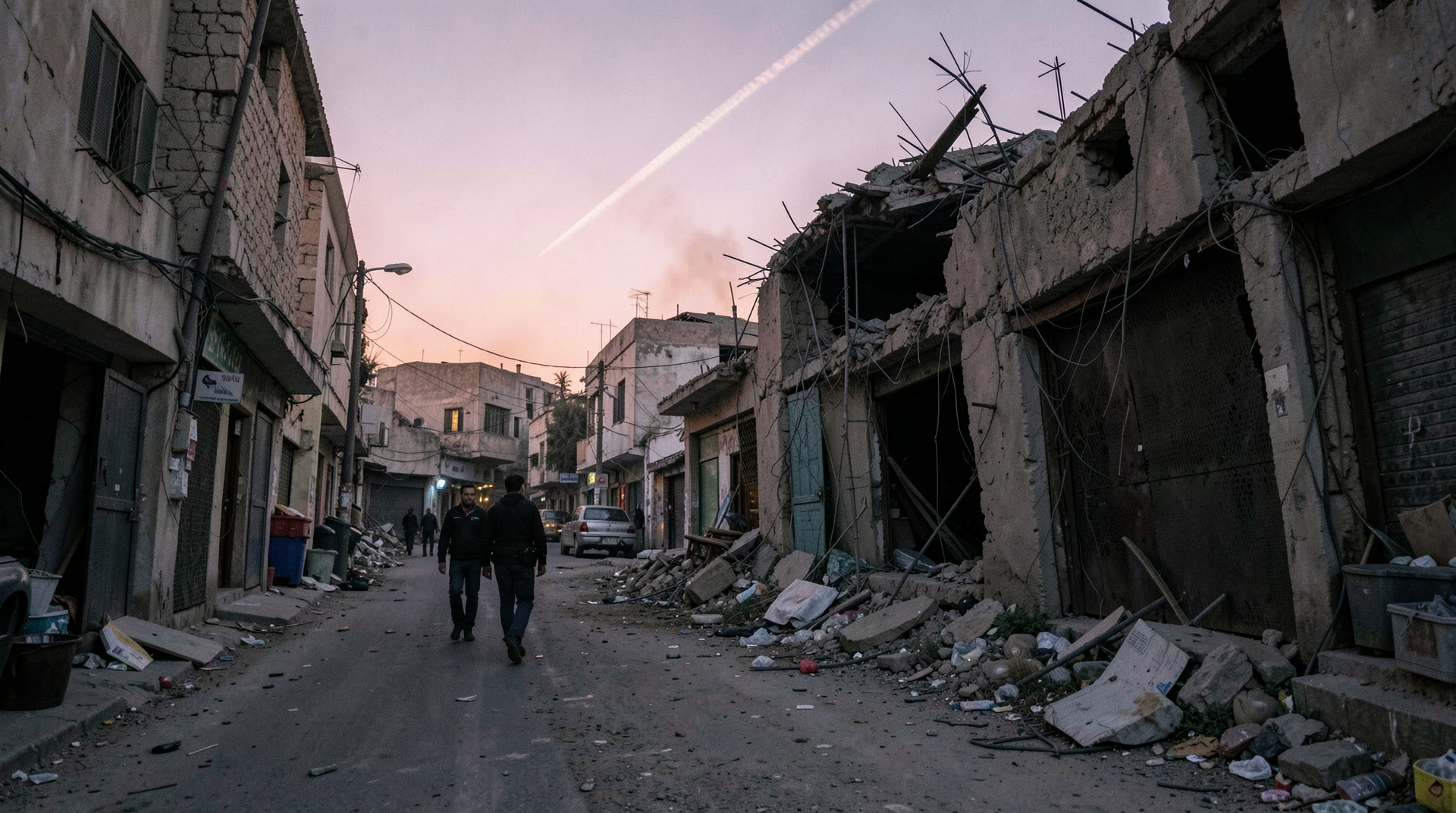
The Monday kinetics are the frame Thursday enters under. OSINT613's open-source Arabic-language feed reported that the IDF called in airstrikes "shortly after detection" against fighters it said had approached troops; the Qaaqaait al-Jisr strike that injured six was folded into the same pattern. [2] Israeli domestic outlets carried the same story with the headline that five divisions continue to operate south of the forward defense line, killing a "Lebanese terrorist who crossed truce line." [5] Prime Minister Netanyahu's April 15 video statement that the IDF was about to "overcome" Bint Jbeil ran in parallel with security-cabinet talks authorizing the Washington track. [6]
Hezbollah, which Israel and the United States both say is not covered by the Iran ceasefire framework, has made the Washington track the center of its political grievance: leader Qassem Naim called the April 14 dialogue a ploy to pressure the militant group to disarm, and the group is not expected to attend Thursday. [4] The Lebanese government's internal problem is that it has no direct control over Hezbollah's guns and has chosen, as of April 14, to go to Washington anyway. [1][4]
What Thursday's round has to resolve is narrower than "peace." The April 14 readout committed all three sides to "reaching agreements to cease hostilities" between the two governments — language that does not include Hezbollah, which is what makes the Monday Bint Jbeil incidents operationally significant. [1] If Israel's army is allowed to continue Bint Jbeil-scale operations while the governments negotiate in Washington, the Thursday round is a containment exercise for the Israeli campaign, not a substitute. That is the architecture the paper named Monday on the Iran axis, and it is now the architecture on the Lebanon axis as well.
The French UNIFIL peacekeeper killed Saturday near Ghandouriyah — about twenty kilometers west of Bint Jbeil — is the third peacekeeper death under the April 16 cessation. [3] Thursday is 48 hours away. The IDF's Monday statements did not mention Thursday.
-- YOSEF STERN, Jerusalem