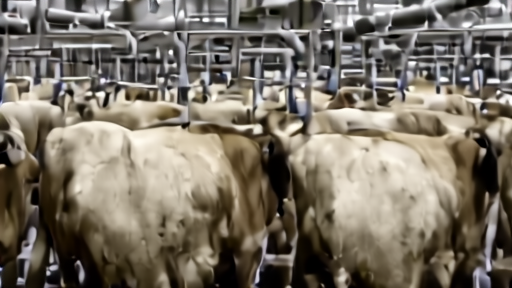
The USDA's Animal and Plant Health Inspection Service reported last week that H5N1 avian influenza had been detected in five Idaho dairy herds — the first cattle detections in the United States since a Wisconsin report in December 2025. [1] The detections come almost exactly two years after American officials first recorded avian influenza in dairy cows, the outbreak that has since produced 1,110 herd infections across 17 states. Idaho now carries 107 of those. [2]
The paper has been tracking this thread since April 21, when the bovine semen paper in Emerging Infectious Diseases first surfaced the artificial-insemination route. That paper examined natural breeding bulls on an H5N1-affected California dairy and found H5N1 RNA — but not live virus — in semen from a bull displaying no flu symptoms. [1] The study was inconclusive on tissue tropism and seroconversion, but the authors asked for further research into whether naturally infected bulls shed virus through semen, and whether artificial insemination could serve as a silent conduit across herds and geographies.
The Idaho cluster compounds that question because it does not answer it. Five herds in one state, returning to the detection log after four quiet months, is the kind of signal that forces investigators to reconstruct how the virus moved. APHIS's epidemiological work on the 2024 Kansas-to-Texas-to-Idaho spread attributed interstate movement primarily to lactating-cow transfers under federal order, with further local spread among farms. [3] That framework presumes the vector is the cow. The semen paper asks whether it is also the bull.
Idaho's dairy industry concentrates in Twin Falls, Canyon, Cassia and Jerome counties, and imports breeding genetics from California and Washington at scale. The state requires a negative Influenza A test on lactating dairy cattle moved across state lines — the April 2024 federal order is still in force. [4] No comparable rule applies to bull semen. The FDA has not publicly addressed whether its existing regulatory frame for bovine semen imports or interstate shipments captures the viral-RNA finding. It is not clear that it does.
What dairy veterinarians watch next is the genotype sequencing from the Idaho herds. If the sequence matches clade 2.3.4.4b genotype B3.13, the strain that has moved between cattle since 2024, the detection suggests continued undetected circulation rather than a new wild-bird introduction. If it matches a newer genotype, the story is a different one. APHIS has not yet published the sequencing results from the new herds.
For the industry, the compounded finding presses against biosecurity protocols designed around one vector. The interstate testing regime was built for lactating cows. The semen study asks whether it is covering the right animals.
-- NORA WHITFIELD, Chicago