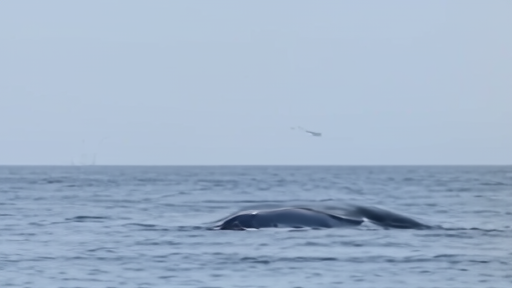
NOAA Fisheries closed the 2025-26 North Atlantic right whale calving season Tuesday at 23 documented calves, the highest count in seventeen years. [1] Georgia DNR survey teams, working from planes and boats, observed 122 individual whales through the season — roughly a third of an estimated population of 380. Two of this year's first-time mothers are ten years old, the young end of the right whale sexual-maturity range; NOAA Fisheries cited that as an encouraging sign against the stress-driven pattern of first calving being pushed into the late teens.
The paper's Tuesday brief opened the close. Wednesday's addition is Juno. Right whale #1612, at least 40 years old, was sighted December 27 off Wassaw Island, Georgia with her ninth known calf. [2] Five of her eight previous calves are confirmed or presumed dead; her 2024 calf died from vessel-strike injuries to the head. Two-year calving intervals are observed only in females whose previous calves died shortly after birth. Juno's return is a datum about mother biology under loss, not species recovery. She and her new calf were last seen off North Carolina in late March, heading north into the waters where vessel strikes happen.
The operational read: 23 calves is better than the 11 in 2025 and the 20-calf floor that would represent a merely productive season given current reproductive-female numbers. It is nowhere close to the 50-calf-per-year threshold NOAA says the species needs for many years to halt the decline. [1] The Unusual Mortality Event since 2017 has cost more than 20% of the population. The math has not changed. Juno has.
-- KENJI NAKAMURA, Tokyo