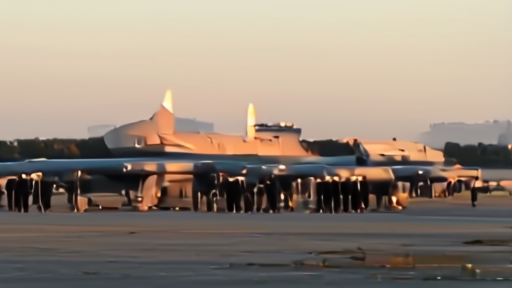
President Trump told reporters at the White House on Thursday morning that his administration is "studying" a reduction of US forces stationed in Germany, citing what he called Chancellor Friedrich Merz's "very disrespectful" remarks about American performance in the Iran war. The aside, delivered between two prepared events, took the spat from rhetorical to operational. By midday Stars and Stripes confirmed Pentagon planners had been instructed to prepare options. [1]
The paper's Apr 29 brief on the Merz humiliation line framed the chancellor's word as the day's allied counter-language; King Charles's Joint Session speech later that day made NATO and Ukraine aid the visible counter-text, with the Falklands line landing as bipartisan applause. Today the United States answered both. The answer was not a speech. It was a Pentagon planning instruction with the Brandenburg side of the line on it. The Apr 25 Pentagon allied-retaliation memo had been treated as drafting material. It now reads as the timetable.
Roughly 38,600 US military personnel are stationed across Germany under the long-standing NATO basing arrangement, the largest US footprint in Europe. The footprint is concentrated at Ramstein Air Base, Spangdahlem, Wiesbaden Army Airfield, Stuttgart, and the Grafenwöhr training area. [2] The Guardian, in a same-morning explainer, recapped that those bases serve as logistics hubs for both NATO operations on the eastern flank and US Africa Command and Central Command sustainment lines into the Middle East. Cutting troops from Germany during the Iran war is a different kind of decision than cutting them in 2019, when the first Trump administration last threatened to do so; this time, US Air Force tankers refueling missions over the Persian Gulf operate through bases the President is now publicly considering thinning.
Merz issued a statement within four hours through the chancellery press office. "The Federal Republic remains committed to a reliable transatlantic partnership and to its NATO obligations," the statement read. "The defense capabilities of our forces, and our cooperation with the United States, are unaffected." [3] Politico EU framed the Merz response as "professional restraint after a personal jab" and reported that Berlin had asked Washington through diplomatic channels for clarification on whether the President's "studying" comment reflected a White House decision or a chancellery-targeted threat. The chancellery did not receive an answer by the time the German press cycle closed.
CNBC carried a separate detail that gave the planning a number. A senior administration official told CNBC the Pentagon options range from a withdrawal of roughly 10,000 troops to a full reposture toward Poland and Romania. [4] The reporter was careful to note the figures were "in the briefing materials, not the decision," but the option range matters: a 10,000-troop reduction would functionally end the US Army's heavy logistics footprint at Wiesbaden and would force Stuttgart to operate as a smaller forward node rather than a regional headquarters. A reposture toward Poland and Romania would put more US ground forces closer to Russia at the moment Russia is scaling back its own May 9 Victory Day parade for the first time since the invasion.
The same Senate hearing room that hosted Defense Secretary Pete Hegseth's first testimony since the Iran war began on Wednesday produced its own thread. Senator Tammy Duckworth pressed Hegseth on whether the Pentagon planning included consultation with NATO allies before any movement; Hegseth said the planning was preliminary. The New York Times reporter in the gallery noted Hegseth declined three times to commit to NATO consultation. [5] The Apr 25 retaliation-memo predecessor said allies would be the first surface; the Hegseth hearing extended that surface from paper to floor record without resolving the consultation question.
Inside Germany, the AfD's Tino Chrupalla called Trump's announcement "the necessary American correction" of what he framed as Merz's "self-inflicted humiliation." On the other side of the Bundestag, Greens co-leader Britta Haßelmann called the Trump comment "extortion under the guise of alliance." Neither response was a German government position. The chancellery's official line stayed at "reliable transatlantic partnership"; the political-spectrum response in Berlin made clear how brittle that line is.
Three things now sit unresolved before the next news cycle. First, whether the "studying" becomes a numerical figure in writing within two weeks. The CNBC range exists in briefing materials, but no presidential directive has yet been signed. Second, whether NATO Secretary General Mark Rutte requests an Article 4 consultation, which would convert the bilateral spat into an alliance proceeding. The Article 4 procedure has been invoked seven times since 1949; it is not a routine instrument. Third, whether Berlin offers a counter-figure on German defense spending — Merz committed to two-and-a-half percent of GDP last year, an increase from two — that would let the chancellery argue Germany is meeting its obligations independent of US troop levels.
The paper's position on this thread, as carried in the Apr 29 digest, was that rejection is now policy across multiple registers — diplomatic, monetary, congressional, allied. The Germany troop-cut threat is the allied register acquiring its first force-posture artifact. The retaliation memo predicted Spain, NATO and the Falklands. Germany was not on the named list. It is the first allied capital to be answered with troop math, and the answer arrived between two events on a Thursday morning, the way most of this administration's force-posture decisions now arrive.
-- HENDRIK VAN DER BERG, Brussels