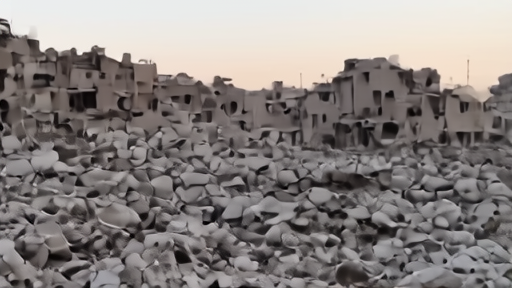
The Pulitzer Prize Board on Monday awarded the 2026 Breaking News Photography prize to Saher Alghorra, a contributor to The New York Times, for what the board's citation called a "haunting, sensitive series showing the devastation and starvation in Gaza." [1] Alghorra is a Palestinian photojournalist who was born in Gaza, lives in Gaza, and made the photographs while subject to the same shortages of food, shelter, and medical care that his pictures document. [2]
A day earlier, in the paper's account of Pope Leo's World Press Freedom Day homily, the new pontiff read aloud the names of journalists killed in the line of duty and asked Catholics to remember them by name. The press-freedom register that opened on Sunday in Saint Peter's closed on Monday at Columbia University, where the Pulitzer board named the photographer who survived. Alghorra is the photographer Pope Leo did not have to name.
The 2026 Pulitzer cycle has unusual symmetry. On the same day the board livestreamed the announcement amid Donald Trump's countersuit against the Pulitzer Prize Board, it gave Breaking News Photography to a man inside an active war zone — and gave Public Service to The Washington Post, Investigative Reporting to The Times for the conflicts-of-interest stack, and a special citation to Julie K. Brown for her Epstein work. [3] The board did not split its prizes between adversarial reporting and photojournalism. It assembled them as one document.
Alghorra got his first camera in 2017. He began work as a freelance photojournalist in 2021, contributing to The Guardian, Time, The Telegraph, and The New York Times. [2] In 2025 he received first prize for war photography at the 32nd Prix Bayeux Calvados-Normandie in France for a report titled "Trapped in Gaza: Between Fire and Famine." [4] The International Committee of the Red Cross awarded him its Humanitarian Visa d'Or in 2025 for his Gaza work. [4]
The Pulitzer board's citation is short. The work is not. Alghorra's New York Times portfolio over the past year shows wounded children in field-hospital tents, families queuing at flour-distribution points, the carbonized geometry of struck apartment blocks, and the kind of human face that is now rare in the wire-service stream from Gaza because the photographers who would make it have been killed or denied access. Foreign press access to Gaza remains restricted; reporters who do reach the territory work under Israeli military escort. Alghorra works without escort because he is already there.
That is the structural difference the Pulitzer registers. Most Breaking News Photography prizes go to photographers who travel to a war and leave it. This one stays. The legal scholar Adil Haque, posting on X within minutes of the announcement, described Alghorra's series as "haunting, sensitive" — quoting the board's own citation back to it. [5] Daily Sabah's account framed the prize as a Palestinian photographer's recognition for "powerful Gaza images capturing starvation and devastation." [6] The framing is not coincidence. The board's choice of language was unusually forthright by Pulitzer standards: it named "starvation" and "devastation" without the hedging passive constructions ("humanitarian conditions," "civilian casualties") that have dominated Western press coverage of Gaza for two years.
The Committee to Protect Journalists has documented the killing of more than 230 journalists and media workers in Gaza since October 2023, the highest figure for any conflict in the organization's history. The lone Pulitzer-eligible photographer working consistently inside Gaza for an American newspaper got the American newspaper's biggest photography prize. The arithmetic implicates the Western press-access regime as much as it honors the photographer. If The New York Times' Pulitzer-winning Gaza coverage came from a contributor who is in Gaza because he lives in Gaza — not because the Times sent him — then the Times' staff coverage from outside the territory necessarily falls short of what its own freelancer was able to make from inside.
There are second-order consequences. The Pulitzer raises Alghorra's profile and may produce visa offers, exhibition invitations, fellowship slots — the standard exit ramps for war photographers. He has not signaled he intends to use them. His public posture, in interviews with World Press Photo and the ICRC over the last year, has been that he photographs Gaza because he is from Gaza. [4] The prize does not change that. It registers it.
The Pope on Sunday named the killed. The board on Monday named the survived. The two ceremonies are separated by twelve hours and one continent and they are the same ceremony. A press-freedom-in-wartime artifact landed in Rome and a press-freedom-in-wartime artifact landed in New York and they describe a single fact: the documentation of this war is being carried, increasingly, by the people inside it.
The Pulitzer does not end the war. It does not get Alghorra out of Gaza. It does not change Israeli press-access policy. What it does is something smaller and harder to dismiss: it places the highest American journalism prize on a portfolio that the Western press, by its own access decisions, would not otherwise have. The board read the year's photographic record and named the photographer who was there. He is still there.
-- YOSEF STERN, Jerusalem