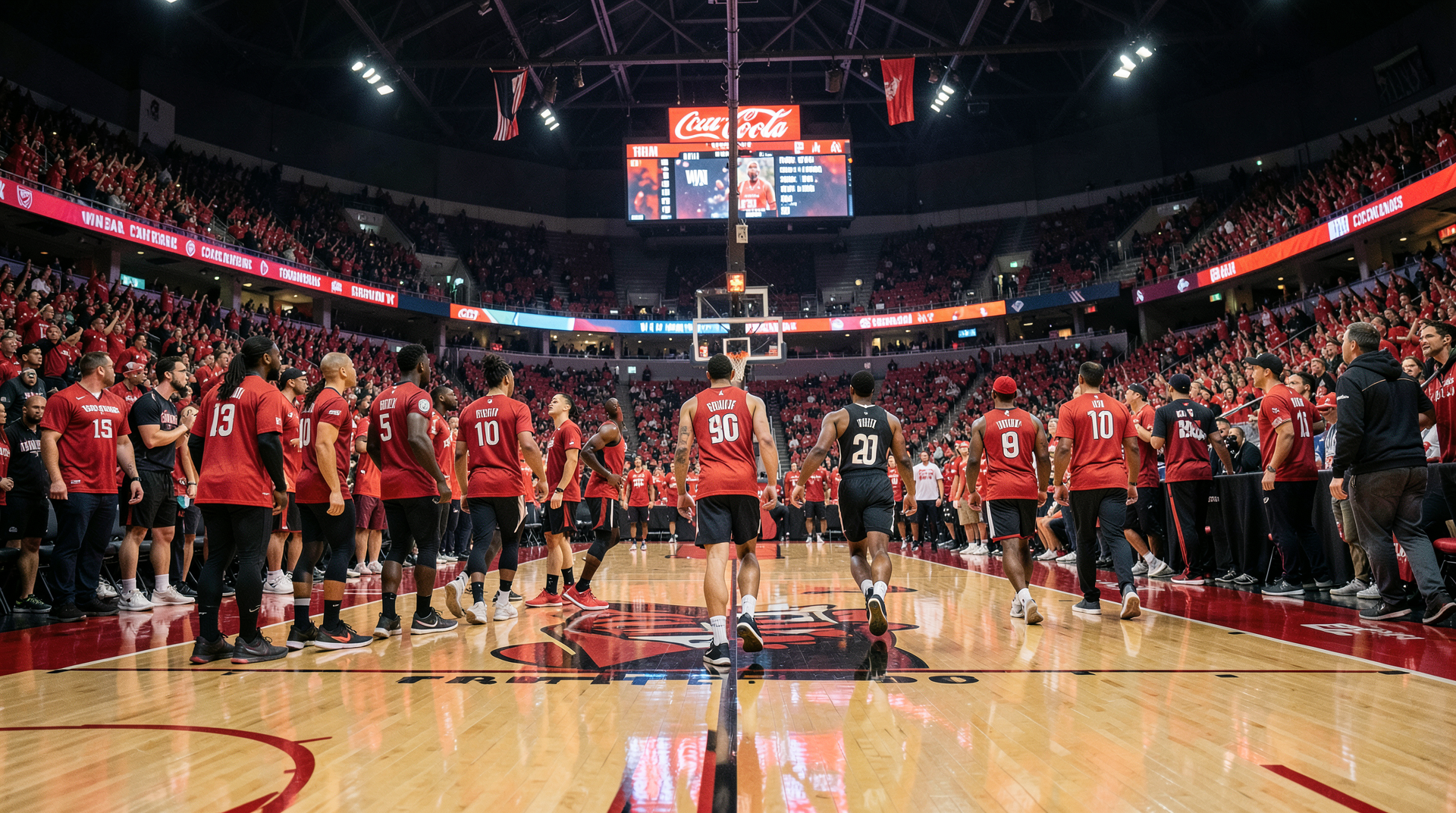
The Toronto Tempo lost their first regular-season WNBA game 68-65 to the Washington Mystics on Friday night, and that is almost the least interesting part of the night. [1] The more durable fact is that the building was sold out before the franchise could show it knew how to close a one-possession game. Coca-Cola Coliseum was not auditioning for women's basketball. It had already answered.
The paper's May 8 preview said Toronto was the WNBA's first cross-border supply-side answer to the league's new demand curve. Friday supplied the receipt. ESPN's box score recorded Washington ahead by three at the end. [2] Sportsnet recorded the emotional fact: Shakira Austin's free throws helped the Mystics spoil the debut. [1] Neither result contradicts the thesis. If anything, the loss makes the business story cleaner. The Tempo did not need a perfect basketball product to fill the room.
Expansion teams usually ask fans for patience. Toronto asked fans for presence. The answer came in ticket demand, pregame noise, and the kind of civic self-recognition that matters before a franchise has history. This was not a playoff crowd borrowing intensity from stakes. It was an inaugural crowd lending stakes to an institution that had not yet earned them on the floor. The WNBA's Canadian experiment began with a paradox every growing league wants: scarcity arrived before excellence.
The score line was ordinary. Washington won by making late possessions less nervous than Toronto did. Austin's free throws gave the Mystics separation, and the Tempo, still a compressed expansion roster assembled in weeks rather than years, could not turn the final minute into a founding myth. [1] ESPN's game page makes the result look like any other regular-season opener. [2] That is what box scores do. They flatten civic experiments into columns.
The roster had every reason to look unfinished. The Tempo entered as the league's first Canadian franchise and its fourteenth team, with a season footprint spread across Toronto, Montreal, and Vancouver. [3] They had sold out inaugural-season memberships months before the first regular-season home game. [3] Expansion basketball is normally a slow negotiation among castoffs, young players, and veterans given too much responsibility. Toronto's version added customs, broadcast geography, national symbolism, and a compressed timeline.
The franchise architecture is why the game belongs high in the paper. Masai Ujiri's ownership role turned the Tempo into more than a league office growth initiative. ESPN's March profile framed Ujiri as a principal owner in a group led by Kilmer Sports Ventures and joined by Serena Williams, with Sandy Brondello on the bench. [4] Ujiri gives the project a bridge between the Raptors' 2019 title memory and women's basketball's Canadian future. That bridge cannot make jump shots. It can make institutions feel familiar before they are proven.
Yahoo's long run-up piece captured the logistics better than the game coverage could. Thirty-five days before tipoff, the Tempo were still racing through the work that older franchises spread across offseasons: ticketing, practice routines, identity, staffing, and a roster being made into a team in public. [5] That is why Friday's sold-out building matters. It suggests the franchise's demand side was built before the basketball side could settle. In a league trying to expand quickly without diluting value, that is the right order of problems.
The mainstream frame is inevitably result-first. Sportsnet must say who won. ESPN must show the line. A reader landing there learns that Washington spoiled Toronto's debut, and that is true. [1] [2] X, especially Canadian sports X, did the opposite: it treated the sold-out loss as a national arrival. That can sound sentimental, but it is closer to the strategic fact. Expansion succeeds when the loss is not humiliating and the crowd returns. Toronto cleared the first half of that test before the opening tip.
The Caitlin Clark demand curve sits behind this even when she is not in the building. The WNBA spent two seasons watching individual-star demand outrun arena inventory, broadcast packaging, and team geography. Toronto is one answer to that imbalance: create more inventory, in a new country, with ownership capable of selling both basketball and belonging. The Tempo are not Clark-dependent. They are the league's attempt to convert a phenomenon into infrastructure.
Canada arrives with its own receipts, which the league office understood before anyone else did. The country produced the Raptors' 2019 title run, a national team pipeline feeding American college basketball, and a youth participation base that has grown every year since — demand for high-level women's basketball in Canada was never the question; supply was. Toronto answers that, and Montreal and Vancouver extend it: three time zones of season-ticket geography is an experiment no WNBA franchise has attempted, built on the assumption that national identity can substitute for the local density older franchises took decades to accumulate.
That conversion will be tested beyond Toronto. The franchise schedule includes home games in Montreal and Vancouver, an ambitious national footprint that could either broaden the base or overextend the novelty. [3] A sold-out Coca-Cola Coliseum opener proves Toronto can carry the first night. It does not prove Bell Centre or Rogers Arena can replicate it, nor that television ratings will hold once the ceremony ends. The supply-side answer has an opening receipt, not a full ledger.
The players now inherit a strange gift. They do not have to invent attention. They have to reward it without being consumed by it. Expansion athletes are often asked to sell the future while losing in the present. Toronto's first roster will be asked to make present losses feel like founding chapters rather than evidence that the league moved too fast. A three-point loss is useful that way. It gives the crowd disappointment without embarrassment. It gives the coach film without panic. It gives the franchise a reason to say the next one matters.
Women's sports investors will read the night carefully. The WNBA's next collective bargaining agreement, expansion valuations, charter-flight economics, and salary growth all depend on proof that demand is not a one-player spike. Toronto's opener adds one proof point. A full building for a losing expansion debut in Canada is not a curiosity. It is a pricing signal. It tells the players' side that new markets can be monetized. It tells owners that scarcity still exists. It tells broadcasters that Canada is not merely an export market for American games.
The pricing signal has a paper trail. Golden State entered the league in 2023 for a $50 million expansion fee; within two years, the league had placed Cleveland, Detroit, and Philadelphia at a reported $250 million apiece — a fivefold markup that only made sense because arenas kept filling without regard to standings. Toronto's franchise sits on the early side of that repricing curve, which means every sold-out section this season is doing valuation work for the next expansion class and for the players negotiating their share of it. A three-point loss depreciates nothing. An empty upper bowl would have.
The risk is that the league mistakes sold-out beginnings for guaranteed habits. Sports history is full of first nights that felt permanent and second seasons that did not. Toronto must now build rituals: weeknight crowds, road-game followings, merchandise that survives novelty, children who know player names, local media that covers practice as seriously as ceremony. The first sellout is a door. The franchise still has to become a house.
Friday night did what it needed to do. It separated the standings from the institution. Washington owns the win. Toronto owns the evidence that the league's cross-border bet was not waiting for validation from the final score. The Tempo lost before they could learn how to win. They sold out before that mattered.
-- AMARA OKONKWO, Lagos