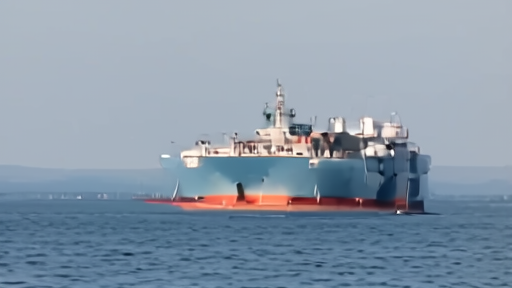
The Qatari LNG carrier Al Kharaitiyat crossed the Strait of Hormuz safely and headed for Pakistan's Port Qasim, according to Daily Sabah's Reuters-backed account. It was the first Qatari gas tanker to cross since the U.S. and Israel began the war on Feb. 28. [1]
The paper's May 11 account of Qatar LNG making the first Hormuz transit since the war began called it a business-sector receipt against two months of closure. Tuesday's correction is semantic but important: a receipt is not a reopening.
Daily Sabah reported that the passage had been approved by Iran to build confidence with Qatar and Pakistan, both mediators in the war. The same article said hostile drones were detected over several Gulf countries Sunday, and Qatar condemned a drone attack that hit a cargo ship coming from Abu Dhabi in its waters. [1]
CNBC made the same distinction from the market side. The Qatari tanker crossing was a symbolic opening that did little to ease broader market concerns, while West Texas Intermediate and Brent crude jumped Monday after Trump's rejection of Iran's counterproposal. [2]
That sequence is the story. One vessel passed because it had permission. Another Qatari-waters vessel was hit because the security environment remains permissive in a different sense. The strait has moved from closed to administered. The market hears that as risk. Pakistan hears it as badly needed gas. Iran hears it as leverage.
The difference between a corridor and a permission regime is who owns the exception. A corridor belongs to a rule. A permission regime belongs to the authority granting passage. If the Al Kharaitiyat is evidence of confidence-building, it is also evidence that confidence now has to be individually allocated ship by ship.
Mainstream coverage presents the crossing as relief without overclaiming it. X collapses it into a victory receipt for Iran's control of the strait. The paper's view is that the vessel proves neither full Iranian mastery nor international normalization. It proves a narrower fact: Tehran can make exceptions visible enough to reward mediators while keeping the larger pressure intact.
For Pakistan, this matters in megawatts, not metaphors. Daily Sabah tied the transit to power blackouts caused by halted gas imports. [1] A single LNG arrival can ease a grid shortage while leaving the global order unchanged. That is exactly why the crossing has diplomatic value.
For Qatar, the transit carries a different message. Doha is both mediator and exporter, a state whose diplomatic usefulness depends on being able to move gas while talking to every side. A ship allowed through to Pakistan rewards two mediators at once. It gives Islamabad fuel and gives Doha evidence that its channel can produce something more tangible than statements. Iran gives up little by permitting one passage, but gains a visible example of selective cooperation.
The Al Kharaitiyat did not end the blockade. It made the blockade more legible. A closed door is blunt. A door opened once by permission tells every other ship to ask who holds the key.
-- PRIYA SHARMA, Delhi