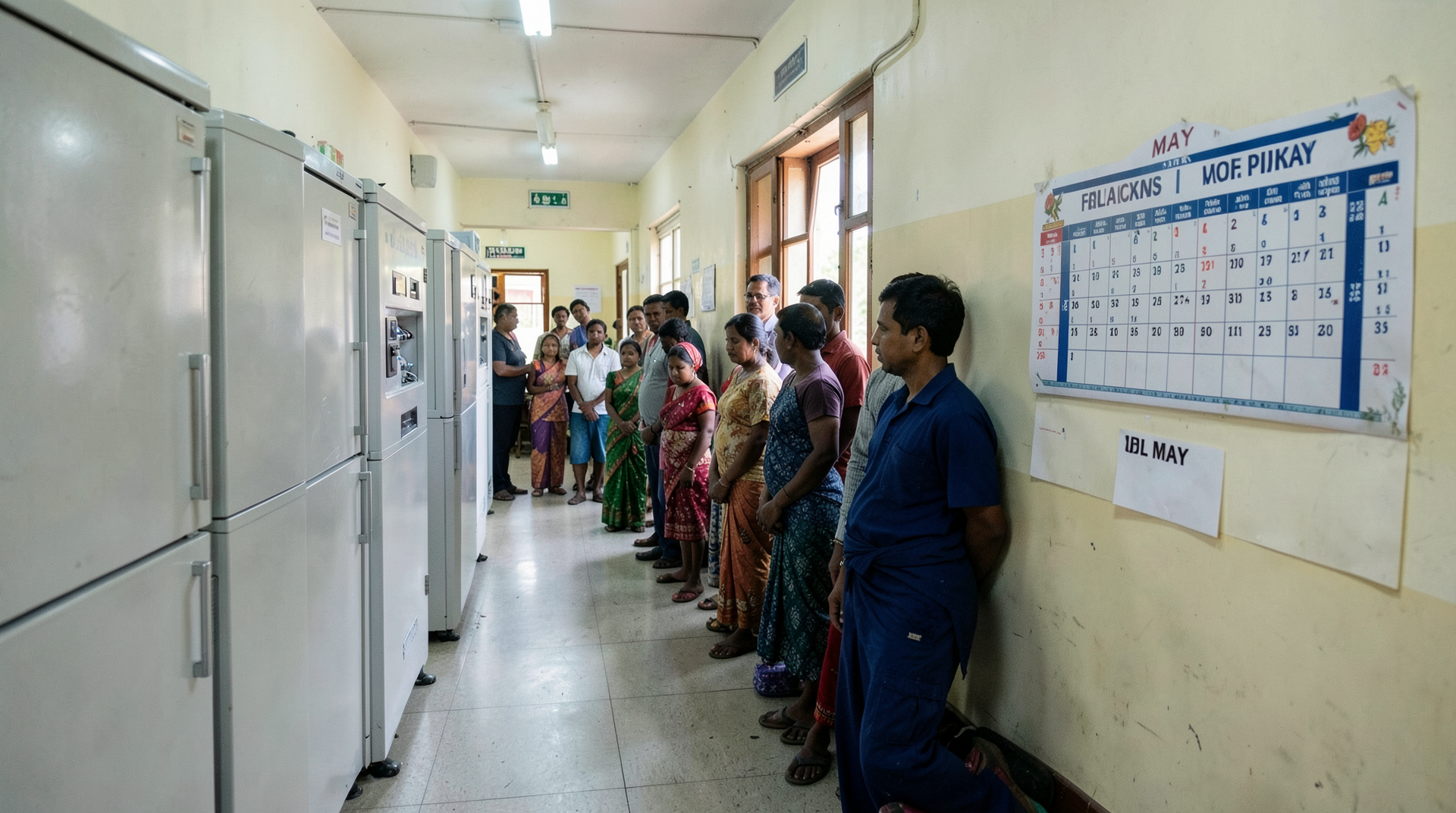
Bangladesh Measles Toll Reaches 415 Children
Six more children died in Bangladesh, and the measles outbreak is now a systems story as much as a medical one.
You're offline. Previously read public pages remain available; new requests will resume when you reconnect.
The news. The narrative. The timeline.
Six more children died in Bangladesh, and the measles outbreak is now a systems story as much as a medical one.
Flaming Gorge can lend Lake Powell water, but it cannot lend the Colorado River a new climate.

The McGill clot is exciting because it treats blood cells as building material, not just biology to be hurried along.

Utah's outbreak is no longer a local case count because November is when elimination status becomes an institutional question.

Removing a warning can be scientifically right and still demand better explanation from regulators and drugmakers.
A 90 percent containment number does not erase 35 lost structures, $9 million in damage, or a June 1 full-containment date.

Copernicus turned April's hot ocean into a forward problem for El Nino, marine heatwaves, and hurricane-season planning.

Higher-than-usual tick-bite ER visits turn a seasonal nuisance into a practical May checklist.
Twenty-three calves are real good news for right whales, but survival still depends on ships, ropes, and food.

Hunt turned the mathematics of turbulent air and water into safer towers, weather services, and public climate work.

Braunwald's legacy is not just a long CV, but the vocabulary cardiologists still use at the bedside.
The dairy H5N1 story has moved from case counts to how federal systems classify states and target testing.

The useful hurricane story starts before the cone appears, with water, alerts, evacuation routes, and a kit.