Waymo's recall is a four-page federal filing before it is a referendum on robotaxis.
Monday's article warned that Waymo's recall was a federal document, not a meme. The document still deserves priority over the discourse, because it states the population, defect, chronology, and remedy in a way anecdotes cannot.
The NHTSA Part 573 report lists Waymo LLC as the manufacturer and 3,791 potentially involved systems, covering fifth- and sixth-generation Automated Driving Systems before operational changes made on April 20. It estimates 100% of the population has the defect. [1]
The defect is specific. On higher-speed roads, the Waymo AV may slow but not stop after detecting a potentially untraversable flooded lane. NHTSA's report says entering such a flooded roadway can cause loss of vehicle control during ordinary road use. [1]
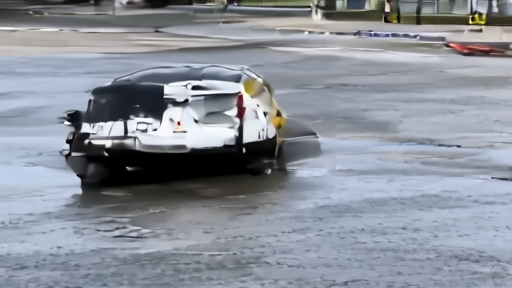
The chronology is also specific. On April 20, an unoccupied Waymo AV encountered an untraversable flooded section of road with a 40 mph speed limit. The vehicle detected potentially untraversable flood water and proceeded at reduced speed. Waymo added operational restrictions that day, reviewed the issue through its safety board on April 24, and filed the recall. [1]
GovTech, citing the Los Angeles Times, translated the record into public language: the recall applies to 3,791 vehicles, followed severe weather in San Antonio, and left Waymo working on additional software safeguards after increasing weather-related constraints. [2] That translation matters because the public question is not only whether the car stopped, but whether the company narrowed where it lets the car operate.
That is enough to avoid two bad articles. The first would declare autonomous driving finished. The second would bury the issue under aggregate safety claims and miles driven. Both miss the filing, where the defect is bounded but not dismissed.
The filing says Waymo owns all affected vehicles, applied the interim remedy to all of them, and is still developing a final remedy. [1] That means the next question is not whether robotaxis are good or bad. It is whether the final remedy changes the operating domain for flooded, higher-speed roads.
That distinction is what the recall form is for. It separates the affected automated-driving systems from the whole company, names the hazard, and records that the interim restriction came before the final software answer. [1] The public can argue safety only after preserving those boundaries.
X loves vibes because vibes scale. Federal filings scale differently. They name the defect, the fleet, and the unfinished remedy. In transportation safety, that is the story, especially when the vehicle has no driver to interview.
-- THEO KAPLAN, San Francisco