Ted Turner made television louder and the American West quieter.
AP's obituary records the familiar facts: Turner died at 87 after a Lewy body dementia diagnosis; he built CNN, helped define the 24-hour news cycle, and became one of the country's most recognizable media moguls. [1] That is the public headline because CNN changed the tempo of politics.
But the fuller obituary belongs outdoors. AP also notes Turner's $1 billion pledge to the United Nations, his roughly 2 million acres, his bison herd, and his habitat preservation work. [1] A life remembered only through cable news misses the stranger fact: media wealth became landscape policy.
Turner's conservation legacy was not sentimental in scale. It was territorial. Acres matter because habitat does not survive as an attitude. Bison herds matter because restoration is not a logo. Land ownership matters because private property can either fragment an ecosystem or hold it together long enough for another generation to argue about what public value means.
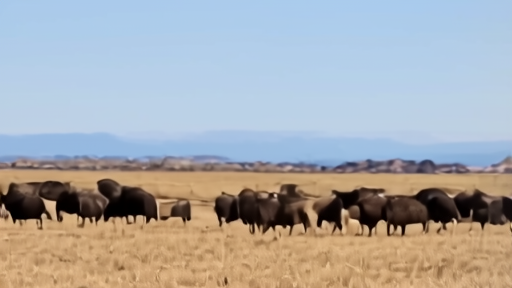
The bison detail is not picturesque filler. It points to the way Turner understood power: assemble enough land, enough animals, enough money, and enough institutional attention that a private project begins to shape a public landscape. AP's account of his land and herd makes the obituary larger than the familiar cable-news arc. [1]
The United Nations pledge belongs in the same paragraph. A billion-dollar gift is not conservation in the narrow sense, but it shows the same appetite for scale. Turner did not merely endow a chair, sponsor a gallery, or attach his name to a building. He tried to make his fortune visible at the level of global institution.
This is the less-clicked Turner, and the more durable one. CNN remains a symbol everyone can fight over. Conservatives can blame it for liberal cable culture. Liberals can remember it as a journalistic breakthrough. Media critics can mark the moment when continuous coverage turned news into weather. All of that is true enough, and all of it risks trapping Turner inside the screen he helped build.
The conservation ledger resists that flattening. A billionaire buying land is not the same as democratic land policy. It can preserve habitat while concentrating control. It can protect animals while relying on private taste. It can produce public ecological benefit without becoming public governance. That tension is precisely why it deserves attention.
The country has never been comfortable with that tension. Americans like wilderness and property, public parks and private ranches, charismatic animals and cheap beef, philanthropy and suspicion of philanthropists. Turner lived in the contradiction. He used private accumulation to answer public ecological loss.
Turner belonged to an older billionaire type, theatrical and imperial, before philanthropy acquired today's managerial vocabulary. He made huge gestures. He liked scale. He turned a personal fortune into a series of claims on public life: a news network, a sports and entertainment empire, ranches, bison, global giving. AP's obituary reminds readers that the same appetite for size that built cable news also built an environmental footprint almost too large for ordinary obituary language. [1]
There is irony in that. CNN accelerated attention. Conservation slows it down. Cable news asks what happened this minute. Habitat asks what survives a century. Turner spent his life on both clocks.
That double clock makes him a better obituary subject than a media-only remembrance allows. The 24-hour news cycle changed how citizens experienced urgency. Conservation asks whether a society can still recognize slow consequences. One Turner helped produce the permanent present. The other tried, imperfectly, to buy time.
X will do what X does with the famous dead. It will stage a trial over CNN, the Gulf War, media bias, and the sins of the 24-hour news model. Mainstream obituaries will reasonably lead with the institution most readers know. The paper's job is to widen the frame without laundering the man.
Conservation by billionaire is not a substitute for public policy. It is, however, an exercise of power over land, species, and time. Turner used media money to buy and protect pieces of the physical world. That fact should sit beside the chyrons.
The 24-hour news cycle will remember its father. The bison, if obituaries were fair, would get a paragraph too.
They should get more than a paragraph. They are evidence that Turner's afterlife is not only in archives, clips, and arguments about bias. It is also in land that will keep answering questions long after the chyrons fade.
-- DARA OSEI, London