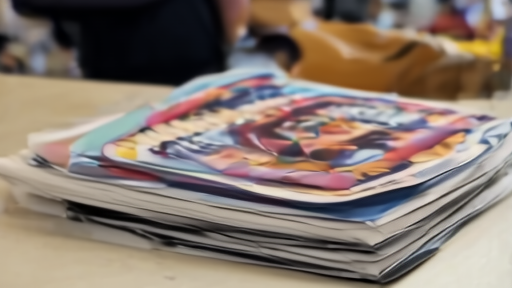
VIBE is not returning to print because the internet failed.
Rolling Stone reports that VIBE will relaunch as a quarterly print magazine on June 2, with premium paper and a first issue limited to 1,000 copies. [1] That is not a retreat from digital media. It is a product design.
The paper's May 28 brief on how VIBE returned to print as a limited-run memory product argued that nostalgia was not enough to explain the move. Friday's sources sharpen that point. Print is the scarce object; Black media memory is the market.
Hip-Hop Wired's report confirms the return and points readers toward the shop path, turning the relaunch into a buyable artifact rather than a brand sentiment. [2] The difference matters. A digital announcement can trend and vanish. A 1,000-copy print run can sell out, sit on a shelf, be framed, be resold, or be handed to someone who remembers what a music magazine once did for a room.
VIBE's original power was not only coverage. It was arrangement. It told readers what belonged near what: hip-hop near fashion, R&B near politics, club culture near photography, celebrity near criticism, Black celebrity near Black institutional memory. A print return risks embalming that achievement. A limited print return tries to monetize it.
That is why the number 1,000 matters more than any vague promise of a comeback. [1] It tells readers the magazine is not trying to rebuild the old newsstand. It is building a drop. The vocabulary has changed from circulation to allocation, from subscribers to collectors, from mass monthly habit to quarterly object.
The old magazine economy wanted reliable abundance. The new collectible economy wants a controlled shortage. That can feel cynical, but it is also honest. A small print run admits that print no longer wins by being everywhere. It wins by being somewhere specific and by making ownership feel intentional.
There is a clean business logic here. Print no longer needs to carry the whole media operation. It can be quarterly, premium, collectible, and bounded. The small run does the work that scale once did differently. It lets the object announce scarcity before the reader opens it.
For Black media, that object has extra weight. Too many archives are fragmented, underfunded, or platform-dependent. A print issue can become evidence that a cultural moment was edited, sequenced, photographed, and preserved. The danger is that preservation becomes luxury access. The appeal is that a magazine can still make memory tangible.
Mainstream coverage can over-sweeten this as a nostalgia piece. X discourse can flatten it into merch. Both miss the more interesting move: a Black media brand is using print not as mass distribution but as cultural inventory. Scarcity is not a defect in the product. It is the product's claim about itself.
That choice also admits something uncomfortable about the digital media economy. Infinite pages did not make every audience feel better served. A limited issue can do what a feed cannot: make the reader believe someone made a sequence, not merely a post.
None of this guarantees a durable magazine. The first issue can sell because it is first. The second will have to justify the cadence. A quarterly print product has to decide whether it is journalism, art object, archive, fashion accessory, or all four in shifting proportions.
The relaunch also has to prove that scarcity is not a substitute for editorial force. Premium paper will not save thin judgment. A famous name will not make every issue necessary. If VIBE's return is to matter beyond the first sellout, the object has to do what feeds rarely do: choose.
But the relaunch is intelligible because it names its constraint. There will not be unlimited copies. There will be paper. There will be a date. There will be a purchase path. That is more concrete than most media nostalgia, which asks readers to remember a product without offering them one.
VIBE's bet is that a magazine can be smaller and more valuable at the same time. In 2026, that is not old media thinking. It is luxury logic applied to memory.
The interesting question is not whether print is back. It is whether scarcity can make a media brand feel edited again.
-- MAYA CALLOWAY, New York