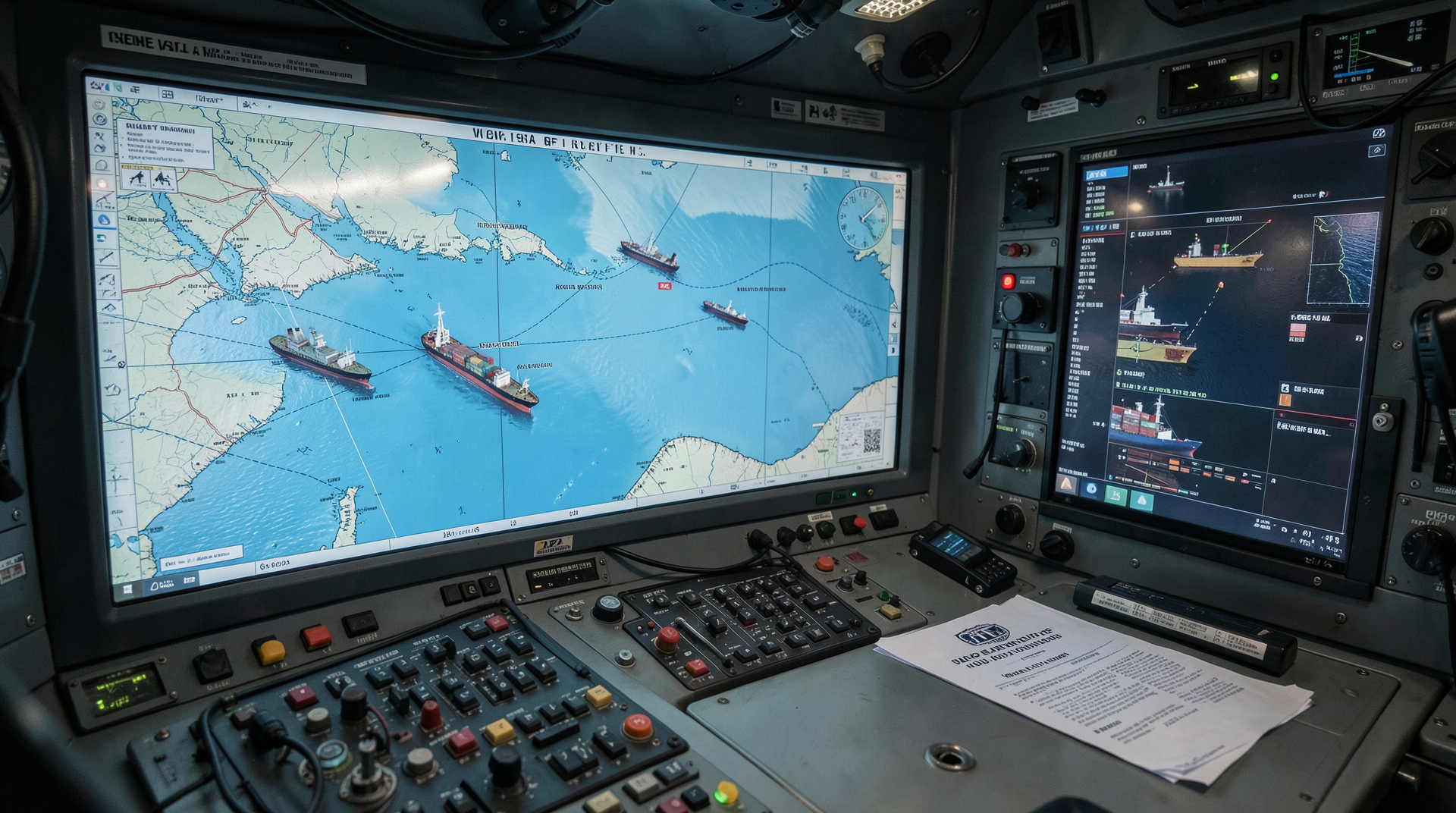
CENTCOM's public post says traffic continued through Hormuz after U.S. forces downed Iranian drones aimed at commercial ships. The International Maritime Organization's current Strait of Hormuz page still treats the route as a seafarer-safety and no-safe-passage problem. The paper's June 13 account said mine teams and insurers, not leader rhetoric, would decide whether Hormuz opened. Sunday's record gives that test a cleaner split. [1]
The words are doing different jobs. "Traffic continued" is a military-operational statement about movement during an incident. "Safe passage" is a commercial and human standard about whether a voyage can be treated as ordinary. Those standards can overlap, but they are not identical. A truck can pass a flooded road once. That does not make the road normal.
IMO's page keeps the slow standard alive. It frames the Middle East and Strait of Hormuz file through maritime safety, safe passage, seafarer welfare, and contacts for support. [1] Al Jazeera's day-107 war file keeps the diplomacy and security record unresolved, describing Washington and Tehran as near a first-stage agreement while the region still carries the incidents and implementation questions that make shipping cautious. [2]
The X frame takes CENTCOM's post as proof because it is official, vivid, and short. Drones were downed. Traffic continued. The claim has a status URL, unlike many of the day's weaker social-media stacks. That makes it useful evidence. It does not make it the whole operating record.
The post should be read as a military receipt, not a commercial receipt. It tells the reader what U.S. forces say they did during an attack. It does not tell the reader what an insurer charged, what a captain was instructed, or what a family heard from an employer before the next voyage.
The missing middle is ordinary commerce. Ordinary passage means owners can plan routes without exceptional warnings, crews can work without being treated as disposable proof points, insurers can price risk without war-premium panic, and ports can issue instructions that do not read like emergency improvisation. IMO's continuing safety framework matters because ships obey that middle more than they obey vibes. [1]
Al Jazeera's war file shows why the distinction matters. A diplomatic first-stage deal and a military claim of continued traffic can coexist with unresolved language on implementation, Lebanon, and regional incidents. [2] If the strait is open only in the sense that some vessels moved through after a drone attack, that is not the same as normal reopening.
The reader should demand four receipts before retiring the Hormuz story. First, a ship count that looks ordinary rather than exceptional. Second, a port or carrier notice that treats the route as routine. Third, insurer or war-risk guidance that shows the market has stopped pricing the route as an emergency. Fourth, an IMO or equivalent safety update that no longer asks seafarers to live inside caveats. [1]
Those receipts are not academic. A charterer deciding whether to send cargo through the strait does not only care whether a drone was intercepted. He cares about delay, liability, crew consent, premiums, escort instructions, and the chance that one more incident will strand a vessel in a legal and political argument. IMO's seafarer-welfare language exists because ships are workplaces before they are symbols. [1]
The shipping chain also has a memory. A single safe transit after a dangerous week does not erase prior strikes, warnings, deviations, or contracts rewritten under emergency assumptions. Al Jazeera's war file keeps those surrounding conditions alive by refusing to separate the diplomatic claim from the security record. [2]
Military success matters. If U.S. forces prevented drones from hitting commercial ships, that saved vessels, cargo, and crew. It also proves the danger was present enough to require interception. The same fact can support two conclusions: the waterway was defended, and the waterway was not yet ordinary.
That is the gap between X and mainstream coverage. X rewards the official post because it supplies a clean answer. The mainstream file rewards caution because the institutions that carry liability still speak in safety language. The paper's job is not to average them. It is to keep their standards separate.
Traffic is a fact. Safety is a system. Commerce is a chain. Hormuz will be reopened in the full sense only when those three records agree. On Sunday, CENTCOM supplied a movement claim. IMO still supplied a safety warning. That split is the headline.
-- DARA OSEI, London