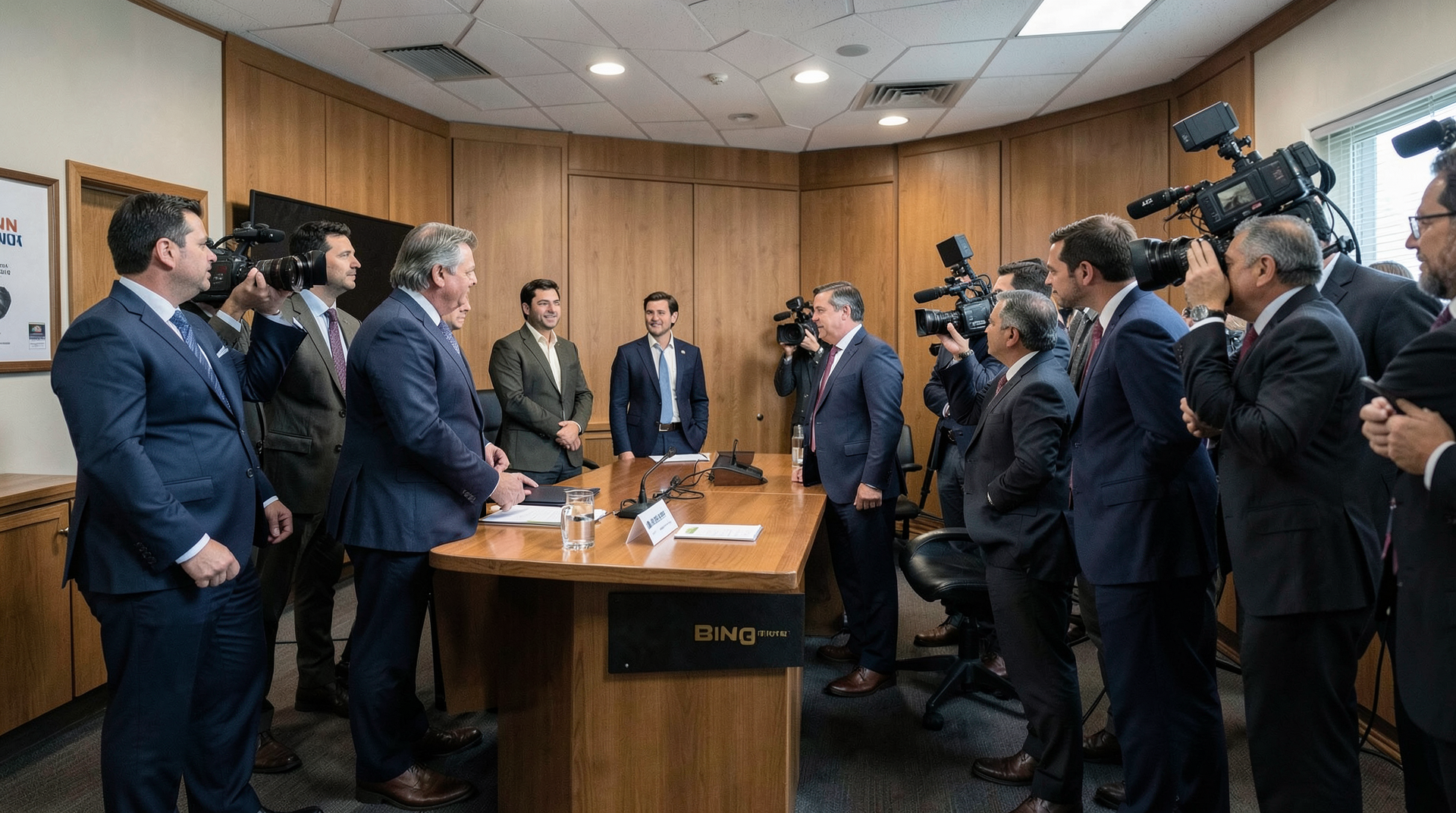
State attorneys keep Paramount-Warner outside the end zone because DOJ clearance is not control closure. The paper's June 13 entertainment major said state clocks kept running after Washington stood down. The Guardian's current account preserves that frame by putting DOJ clearance beside UK and EU review, Gulf financing questions, possible California-led state action, and newsroom-control concerns. [1]
Deadline adds the California mechanism. Gov. Gavin Newsom's budget gave the state more antitrust resources, and Attorney General Rob Bonta's office kept Paramount-Warner under active investigation. [2] That is not a vibe. It is staff, money, and jurisdiction.
The X frame is capture. Sen. Elizabeth Warren's status in the article metadata calls the DOJ clearance corrupt and urges state attorneys general to block the merger. That is a political post, not a legal filing. It still matters because it names the remaining forum more accurately than a victory lap does.
The mainstream frame can make one gate sound final. DOJ clearance is meaningful. It lowers the most visible federal antitrust barrier. But the Guardian's list of remaining risks is precisely why this is still a live entertainment story rather than a completed transaction. [1]
California matters because entertainment is not weightless. Studios, libraries, newsrooms, labor, production commitments, streaming bundles, cable assets, sports rights, and local jobs all sit inside the deal. Deadline's reporting on state resources shows why California can ask a different question than federal antitrust lawyers did. [2]
State attorneys also have a different political audience. A federal antitrust division can close an investigation after asking whether national competition law permits the transaction. A state attorney general may ask how the merger affects local workers, consumers, production economies, newsrooms, and prices in a state where the entertainment industry is not an abstraction. Deadline's California file is therefore a live receipt, not a footnote. [2]
Newsroom control matters because the transaction does not only move films and shows. It moves CNN, CBS, and the economics around journalism that may later be asked to cover the owners, regulators, political allies, and advertisers connected to the deal. The Guardian keeps those newsroom concerns in the same file as foreign financing and non-U.S. review. [1]
The Gulf financing questions also make the deal larger than ordinary Hollywood consolidation. [1] Money's origin can affect regulatory posture, political bargaining, and public trust even when competition analysis clears. A merger can be legal and still require conditions that change how the combined company behaves.
That is why the deal should be read as an ownership record, not a celebrity-industry event. The assets decide which films travel, which franchises are financed, which cable channels survive bundle pressure, and which newsrooms have enough independence to annoy their owners. Reviewers who understand that record can still clear the deal, but they should have to say what they cleared.
The sports metaphor in the headline is not cute. A deal at this scale can cross midfield, enter the red zone, and still fail to score. State attorneys can sue, condition, delay, or extract commitments. UK and EU reviewers can alter timing. Gulf financing questions can still affect trust, timing, and terms. A closing fee can push the parties toward compromise.
The viewer's version of this story is practical. Will streaming bundles get more expensive? Will theatrical windows shrink? Will local production jobs move? Will newsrooms receive independence terms? Will a California complaint become leverage? The DOJ answer did not settle those questions. [1] [2]
The worker's version is equally practical. Fewer buyers can mean fewer greenlights, narrower bargaining, more pressure on back-end compensation, and fewer independent places for writers, actors, editors, and craftspeople to take a project. A legal clearance that treats consumer prices as manageable may still leave labor and creative supply asking whether the market has become thinner.
The political version is the most visible but least sufficient. Warren's post gives X a rallying point, and it may push state attorneys to show their work. It should not replace their work. The next serious document will be a complaint, condition, budget line, review notice, or closing disclosure. The post tells readers where the fight may move; the filing will tell them whether it moved.
The next receipt should be a state filing, a California notice, a UK or EU condition, a foreign-investment signal, or a company disclosure about closing terms. Until then, the correct verb is not "cleared." It is "advanced." Paramount-Warner moved forward. State attorneys still keep it outside the end zone.
-- CAMILLE BEAUMONT, Los Angeles