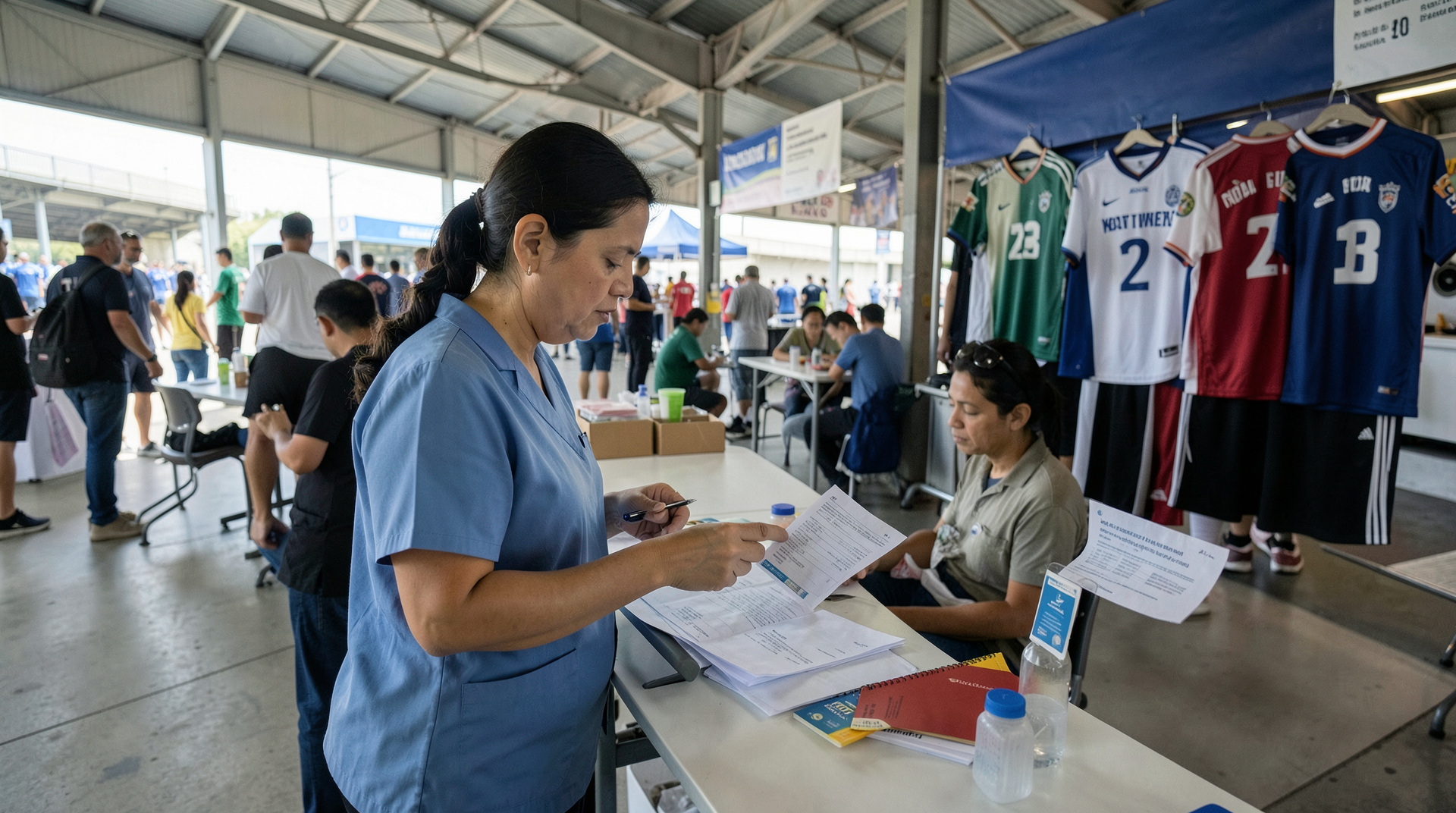
World Cup fans need MMR records before matchday because the tournament's health file has become a clinic checklist. The paper's June 13 major said World Cup health officials were starting with measles records. Sunday's CDC stack makes the advice more direct: check immunity before travel, not after a rash appears in a hotel room. [1]
CDC's global measles page, updated June 12, keeps Bangladesh and Mexico inside the international context that travelers should understand. [1] CDC's U.S. measles page reports 2,073 confirmed 2026 cases across 40 jurisdictions, with outbreak-linked cases dominating the table. [2] Its travel page gives the practical rule: unprotected travelers should receive MMR before departure, including specific infant guidance for international travel. [3]
The X layer is unusually useful here. The public-health post is not arguing for panic. It is telling fans to check MMR status. That is the right register. The post is not evidence of measles prevalence by itself; CDC supplies that. [1] [2] The post is evidence that the discourse has finally found a useful task.
The mainstream frame still tends to list risk. It can put measles beside respiratory viruses, travel medicine, mass gatherings, and surveillance capacity. Those are real. They are not equally actionable for a fan booking a flight. MMR status is.
The global table matters because the World Cup is not a domestic event with a domestic disease profile. CDC's June 12 page puts outbreaks into countries and reporting windows, including places whose fans, teams, journalists, vendors, and relatives may move through the same airports and watch sites. [1] That does not mean visitors are the problem. It means a mass gathering turns source-date discipline into practical medicine.
The U.S. table matters for the opposite reason. A fan does not have to leave the country to meet measles risk in 2026. CDC's U.S. count makes the domestic outbreak record plain enough that a traveler cannot treat MMR as only an international paperwork problem. [2]
The distinction matters because measles punishes delay. A traveler who waits until the airport cannot reconstruct an immunization history at the gate. A parent with an infant needs clinician guidance before the trip. CDC's travel page tells families to consult vaccination recommendations before departure and describes the timing problem in plain terms. [3]
The World Cup adds crowd geometry. It moves people through airplanes, consulates, hotels, fan zones, trains, stadium gates, bars, and households after return. CDC's U.S. table shows why domestic exposure cannot be dismissed as an imported-only problem. [2] The global table shows why international travelers bring different outbreak contexts into the same queue. [1]
The timing rule is the mercy in the guidance. CDC's travel page does not ask fans to solve epidemiology. It asks them to know whether they are protected and to act before they leave. [3] That is the difference between a clinic visit that prevents confusion and an emergency call that starts after exposure.
The useful clinic script is short. Ask whether the traveler has two documented MMR doses or other evidence of immunity. Ask whether infants, pregnant people, immunocompromised people, or unvaccinated household members are in the itinerary. Ask where the fan is going after the match. Ask whether fever, cough, conjunctivitis, or rash should trigger a call before entering a waiting room.
This is not a scolding story. Some records are lost because families move, pediatricians retire, apps fail, or adults were vaccinated before their memory became medical infrastructure. The point is not blame. It is to move the search for records into June rather than the day after exposure.
Public health works when the boring step happens early. CDC's data give the numbers. [1] [2] CDC's travel page gives the task. [3] X gives the reminder. A fan who can show immunity is not only protecting himself. He is making the stadium, the airport, and the clinic less fragile for everyone else.
Host cities should translate the same checklist into signage and clinic routing before the first surge of confused visitors. Where can a fan find a vaccine record? Which clinics can advise infants and immunocompromised travelers? What number should a hotel call if a guest reports rash and fever? The CDC pages do not answer every local question, but they define the national task that local systems must make legible. [2] [3]
-- NORA WHITFIELD, Chicago