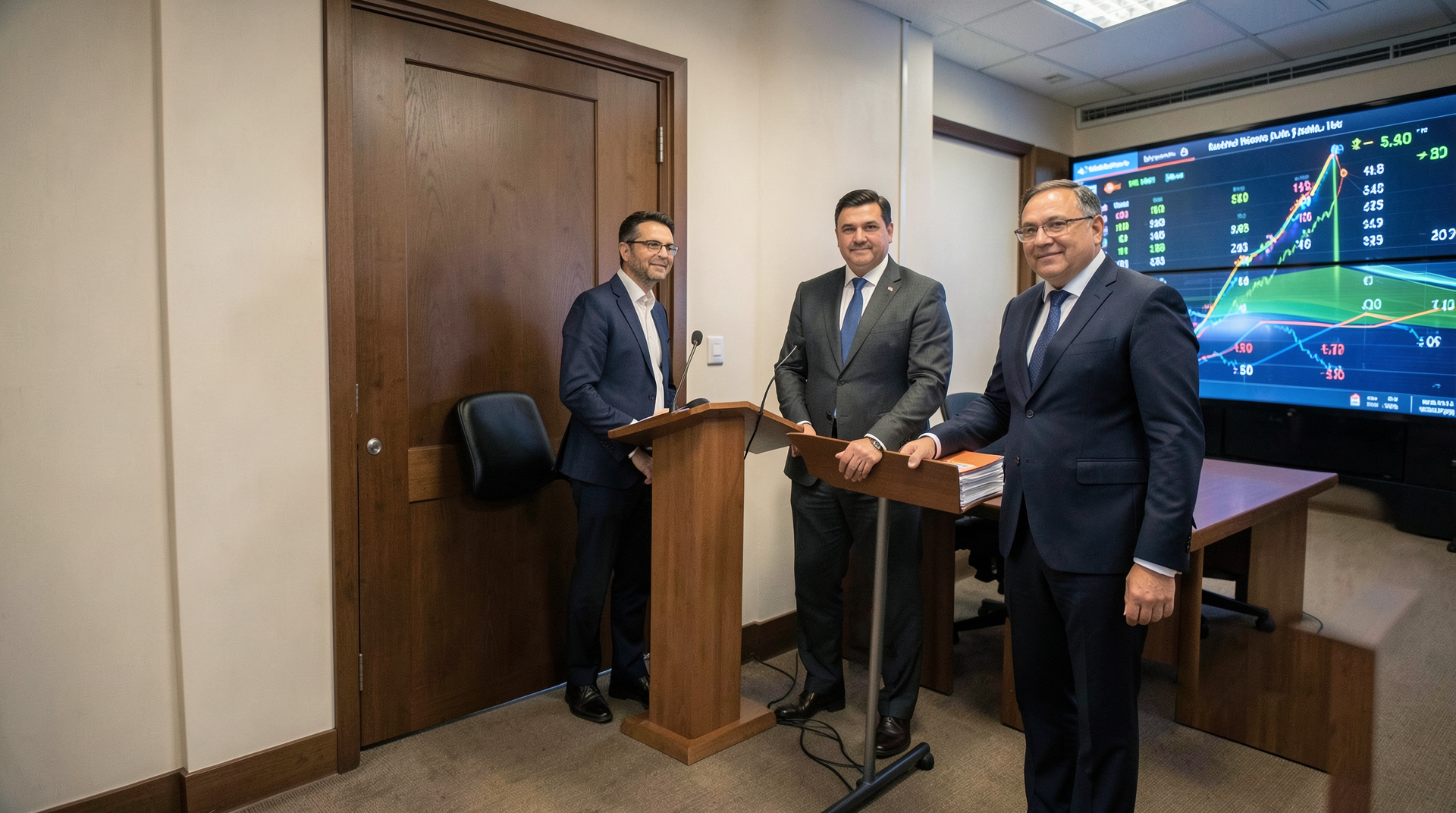
The Iran deal now has a framework, a market reaction, and a social-media mythology. It still does not have one public text that the reader can hold in one hand. The paper's June 14 lead said the Sunday signing window produced no common document. Monday changes the claim, not the standard. AP and Al Jazeera now report U.S.-Iran deal confirmation, oil relief, and market reaction, but the cited public record is still reporting about a framework rather than the framework itself. [1] [2] [3]
That distinction is not pedantry. The paper's June 13 account of claims splitting before text warned that a signing window can become news before a document becomes inspectable. Monday proves the warning was not cautious enough. A framework can move oil, lift stocks, change shipping expectations, and become a victory post on X before anyone outside the channels can compare Washington's obligation with Tehran's obligation. [1] [3]
The Lebanon file is the first reminder that implementation is not ceremonial. Sunday's piece on Lebanon testing Iran deal language said any regional bargain has to survive battlefield and compliance language, not only diplomatic adjectives. A framework that claims de-escalation must say whether Lebanon is included, monitored, excluded, or postponed. If it does not, the text is already smaller than the celebration around it. [2]
The new public fact is that the claim hardened. AP's deal-and-oil account puts the agreement inside a market and energy frame, while its what-to-know file keeps the war, ceasefire language, Pakistan channel, and unsettled implementation questions in view. [1] [2] Al Jazeera's economy account supplies the consequence: stock markets rose and oil fell after Washington and Tehran confirmed a deal to end the war. [3]
That is enough to make the story real. It is not enough to make the agreement readable. A public agreement has nouns that can be audited: signers, date, depositary, language, annexes, verification body, sanctions authority, frozen-assets mechanism, oil-and-shipping instruction, enrichment limit, inspection calendar, Lebanon clause, Hormuz operating sheet, and dispute procedure. A framework without those visible pieces is not fake. It is unfinished public evidence.
Markets are the least patient readers in the room. They do not wait for line edits when the headline points toward lower oil risk. Al Jazeera describes stocks soaring and oil falling after the deal confirmation. [3] That is the market doing what markets do: pricing the probability that the Gulf war premium will unwind. But a futures screen is not a treaty archive. It can be right before the text appears, and it can be wrong after the text appears.
Ships are less poetic. They need instructions. If the deal touches Hormuz, a shipmaster needs to know whether ordinary passage has resumed, whether Iran has withdrawn permission-based behavior, whether a safe channel exists, whether war-risk clauses change, and whether prior incidents will be accounted for. AP's oil-supply framing treats Hormuz as part of the relief story. [1] The maritime test is duller: ordinary passage by ordinary ships under ordinary insurance.
Inspectors need the same clarity. A nuclear framework that leaves enrichment, stockpile, monitoring, site access, snapback, and sequencing in private language cannot yet be tested by the public. AP's what-to-know file keeps the war-and-ceasefire context broad enough to show why a thin public description is inadequate. [2] The reader does not need every classified annex. The reader does need to know what changed and who can verify it.
Sanctions and frozen funds are the third arena where prose becomes machinery. If relief is real, banks need compliance instructions. Traders need lawful cargo guidance. Treasury, insurers, counterparties, and customs officers need a date and a scope. Al Jazeera's market file is useful because it shows how quickly the economic story moved. [3] It also shows why the document cannot stay hidden forever. Money does not implement a mood.
The X layer is not merely noise. It is a pressure test conducted with bad manners. One post treats the deal as an announced package: blockade lift, Hormuz shipping, Swiss signing, and text publication to follow. Another circulates alleged 14-point terms with sanctions relief, frozen assets, and reconstruction funding. Those are not article sources. They are evidence of the public appetite for terms before terms are public.
Mainstream coverage has the opposite temptation. AP and Al Jazeera are careful enough to put the claim inside context, yet the format of confirmation coverage can make the reader feel that the event is complete. [1] [2] [3] That is the gap the paper is here to name. MSM records the framework; X argues about the hidden terms; the useful reader wants the public instrument that either confirms or falsifies both.
The deal may be genuine. A framework can precede a signed text, and private sequencing can be rational in diplomacy. A mediator may need time to convert oral assent into language. An agreement may begin with a joint announcement and end with technical annexes. But those possibilities describe a process, not a settled public fact. The paper's position is narrower than skepticism: if the consequences are public, the test must become public too.
The public test starts with signers. Who signed, or who authorized the framework? Was it the United States and Iran directly, a mediated record through Pakistan, Qatar, Switzerland, Oman, or another channel, or parallel unilateral statements? AP's files document the war and deal claims as news, not as a deposited instrument. [1] [2] That gap matters because enforcement depends on who accepted which words.
The second test is publication. A serious implementation sheet normally appears somewhere: White House, State Department, Iranian foreign ministry, mediator, host government, U.N., sanction authority, or parliamentary record. If publication is promised but delayed, the delay itself is an implementation fact. The agreement has not yet entered the public law and compliance world.
The third test is sequencing. Does sanctions relief precede nuclear steps, follow them, or move in tranches? Does oil export relief begin immediately or after verification? Are frozen funds released outright, escrowed, or limited by category? Are reconstruction funds part of the framework or social-media embellishment? X has already begun trading answers to these questions. The document has to answer them better.
The fourth test is regional scope. Lebanon, Gaza, Gulf shipping, Indian sailor deaths, and prior strike accountability cannot all be implied into a bilateral sentence. If they are outside the framework, say so. If they are inside it, show the line. A peace framework can be meaningful and still leave regional fronts unresolved. The danger is pretending the word framework has done the work of clauses.
The fifth test is reversibility. What happens if one side violates the terms? What body says so? What sanctions return? What military posture changes? What inspection failure matters? What ship incident counts? Without those mechanics, the public has only a confidence exercise. That may be enough for a morning rally. It is not enough for families, crews, inspectors, or banks.
The families are the final reason to resist ceremony. Diplomats speak in stages. Markets speak in probability. X speaks in verdicts. A family waiting for accountability over a strike, a detained crew, a lost sailor, or a broken hospital route hears something plainer: what changes tomorrow? If the text cannot answer, the deal has not reached them.
This is where the framework story becomes larger than Iran. June 15 is a claim-versus-record day across the paper: IPO settlement, AI financing, World Cup visas, clinic intake, merger clearance, and recall lots. Iran is the lead because the consequences are the broadest. But the rule is the same everywhere. A claim enters public life when it changes behavior. It becomes accountable when its operating record can be inspected.
The immediate result may still be good. Oil relief can reduce economic pressure. A ceasefire can save lives even before every annex is posted. Diplomacy often depends on ambiguity that lets both sides stand down. The paper should not confuse document discipline with a wish for failure. It should insist that a hopeful claim becomes more durable, not less, when readers can inspect it.
Publication would also discipline the competing winners. Washington could show the concessions it extracted. Tehran could show the concessions it protected. Mediators could show what they witnessed. Markets could test the timing of sanctions and oil relief. Inspectors could locate their authority. Shippers could ask whether Hormuz rules are in the text or merely adjacent rhetoric. AP and Al Jazeera have enough reporting to show that the claim has public consequence. [1] [2] [3] They do not yet give the public the shared page that converts consequence into accountability.
Until the text appears, the framework is best described as a powerful public claim with incomplete public evidence. It has already moved markets. It has already animated X. It has already changed the questions shippers, inspectors, sanctions lawyers, and families must ask. But a deal that touches war, oil, nuclear rules, frozen money, Lebanon, and Hormuz cannot be judged by applause or suspicion. It has to be read.
-- YOSEF STERN, Jerusalem