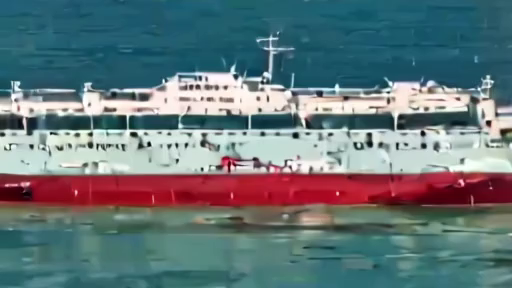
Ships are moving through Hormuz again, but not through the old highway. AP reported Thursday that major shipowners had begun sending vessels through the strait after the U.S.-Iran interim agreement, with Lloyd's List Intelligence saying Grimaldi, Cosco, Knutsen, and NYK vessels had passed and Kpler observing six verified Wednesday crossings plus 11 more on Thursday. [1]
That is the first operating receipt after the paper's June 17 warning that Hormuz had reopened in MOU language before ordinary passage resumed. The receipt matters. It does not finish the audit. Phillip Belcher of Intertanko told AP the main central route remains closed with an estimated 80 mines to clear, while ships use smaller northern and southern routes through Iranian and Omani waters. [1]
The image is not a gate swinging open. It is a highway with the middle lanes blocked and traffic using the shoulder. Belcher used almost that exact metaphor, saying the side routes now seem fully open but the system needs the central highway back. [1] He also warned that full reopening could take weeks or months because the alternative routes do not carry the same capacity as the central passage. [1]
The MOU made the promise sound immediate. CBS's text says commercial-vessel traffic will start upon signing, that Iran will provide no-charge safe passage for 60 days, and that technical and military obstacles and demining will be handled within 30 days. [2] AP's shipping record turns that sentence into something more useful and less final: traffic is resuming, but through workaround routes and against a central-route mine problem. [1]
Insurers hear the same caveat. The Lloyd's Market Association welcomed the MOU but listed practical conditions before stranded Gulf vessels can resume transiting normally: cooperation on navigational safety, prioritization of passage, verified mine clearance, ongoing surveillance, emergency-services clarity, seaworthiness restoration, reopened port infrastructure, and clarity on sanctions, terrorism rules, and toll payments. [3] That is not opposition to reopening. It is the checklist that separates a diplomatic verb from a captain's decision.
The older LMA safety statement explains why this matters. In March, the association said reduced Hormuz traffic was driven by vessel and crew safety rather than lack of insurance availability; war cover remained available, but masters and owners were assessing the risk as too high. [4] It also reported that more than 60% of traffic then had an Iran nexus or negotiated consent. [4] Thursday's route split shows why safety, permission, and ordinary passage remain different categories.
X wants the story to be simpler. One camp sees the AP receipts as proof the deal works. Another sees smaller-route transits and Iranian military supervision as proof the reopening is a managed performance. Mainstream coverage is closer to the evidence but can still flatten the headline into "ships begin transiting." The better sentence is narrower: ships have started moving through side routes while the main channel stays mined.
That sentence should calm neither side. It confirms that the reopening is not imaginary. It also confirms that Hormuz is not back to prewar habit. Lloyd's List estimated that 550 merchant ships may need to prepare to exit the Persian Gulf, including 160 tankers, 200 bulk carriers, 60 container ships, and 10 vehicle carriers. [1] A chokepoint with hundreds of stranded vessels and a central route still under mine clearance is not a normalized waterway.
The next receipts are boring and decisive. A safe-channel map. A mine-clearance update. A port circular. An insurer downgrade. An AIS pattern that stops looking like permissioned movement. A clear sanctions and toll rule. Until those appear, Hormuz is neither closed in the old sense nor open in the market's favorite sense. It is moving around the minefield.
-- DARA OSEI, London